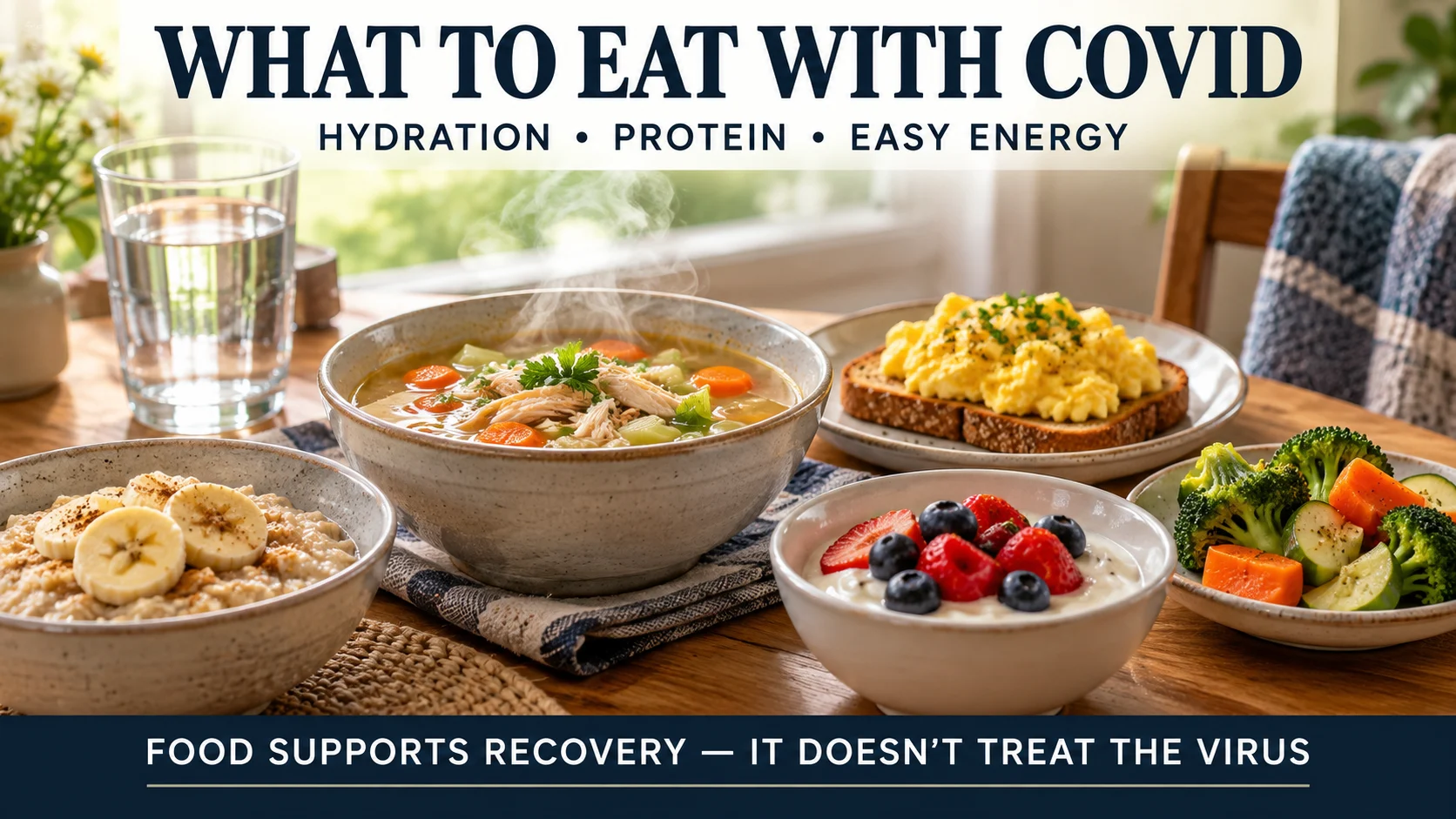

If you have COVID, food is not a treatment for the virus, but eating and drinking enough can make recovery easier by supporting hydration, energy intake, muscle maintenance and normal immune function. The best choices are the foods you can tolerate consistently, especially when fever, fatigue, sore throat, nausea, diarrhea or changes in taste and smell make normal meals difficult.
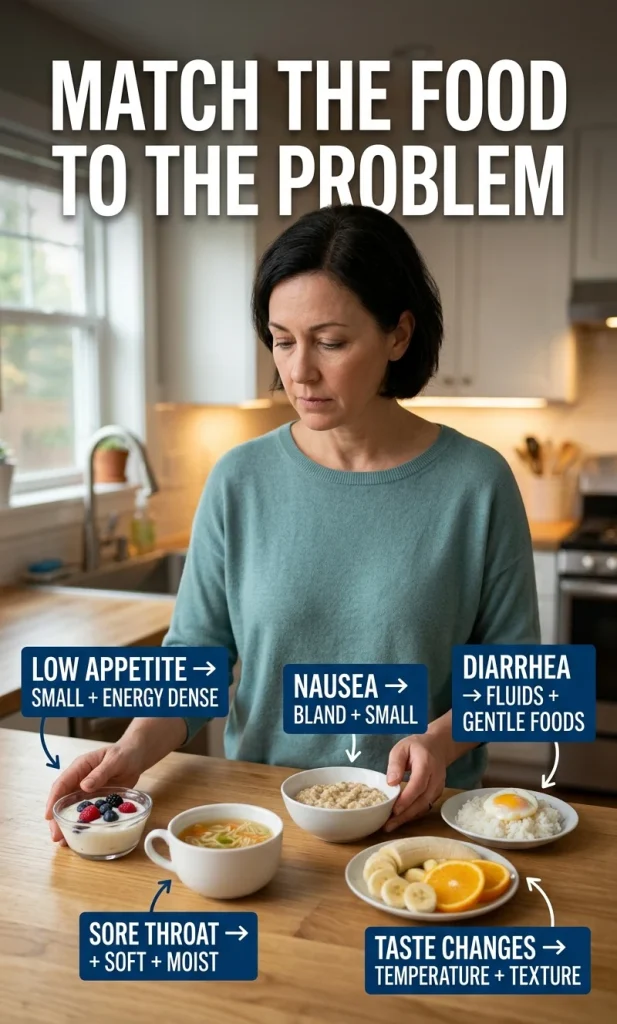
| If this is the main problem | Start with | Why it can be easier |
|---|---|---|
| Low appetite | Yogurt, eggs, nut butter, soup, smoothies | More protein and energy in a smaller volume |
| Sore throat or dry mouth | Oatmeal, yogurt, soft eggs, soups, mashed vegetables | Soft, moist textures require less chewing and may feel less irritating |
| Nausea | Rice, toast, oats, bananas, clear soups | Mild flavors and smaller portions can be easier to tolerate |
| Diarrhea | Fluids, rice, oats, bananas, potatoes, soup | Prioritizes fluid replacement and gentle foods while intake is limited |
| Taste or smell changes | Cold foods, fruit, yogurt, herbs, textured foods | Temperature, texture and aroma can make food more acceptable |
What food can – and cannot – do during COVID
A varied diet helps your body meet its normal needs for protein, carbohydrate, fat, vitamins, minerals and fluid. The World Health Organization’s COVID-19 food and nutrition guidance is clear that no single food prevents COVID-19 and micronutrient supplements are not a substitute for medical treatment.
During illness, the practical problem is often not finding a special “immune-boosting” ingredient. It is maintaining enough fluid, energy and protein when you are tired, your appetite is low, food tastes strange or symptoms make cooking feel like work. Recovery-focused eating should therefore be simple, flexible and based on foods you can actually manage.
If you are at higher risk for severe COVID-19, diet should never delay treatment. Current CDC COVID-19 treatment guidance says antiviral treatment for eligible people needs to begin within the first several days after symptoms start.
15 types of foods that can make eating easier with COVID
1. Broth-based soups and stews
Soup combines fluid, sodium, carbohydrate and, when you add beans, chicken, fish, tofu or eggs, useful protein in one easy bowl. Choose a broth-based soup when appetite is low, then make it more substantial with rice, noodles, potatoes or bread if you need more energy.
2. Oatmeal and other soft cereals
Warm oats are soft, easy to portion and simple to enrich with milk, yogurt, banana, nut butter or seeds. They are especially practical when chewing feels tiring or a dry throat makes toast and crackers less appealing.
3. Rice, potatoes, pasta and other easy carbohydrates
Carbohydrate is a useful energy source when illness has reduced how much you are eating. Plain rice or potatoes can be easier during nausea, while pasta with sauce can add both fluid and calories when appetite begins to return.
4. Eggs
Eggs provide protein in a small serving and can be cooked into a soft texture. Scrambled eggs, an omelet or an egg added to soup can be easier to manage than a large portion of meat when you are tired.
5. Yogurt or kefir
Yogurt is soft, cool and convenient, and it can provide protein, calcium and energy without much preparation. If dairy bothers your stomach, choose a suitable alternative and compare labels because protein content varies widely between products.
6. Milk or fortified soy drinks
Drinks can carry nutrition when solid food feels difficult. Milk or fortified soy beverages can add protein and calories to oatmeal, smoothies or soups; people with specific kidney, heart or fluid restrictions should follow their clinician’s advice instead of increasing fluids automatically.
7. Chicken, turkey and other lean meats
Soft shredded poultry can add protein to soups, rice bowls and sandwiches without requiring a large portion. Keep preparation simple and moist if a sore throat, coughing or dry mouth makes dense foods uncomfortable.
8. Fish
Fish is another compact protein option, and oily fish also provides omega-3 fats. Canned salmon or tuna can reduce cooking effort, while baked fish tends to be softer than grilled or heavily browned meat.
9. Beans, lentils and chickpeas
Legumes provide protein, carbohydrate, fibre and minerals in one food. Use them in soups, dhal, hummus or mashed fillings if you want a plant-based protein source, but reduce portion size temporarily if gastrointestinal symptoms make high-fibre foods uncomfortable.
10. Tofu and other soft soy foods
Tofu works well when you want protein with a soft texture and mild flavor. Add silken tofu to soup or blend it into a smoothie, or use firm tofu in a simple rice bowl once your appetite is stronger.
11. Bananas and other easy fruit
Bananas are easy to eat, blend or add to cereal. Other fruits such as melon, berries, pears and oranges can add fluid, carbohydrate and micronutrients; choose softer or less acidic fruit if your throat or stomach is sensitive.
12. Colorful vegetables
Vegetables do not need to be raw to count. Cook carrots, squash, spinach, broccoli or other vegetables until tender, blend them into soup, or use frozen vegetables when fatigue makes washing and chopping unrealistic.
13. Avocado and olive oil
When you can only eat small portions, energy-dense foods help each bite do more work. Avocado can be mashed onto toast or into rice, while olive oil can enrich soup, pasta, potatoes and cooked vegetables without adding much food volume.
14. Nuts, seeds and nut or seed butters
These foods provide energy, unsaturated fat and some protein. A spoonful of peanut, almond or seed butter is often easier than a handful of nuts when chewing is tiring, and it can be added to toast, oatmeal or a smoothie.
15. Whole-grain bread, crackers and cereal
Whole grains add carbohydrate, fibre and micronutrients and can help you return to a more balanced eating pattern as symptoms improve. If nausea or diarrhea makes higher-fibre foods hard to tolerate, a temporary switch to softer refined grains can be reasonable until your intake normalizes.
Build a recovery meal without overthinking it
A useful sick-day meal does not need to be perfect. Start with one fluid, one easy carbohydrate and one protein, then add fruit, vegetables or an energy-dense extra if you can manage it.
- Soup meal: broth + rice or noodles + chicken, tofu or beans + soft vegetables.
- Breakfast bowl: oats + milk or soy drink + banana + nut butter.
- Cold option: yogurt + fruit + oats or cereal + seeds.
- Easy plate: scrambled eggs + toast + avocado + fruit.
- Low-effort plant meal: lentil soup + bread + olive oil + cooked vegetables.
If you are struggling with protein, the site’s guide to foods with protein examples can help you identify easy swaps. For a broader reset after your appetite returns, see getting healthy eating habits back on track.
Match the texture to the symptom
COVID can change eating for several reasons at once. Loss of smell can flatten flavor, a sore throat can make dry foods unpleasant, nausea can reduce tolerance for rich meals, and fatigue can make cooking itself the obstacle. The best food choice is therefore often the one that solves the immediate eating problem rather than the one with the most impressive nutrient label.
| Challenge | Try | Be cautious with |
|---|---|---|
| Sore throat | Soft, moist, cool or warm foods | Very dry, rough, spicy or strongly acidic foods if they sting |
| Nausea | Small portions, bland starches, clear soups | Large, greasy or strongly scented meals |
| Diarrhea | Frequent fluids and tolerated simple foods | Alcohol and foods that clearly worsen symptoms |
| Taste/smell changes | Different temperatures, herbs, texture contrast | Adding excessive salt or sugar just to chase flavor |
| Low appetite | Small frequent meals with protein and energy | Large low-calorie meals that fill you before you get enough nutrition |
The Guy’s and St Thomas’ NHS recovery guidance specifically notes that appetite and smell changes can interfere with balanced eating and that unintentional weight loss can signal malnutrition. If your clothes become noticeably looser, your strength is dropping, or you are repeatedly unable to finish even small meals, that is a reason to get personalized medical or dietetic advice.

Hydration matters as much as the food list
Fever, vomiting and diarrhea can increase fluid losses, while fatigue may simply make people forget to drink. Keep water or another suitable drink within reach and use small frequent sips when a full glass feels difficult; soups, milk, fruit and other fluid-containing foods can contribute too.
There is no single fluid target that is correct for everyone. People with heart failure, kidney disease, certain endocrine conditions or a prescribed fluid restriction should follow their clinician’s plan rather than generic advice.
Do you need vitamin C, vitamin D or zinc supplements?
Your body needs these nutrients for normal immune function, but that does not mean taking large doses treats COVID. The NIH Office of Dietary Supplements evidence review states that evidence is insufficient to recommend dietary supplements as a general way to prevent or treat COVID-19, and high doses can cause side effects or interact with medicines.
Food-first choices are straightforward: fruit and vegetables for vitamin C, fish, eggs and fortified foods for vitamin D, and meat, shellfish, dairy, beans, nuts and whole grains for zinc. If a clinician has diagnosed a deficiency or recommended a supplement for another reason, follow that individualized plan.
When food advice is not enough
Nutrition supports recovery, but it cannot replace assessment when COVID is becoming more severe. Seek urgent medical help for warning signs such as trouble breathing, persistent chest pain or pressure, new confusion, inability to wake or stay awake, or a pale, gray or blue appearance of the lips, nail beds or skin depending on skin tone, as described in the CDC emergency warning signs.
Also contact a healthcare professional if you cannot keep fluids down, you are urinating very little, you are becoming markedly weak or dizzy, or your intake and weight continue to fall. People who are older, immunocompromised or living with significant medical conditions should have a lower threshold for getting help.
Frequently asked questions
What is the best food to eat when you have COVID?
There is no single best food. A better target is a simple combination of fluid, protein and easy energy – for example chicken or lentil soup with rice, oatmeal made with milk and banana, or eggs with toast and fruit.
What should I eat if I cannot taste or smell much?
Try changing temperature, texture and seasoning rather than relying only on stronger salt or sugar. Cold yogurt with fruit, crisp-soft contrasts, herbs, mild spices, citrus if tolerated and individually flavored foods can make meals more noticeable.
Is soup enough when I have COVID?
Soup can be a good base, but clear broth alone may not provide enough energy or protein if it is your main food for more than a short period. Add chicken, fish, tofu, beans, egg, rice, noodles, potatoes or bread as tolerated.
Should I force myself to eat full meals?
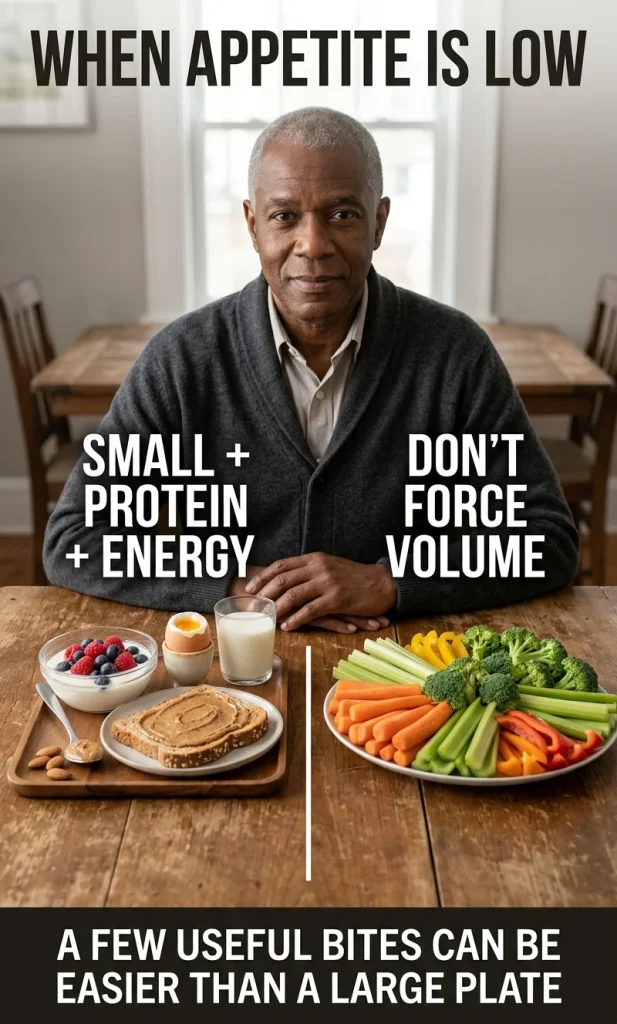
Not necessarily. If appetite is poor, smaller meals and snacks every few hours are often more manageable than three large meals. Focus on getting enough fluid, some protein and enough total energy across the day.
Should I take zinc or vitamin D specifically for COVID?
Do not assume a high-dose supplement will speed recovery. Evidence does not support routine megadosing as a COVID treatment, and excessive doses can cause harm or medication interactions. Use supplements for a documented need or clinician-directed reason.
What if diarrhea is my main COVID symptom?
Prioritize frequent fluids and simple foods you tolerate, such as rice, potatoes, oats, bananas, toast and soup, then re-expand the diet as symptoms settle. Seek medical advice if diarrhea is severe, persistent, bloody, accompanied by marked weakness, or you cannot maintain hydration.
The practical bottom line
The best COVID recovery food is food you can tolerate, prepare and eat often enough to stay hydrated and nourished. Use soft or bland foods when symptoms demand them, bring protein and energy back into each small meal as soon as you can, and treat continuing weight loss, dehydration or worsening respiratory symptoms as medical problems rather than nutrition problems.