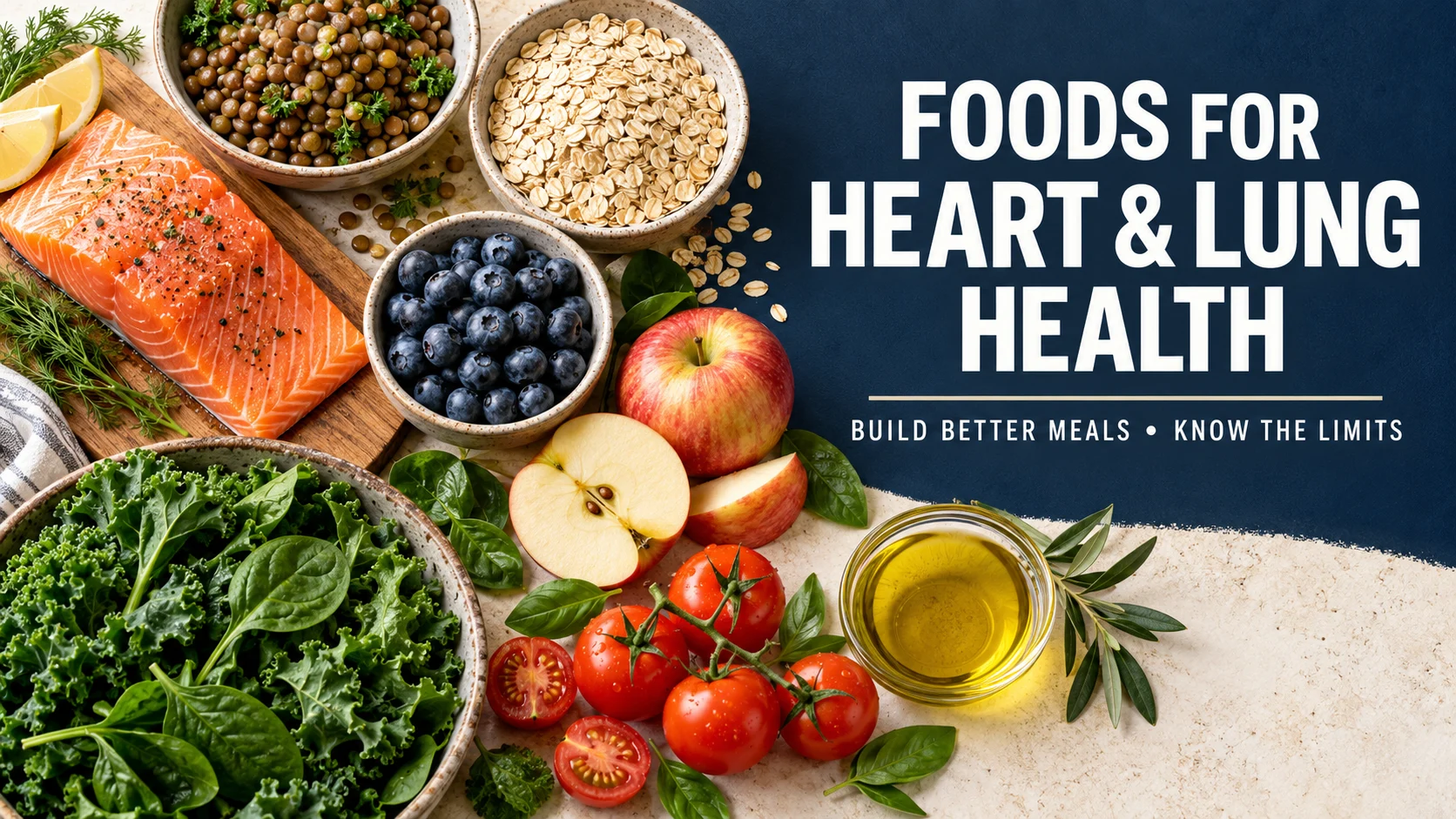
The best foods for heart and lung health are the building blocks of a balanced eating pattern: vegetables, whole fruit, whole grains, beans, nuts, unsaturated oils and fish if you eat it. Their cardiovascular role is better established than any claim that a single food strengthens or cleans your lungs. Start with meals you can repeat, rather than a supplement or a list of miracle ingredients.
A bowl of oats, a bean-based lunch and a vegetable-rich dinner can be more useful than buying expensive powders. These choices work best when they replace meals dominated by processed meat, salty sauces or sugary drinks. The goal is a sustainable pattern that fits your appetite, budget and medical needs.
How the heart and lungs work together
Your lungs move oxygen into the blood and remove carbon dioxide; your heart circulates that blood through the body. Food provides fuel and nutrients for the tissues involved, but eating an antioxidant does not directly increase oxygen delivery. Breathlessness can arise from many conditions, so it needs an explanation rather than a food-based assumption.
What food can-and cannot-do for your lungs
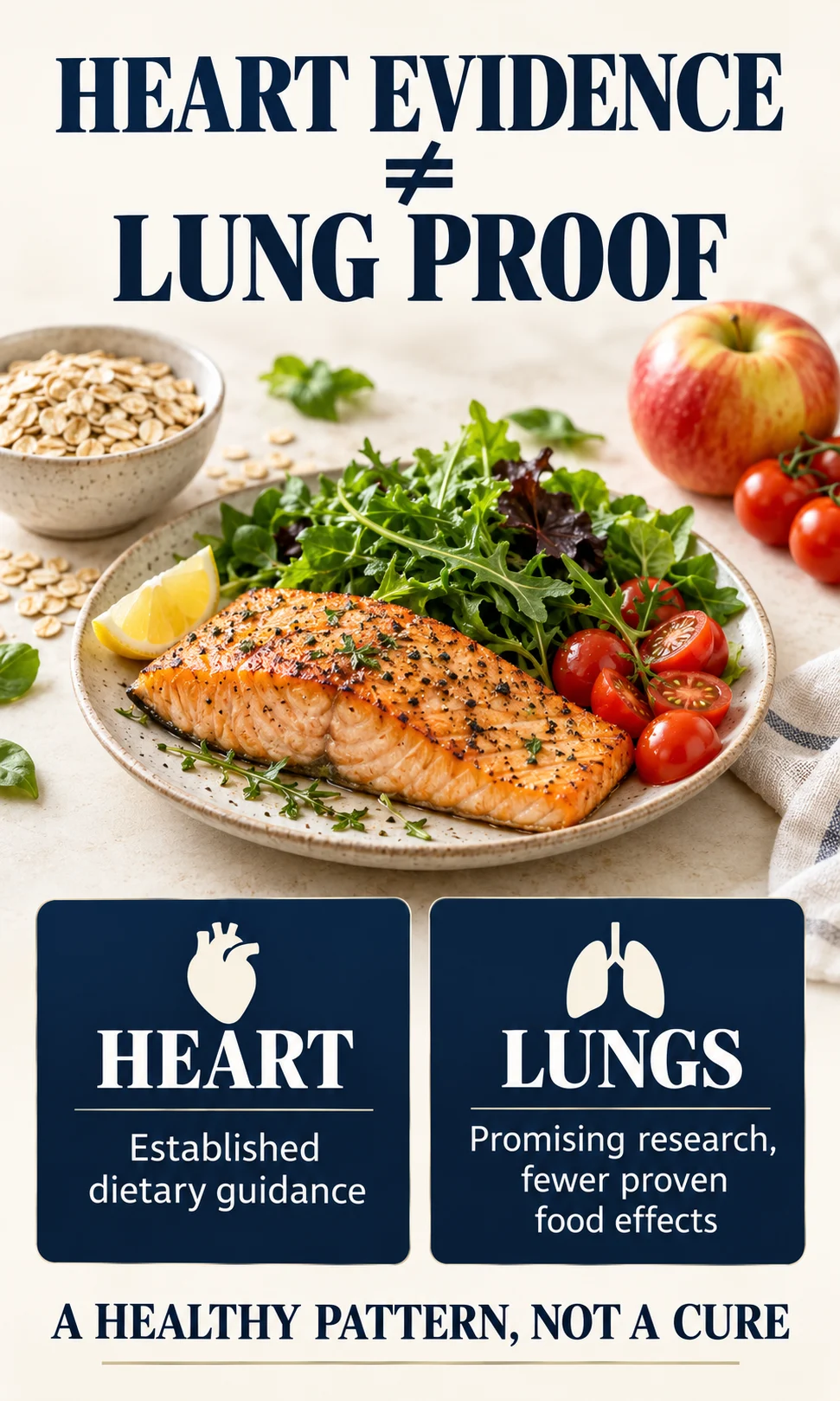
For the heart, dietary guidance emphasizes the overall eating pattern, including food variety and replacing saturated fats with unsaturated fats. Lung research is less definitive: healthier dietary patterns have been associated with lower COPD risk in prospective studies. An association does not prove that changing one ingredient prevents a disease.
Several lung studies measure spirometry, such as the volume of air exhaled in one second, rather than how someone feels after a meal. Other studies examine blood nutrients instead of the food itself, making a specific food dose difficult to infer. None of this establishes a food that removes smoke damage, treats an asthma attack or replaces prescribed respiratory care.
15 useful foods and ingredients for heart and lung health
Fatty fish: salmon, sardines and Atlantic mackerel
Fatty fish supplies protein and the omega-3 fats EPA and DHA, making it a useful alternative to processed meat. The heart-health recommendation is two fish servings a week, with a serving around 3 ounces cooked. Research on blood omega-3 levels and lung function is promising, but does not prove that fish or fish-oil capsules treat lung disease.
Leafy greens
Spinach, kale and other leafy vegetables add variety, fiber and micronutrients to everyday meals. Their place in a heart-supportive pattern is a stronger reason to eat them than claims about chlorophyll improving blood flow to the lungs. Stir cooked greens into lentils or serve a handful alongside dinner; if you take warfarin, ask about keeping vitamin K intake consistent.
Beets and beet greens
Beets contain dietary nitrate, which the body can use in nitric-oxide pathways involved in blood-vessel relaxation. Research on concentrated nitrate products cannot be turned into a promise that an ordinary serving increases lung capacity. Roast beets for a salad if you enjoy them, and treat beet juice or nitrate supplements as a separate decision to discuss with your care team.
Berries
Fresh or unsweetened frozen berries are an easy way to add whole fruit to breakfast. Their fiber and plant compounds make them useful within a varied diet, but those nutrients do not establish a treatment for respiratory inflammation. Add a small bowl to oats or yogurt, choosing whichever berries are affordable rather than assuming blueberries are essential.
- Choose lower-sodium canned foods where available; compare the actual labels.
- Use fruit, whole grains and legumes across the week instead of relying on a single ingredient.
- Treat the suggestions here as food ideas, not doses that guarantee a heart or lung outcome.
Apples
An apple is a convenient whole-fruit snack that supplies fiber a sugary drink usually lacks. Observational lung research has included apples, but it does not justify calling them a way to repair lungs after smoking. Keep the skin when practical, wash the fruit, and eat it whole instead of treating apple juice as an equivalent choice.
Walnuts and other unsalted nuts
Nuts provide unsaturated fats, and walnuts also supply the plant omega-3 ALA. ALA is not interchangeable with the EPA and DHA studied in fish-related research, so walnuts should not inherit the same lung claims. Use a small handful in place of a salty snack; choose an alternative if you have a nut allergy.
Tomatoes
Tomatoes contribute variety and contain lycopene, a plant pigment often discussed in antioxidant research. In a study following lung function over ten years, tomato intake was associated with slower decline, while several other food associations weakened after adjustment for multiple comparisons. Fresh tomatoes or no-added-salt canned tomatoes are practical choices, with no proven tomato dose for lung repair.
Oats and other whole grains
Oats, barley and whole-grain bread help build meals around fiber-rich staples. Oats contain soluble beta-glucan fiber, relevant to cholesterol management, whereas dietary-fiber research on lung function is observational. Cook plain oats and add fruit, or replace part of a refined-grain staple with a whole-grain version you enjoy.
Avocados
Avocado is useful when it replaces a spread or topping rich in saturated fat. Its unsaturated fat and fiber do not establish a specific benefit for the lungs, and it is not a meaningful substitute for fatty fish as a source of EPA or DHA. Spread a few slices on whole-grain toast or add them to a bean bowl according to appetite.
Unsweetened green tea
Green tea can be a lower-sugar alternative to a sweetened beverage if you enjoy its taste. It is not an inhaler, a detox drink or a proven way to prevent lung cancer. Choose brewed tea rather than concentrated extracts, and switch to water or a caffeine-free option if caffeine or tea worsens your sleep or reflux.
Garlic
Garlic helps make beans, vegetables and fish more appealing without depending entirely on salt. Laboratory findings about garlic compounds do not prove that culinary garlic prevents lung damage. Use it in a dressing or a cooked dish according to taste, and avoid treating garlic supplements as an automatic extension of cooking with it.
| Evidence type | What it supports | What it does not establish |
|---|---|---|
| Heart-health dietary guidance | A varied pattern and useful substitutions. | An individual food curing heart disease. |
| Omega-3 and lung-function research | Promising associations, especially involving blood DHA. | A fish or supplement dose that treats COPD. |
| Fruit, tomatoes and fiber studies | Possible links with lung function or slower decline. | Lung repair, detoxification or guaranteed prevention. |
| Flavor ingredients and spices | More appealing meals with less reliance on salt. | Cancer prevention from garlic, tea or turmeric. |
Olive oil and other unsaturated plant oils
Olive oil is useful as a replacement for butter or other fats high in saturated fat. Its role is part of the meal pattern, rather than a separate spoonful that heals the heart or lungs. Use a modest amount for cooking or dressing vegetables, and remember that adding more oil is not automatically better.
Beans and lentils
Legumes bring protein and fiber to meals and can replace some processed or fatty meat. Protein supports body tissues, including respiratory muscles, but a lentil serving is not a lung-strengthening treatment. Begin with a portion you tolerate, rinse canned beans, and increase gradually if a sudden fiber increase causes gas.
Citrus fruit and peppers
Oranges and peppers add vitamin C and food variety without requiring a supplement. Vitamin C supports normal body functions, but eating more than you need does not establish better lung oxygenation. Try whole citrus fruit as a snack and peppers in a cooked meal; use other produce if acidic foods worsen reflux.
Turmeric as a cooking spice
Turmeric can add flavor to vegetables or lentils, but it is optional rather than a key heart-and-lung food. Evidence and safety information on turmeric does not support promises that it prevents lung cancer or treats cardiopulmonary disease. Culinary use is different from concentrated curcumin products, particularly enhanced-absorption supplements that have been linked to liver injury.
Foods to limit: focus on the replacement
The useful question is what will take the place of the food you limit. Replacing a sausage lunch with beans and vegetables is more constructive than adding turmeric to the same lunch and expecting protection. Salt, added sugars and saturated fat deserve attention across the whole day, especially when sauces, snacks and drinks are easy to overlook.
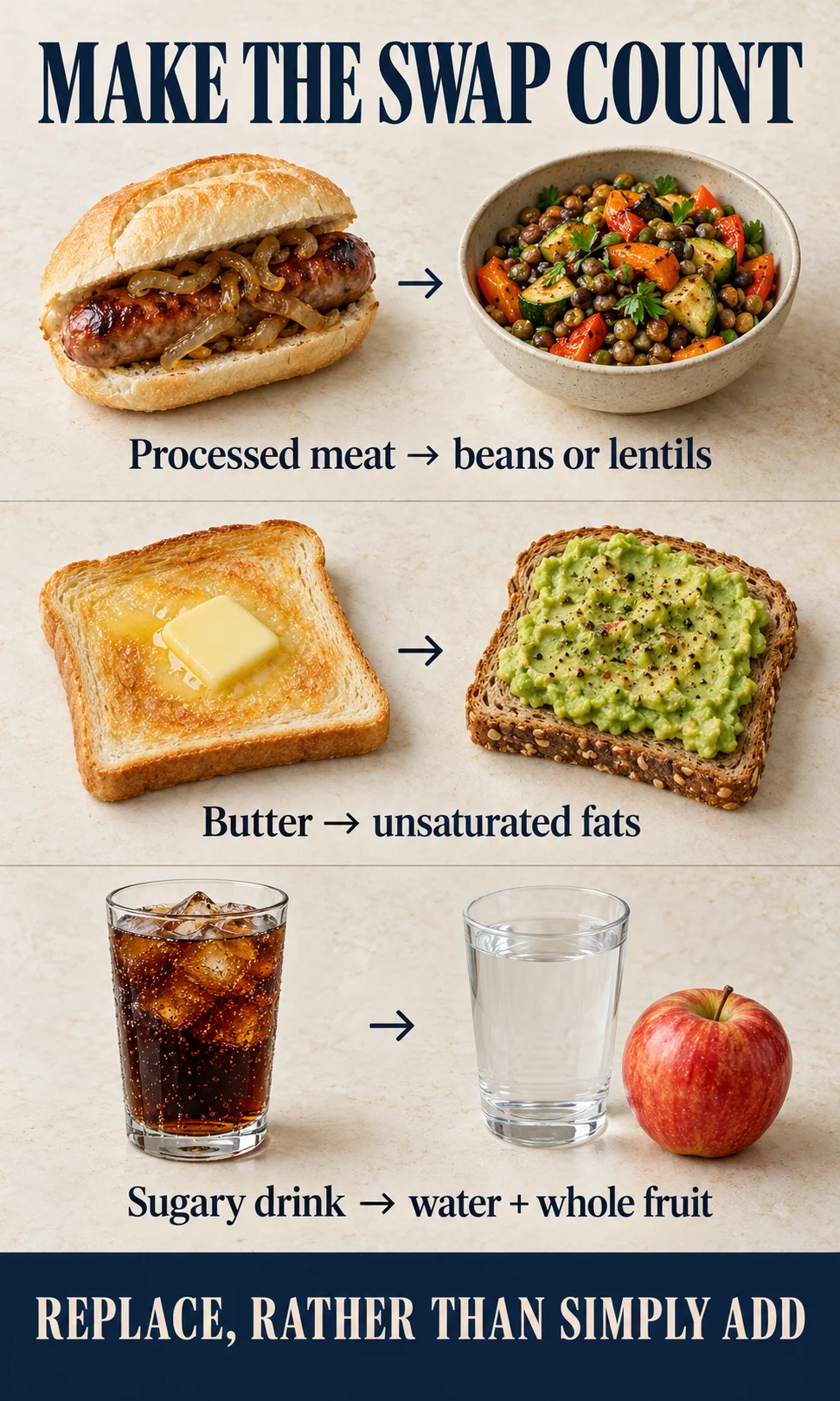
- Processed meats: use beans, lentils, fish or another suitable protein more often.
- Frequent deep-fried meals: rotate in baked, steamed or roasted meals, paying attention to sauces as well.
- Salty packaged foods: compare sodium per serving and check how many servings you actually eat.
- Sugary drinks: choose water or an unsweetened drink; whole fruit adds something juice does not.
- Alcohol: do not start drinking for a supposed cardiovascular benefit.
There is no need to ban every packaged food. Frozen vegetables, canned beans and plain oats can make balanced eating easier and less expensive. Refined grains are not inherently full of trans fats, and a food label gives a better basis for comparison than assuming every item in one category has the same composition.
A simple daily meal framework
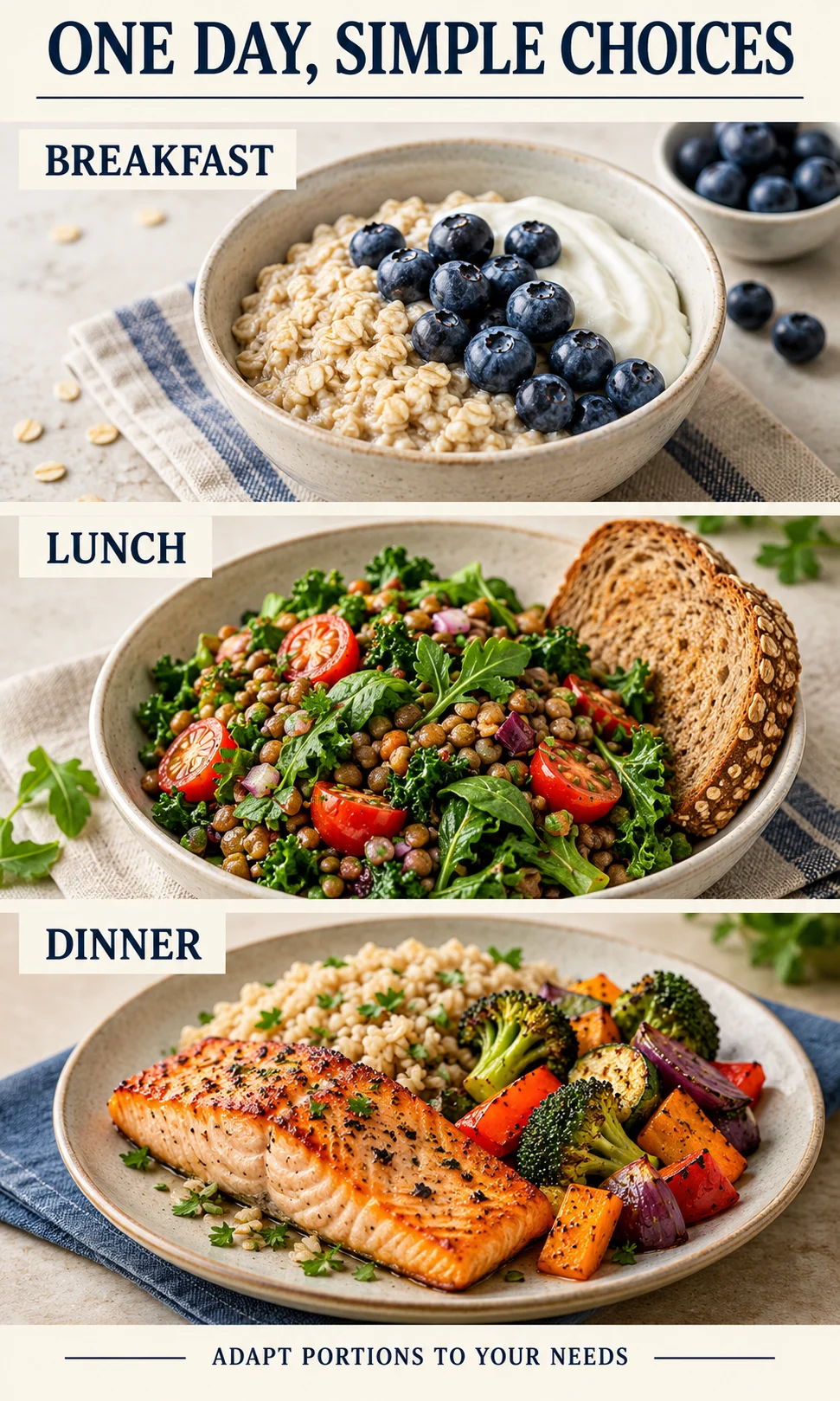
Build a meal from a protein source, a grain or other suitable starch, vegetables or fruit, and a little unsaturated fat where useful. The following day is an illustration, not a prescription or a complete nutritional assessment. Change quantities, timing and ingredients to suit your appetite, activity and any existing care plan.
| Meal | Example | Useful adjustment |
|---|---|---|
| Breakfast | Plain oats, berries and plain yogurt. | Use a suitable fortified unsweetened alternative if avoiding dairy. |
| Lunch | Lentil, tomato and leafy-green salad with whole-grain toast. | Use cooked vegetables or a smaller legume portion if better tolerated. |
| Dinner | Baked salmon, brown rice and mixed vegetables. | Swap fish for tofu or another suitable protein; the nutrient profile changes. |
| Snack, if wanted | An apple or a small handful of unsalted nuts. | Choose around appetite and allergies; snacks are optional. |
Cooking once can make this pattern easier to repeat. Prepare a batch of lentils, cook a grain, and keep washed or frozen vegetables ready for a second meal. Refrigerate leftovers promptly and use appropriate food-safety guidance rather than leaving cooked meals out through the day.
- Produce: leafy greens, tomatoes, apples, berries and a vegetable you enjoy.
- Staples: plain oats, a whole grain and no-added-salt beans or dried lentils.
- Proteins: fish if you eat it, tofu and a suitable yogurt or fortified alternative.
- Extras: olive oil, unsalted nuts if tolerated, garlic and favorite herbs.
Build a meal you can actually repeat
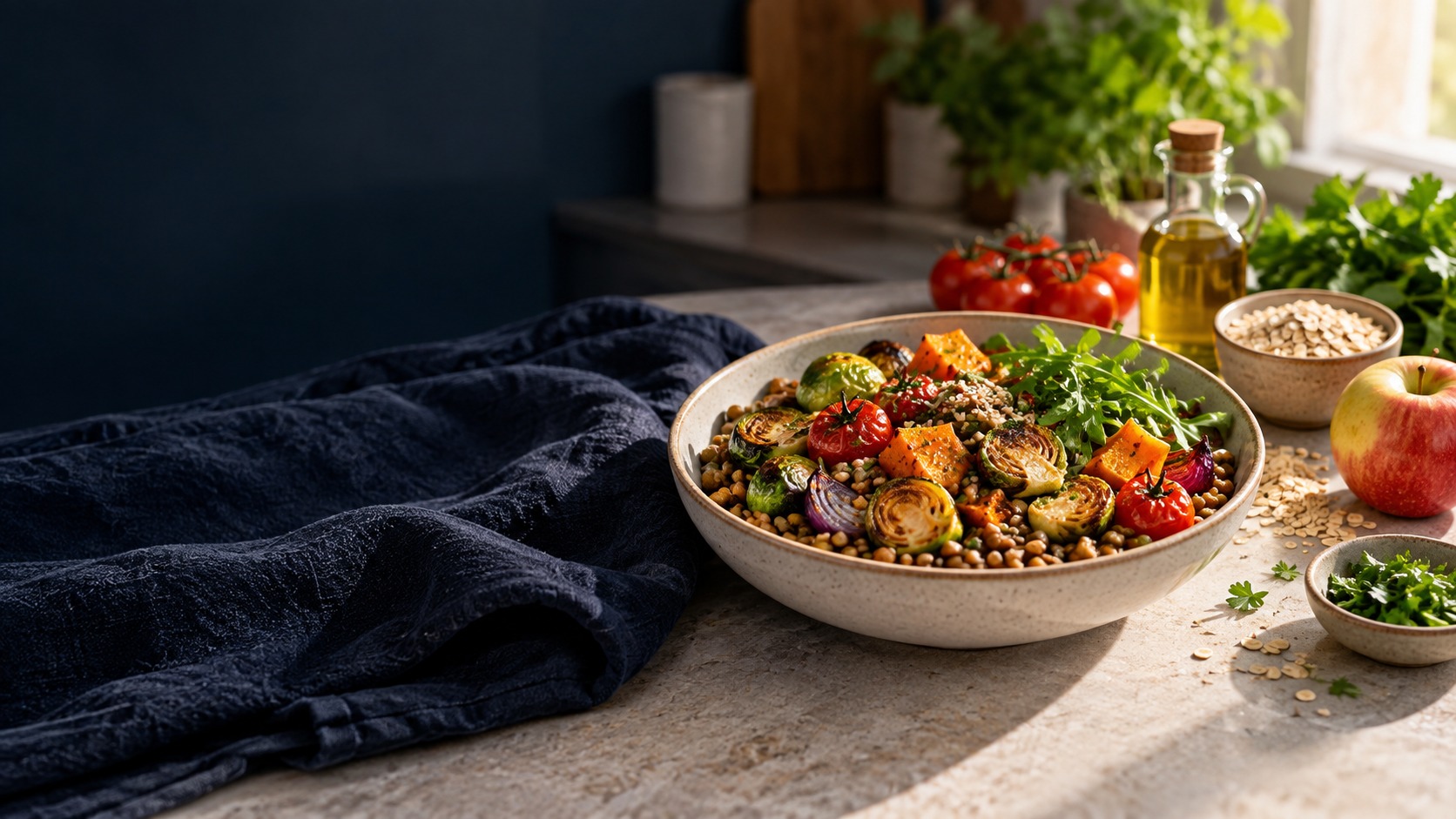
Everyday Plate Studio turns a few ingredient choices into an illustrative meal and a short shopping list. It does not calculate lung capacity, diagnose a condition or prescribe calories, fluids or nutrients. If you already have dietary restrictions, use the clinician-guidance option rather than replacing that plan.
A practical place to start
Everyday Plate Studio
Choose familiar ingredients. Build a repeatable meal and a short shopping list.
General food education, not a diagnosis, treatment or personalized diet prescription. No food detoxes lungs. Follow existing medical dietary advice.
Example to get you started
What this experience can tell you
Selections change meal ideas, preparation notes and the shopping list. They do not estimate health improvements, nutritional adequacy or lung capacity. Portions are intentionally left to your needs and care plan.
Heart guidance is more established than food-specific lung claims. Lung findings are often observational. Ingredients stay on this device; this experience does not store or send your selections.
When the general food list needs adapting
A heart-supportive menu is not automatically suitable for every person with lung disease or another medical condition. Kidney disease, prescribed fluid limits, allergies and medicines can change which ingredients or quantities are appropriate. Follow your existing plan and ask a registered dietitian or clinician to reconcile overlapping needs.
| Situation | Practical next step |
|---|---|
| COPD with poor appetite or weight loss | Ask about adequate energy and protein; smaller, more frequent meals may be easier. Do not begin a restrictive diet on your own. |
| Kidney disease or a potassium restriction | Check produce, legumes and portion choices with your care team; avoid assuming potassium-rich foods suit everyone. |
| Heart failure or prescribed fluid/sodium limits | Follow your individual targets rather than a generic hydration recommendation. |
| Warfarin use | Ask how to keep vitamin K intake consistent; do not suddenly remove or greatly increase leafy greens. |
| Pregnancy or food allergies | Use pregnancy-appropriate fish guidance and avoid your allergens. The interactive examples do not assess cross-contact. |
For COPD, nutrition guidance includes adapting meal size and meeting energy and protein needs. If a large meal makes breathing uncomfortable, smaller meals may help, but ongoing breathlessness or unintentional weight loss needs medical review. New severe breathlessness, chest pain or blue or gray lips requires urgent medical help, not a dietary experiment.
What to eat after quitting smoking
After quitting, the same varied eating pattern is a sensible place to start, but no food clears tar or reverses all smoke-related damage. Stopping smoking has established benefits for heart and respiratory health, and food should support that change rather than compete with it. Ask your clinician about persistent symptoms and whether lung-cancer screening is appropriate for your history and local guidelines.
For more detail on the underlying meal pattern, read foods allowed on a Mediterranean-style diet. If packaged-food labels are your main difficulty, use how to choose foods lower in sodium. A separate guide to building a balanced plate covers the general meal structure in more depth.
Frequently asked questions
What is the best food for both heart and lung health?
There is no single best food with proven treatment benefits for both organs. A varied pattern built around vegetables, whole fruit, whole grains, legumes, nuts, unsaturated oils and fish if you eat it is more useful. Individual restrictions can change those choices.
Can foods clean or detox the lungs?
No food has been shown to remove smoke damage or detox the lungs. Avoiding tobacco and harmful exposures and following appropriate medical care matter more. Do not use a detox drink as a substitute for evaluation of breathing symptoms.
Do apples and tomatoes help lungs after smoking?
Some observational research links fruit and tomato intake with slower lung-function decline, including in former smokers. That does not prove those foods repair smoke damage. Eat them for variety while maintaining smoking cessation and appropriate care.
Should I take fish oil for lung health?
The blood omega-3 research does not establish fish oil as a lung-disease treatment. Do not start a supplement to treat breathing symptoms without discussing it with your clinician. Food-based fish recommendations and prescription omega-3 therapy are separate issues.
Are eggs bad for heart and lung health?
Eggs can fit some balanced eating patterns and provide protein, but they are not a lung treatment. Consider the overall meal, including processed meat, butter and other sources of saturated fat. Ask for individualized guidance if you have lipid concerns or an egg allergy.
Are canned and frozen foods suitable?
Plain frozen produce and canned legumes can be practical choices. Compare sodium and added sugars and select options that fit any prescribed restrictions. Processing alone does not tell you whether a food suits your diet.
Should people with COPD avoid carbohydrates?
Do not cut out carbohydrates simply because you have COPD. Energy needs, weight changes and coexisting conditions affect the right balance of nutrients. Your care team can advise whether any targeted adjustment is appropriate.
Choose one change for this week
Start with a change that solves a real meal problem: oats instead of a sugary breakfast, lentils in place of a processed-meat lunch, or vegetables alongside a familiar dinner. Buy the ingredients for that change and repeat it before adding another. A workable pattern is more valuable than a long list of foods you never use.