No single food, supplement, or “breast health diet” can prevent breast cancer. The most defensible approach is a healthy, plant-forward eating pattern that helps you maintain a healthy weight, while treating alcohol as the dietary factor with the clearest reason to reduce or avoid.
That means the useful question is not “Which superfood protects breast tissue?” It is “Which eating pattern gives me the best evidence-backed foundation without turning uncertain food research into promises?” The answer is built from vegetables, whole fruit, whole grains, beans and other protein foods, mostly unsaturated fats, and a realistic plan for limiting alcohol, highly processed foods, and excess calories.
What matters most in a breast health diet
The distinction matters because “healthy food” and “proven breast-cancer prevention” are not the same claim. The World Cancer Research Fund’s breast cancer prevention review identifies stronger evidence for physical activity, healthy weight, limiting alcohol, and breastfeeding where applicable, while describing the evidence for particular vegetables, carotenoid-rich foods, and calcium as more limited or suggestive.
| Diet factor | What the evidence supports | Practical move |
|---|---|---|
| Alcohol | Alcohol increases breast cancer risk. Risk is not limited to one type of alcoholic drink. | For cancer prevention, avoiding alcohol gives the lowest exposure. If you drink, less is better. |
| Overall eating pattern | Plant-rich dietary patterns support overall cancer prevention and make healthy weight management easier. | Center meals on vegetables, fruit, whole grains, beans, nuts/seeds, and sensible protein choices. |
| Healthy weight | Higher body weight and adult weight gain are linked with higher breast cancer risk after menopause. | Use food quality, portions, and activity together rather than chasing a “fat-burning” food. |
| Specific foods | Some foods and nutrients are promising, but breast-specific evidence is generally weaker than the evidence for the full lifestyle pattern. | Choose variety. Do not build the diet around one berry, seed, spice, tea, or vegetable. |
| Supplements | There is no strong evidence that vitamin or dietary supplements prevent breast cancer. | Meet nutritional needs through food when possible; use supplements for a defined need with professional guidance. |
Build your plate around food groups, not miracle ingredients
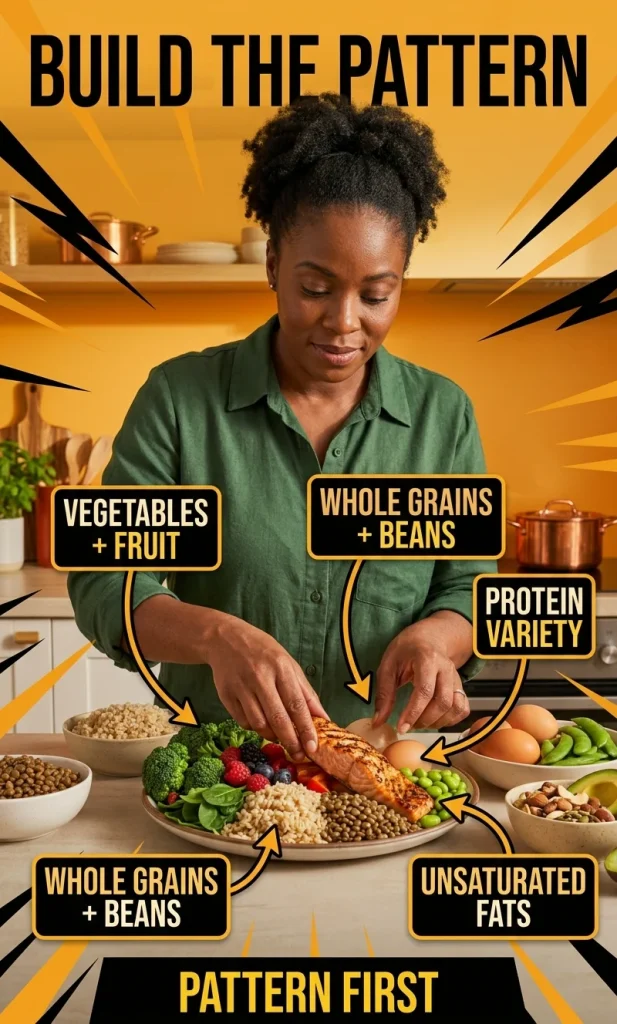
A useful breast health diet looks a lot like a strong general health diet because the same eating pattern supports body weight, cardiovascular health, blood sugar control, and overall cancer prevention. The American Cancer Society diet and activity guideline emphasizes vegetables, whole fruit, whole grains, beans and other nutrient-dense foods while limiting red and processed meats, sugary drinks, highly processed foods, and refined grains.
Vegetables and whole fruit
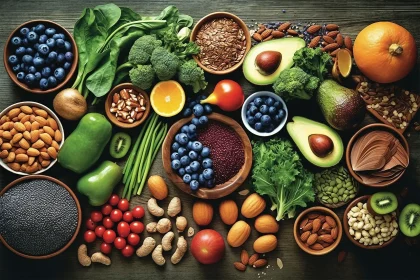
Choose a wide range of colors rather than assigning one vegetable a special protective status. Leafy greens, cruciferous vegetables, tomatoes, peppers, carrots, berries, citrus, and other produce contribute fiber, vitamins, minerals, and phytochemicals, but they work as part of a pattern rather than as a treatment.
If you need a simpler way to improve consistency, use produce as a meal-structure rule: put at least one vegetable or whole fruit into every main eating occasion before you start worrying about specialty powders. For broader food choices, the site’s guide to daily healthy eating habits can help turn that idea into a routine.
Whole grains, beans, lentils, nuts and seeds
These foods make it easier to build a fiber-rich pattern without relying on supplements. Oats, brown rice, barley, whole-grain bread, beans, chickpeas, lentils, nuts, and seeds also increase meal variety and can replace some refined grains or heavily processed foods.
Fiber is useful for overall health and weight management, but avoid claims that a fiber supplement “detoxes estrogen” or directly protects breast tissue. Whole foods bring multiple nutrients together, and that is the reason the dietary pattern is more defensible than isolated extracts.
Protein: include variety
Protein can come from beans, lentils, soy foods, fish, poultry, eggs, dairy foods, nuts, seeds, and other choices that fit your needs. If you are trying to reduce red or processed meat, the site’s examples of foods with protein can help you substitute rather than simply remove food and end up with an unbalanced meal.
Soy foods do not need to be feared
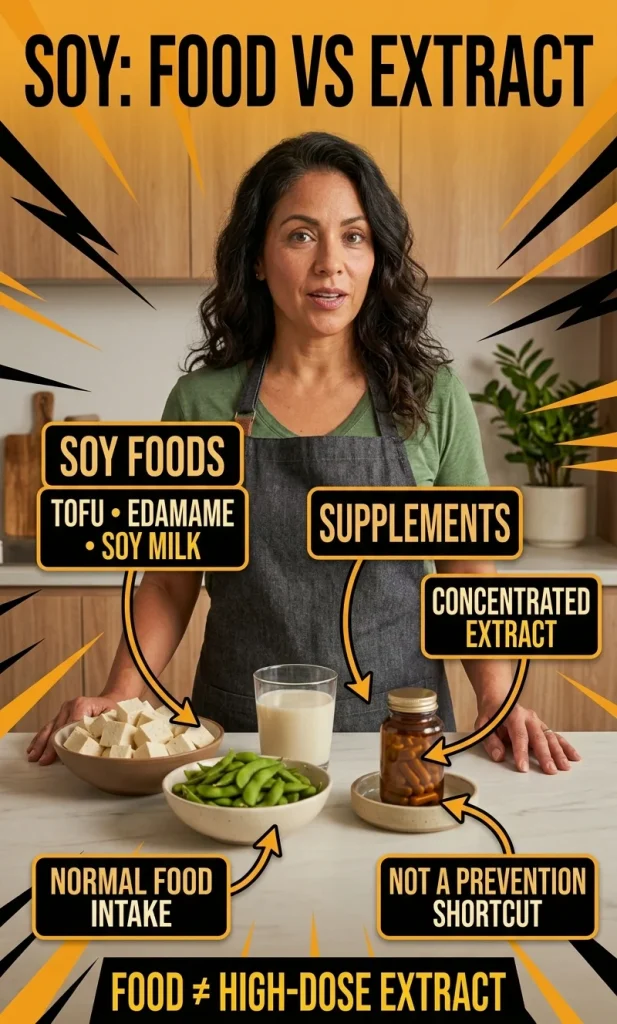
Tofu, tempeh, edamame, and unsweetened soy milk contain isoflavones, which has led to years of confusion because isoflavones can interact with estrogen receptors. Human evidence does not show that normal soy-food intake increases breast cancer risk; the American Cancer Society’s review of soy and cancer states that eating soy foods either lowers the risk of some cancers or has no effect on risk, including for women at higher breast cancer risk.
The important distinction is food versus concentrated supplements. A serving of tofu or edamame is not equivalent to a high-dose isoflavone extract, and supplements should not be treated as a shortcut for cancer prevention.
Alcohol deserves more attention than any superfood
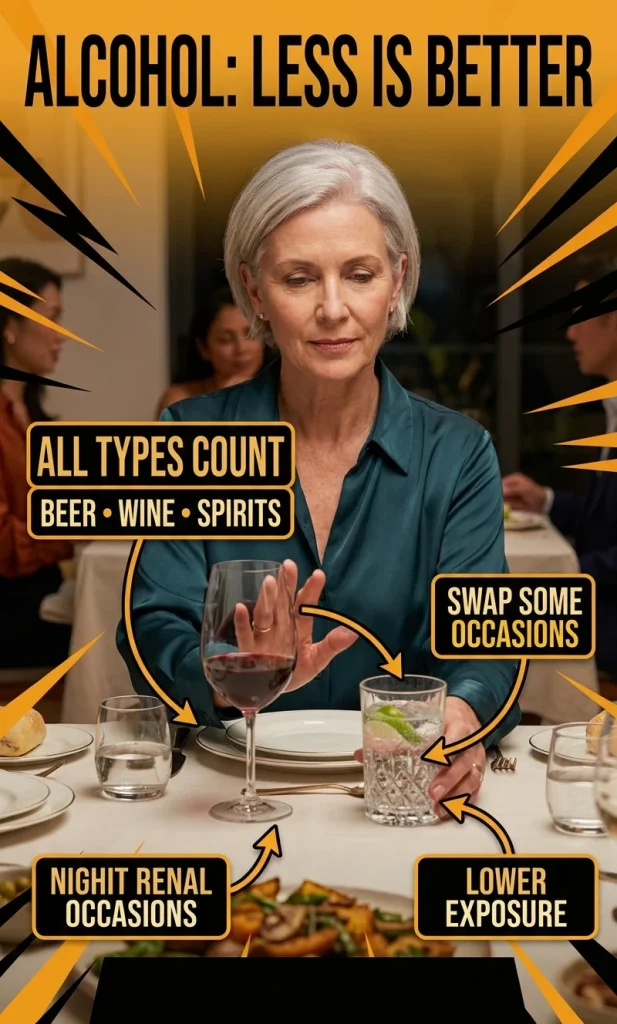
If you make only one breast-specific dietary change, alcohol is the clearest place to look. The World Cancer Research Fund’s alcohol evidence review identifies alcoholic drinks as a cause of postmenopausal breast cancer and probable cause of premenopausal breast cancer, and it advises that for cancer prevention it is best not to drink alcohol.
Wine does not get a special exemption because it contains polyphenols. Beer, wine, spirits, and other alcoholic drinks all expose the body to ethanol; switching drink type does not remove the cancer-related risk. If you enjoy the ritual more than the alcohol itself, replacing some drinking occasions with sparkling water, alcohol-free drinks, tea, or another unsweetened beverage is a practical way to reduce exposure.
Calcium and dairy: useful foods, not mandatory foods
Dairy foods can provide protein and calcium, and some evidence suggests calcium-rich diets may be associated with lower breast cancer risk. That does not make milk or yogurt mandatory, and it does not mean taking high-dose calcium supplements prevents breast cancer.
If you eat dairy, choose options that fit your overall nutrition and calorie needs. If you do not eat dairy, calcium can come from fortified plant milks, calcium-set tofu, some leafy greens, canned fish with edible bones, and other foods; the site’s guide to calcium-rich foods gives more examples.
Highly processed foods matter mainly because of the pattern they create
A packaged food is not automatically harmful, and “processed” is too broad to be a useful warning by itself. The more relevant issue is whether much of your diet comes from energy-dense foods high in added sugar, refined starch, salt, or saturated fat that displace vegetables, whole grains, beans, fruit, and other nutrient-dense foods or make healthy weight maintenance harder.
Use the nutrition label to compare products rather than relying on front-of-pack health claims. The site’s explanation of what a food label tells you is a useful companion when you are comparing added sugar, fiber, saturated fat, sodium, and serving size.
Breast Health Diet Reality Check
Find the eating-pattern change that deserves attention first without pretending a food score can predict breast cancer.
General education only. This does not diagnose disease, calculate breast-cancer risk, or replace screening or individualized medical care.
Next priority
Keep / reinforce
How to read this result
This is a behavior-priority summary, not a medical score. It gives extra weight to reducing alcohol and favors an overall plant-rich, food-first pattern.
What a practical day can look like
Below the table for reference.
| Meal | Simple pattern | Why it works |
|---|---|---|
| Breakfast | Oats, berries, ground flax or walnuts, and plain yogurt or fortified soy milk | Combines whole grain, fruit, fiber, and a protein source. |
| Lunch | Large vegetable salad or grain bowl with beans, tofu, fish, or chicken | Makes plants the base while keeping protein and energy adequate. |
| Snack | Whole fruit with nuts, yogurt, or hummus and vegetables | Adds fiber and satiety without requiring a specialty product. |
| Dinner | Vegetables + whole grain or starchy vegetable + beans/fish/poultry/tofu + unsaturated fat | Keeps the pattern flexible across cuisines. |
| Drinks | Water, sparkling water, tea, coffee, or other unsweetened drinks | Reduces reliance on alcohol and sugar-sweetened beverages. |
Do not let a “breast health” diet create new problems
- Do not cut major food groups without a reason. Eliminating soy, gluten, dairy, or carbohydrates by default can make meals harder to balance without proven breast-health benefit.
- Do not replace food with supplement stacks. More antioxidants or phytoestrogens in capsule form are not automatically better, especially during cancer treatment.
- Do not turn healthy eating into a purity test. A consistent pattern matters more than an occasional dessert, restaurant meal, or convenience food.
- Do not use diet instead of screening or medical care. Nutrition can support health, but it cannot detect breast cancer or replace screening based on your age and individual risk.
- Ask for individualized advice when treatment changes nutrition needs. Surgery, chemotherapy, radiation, endocrine therapy, appetite changes, weight changes, bone-health concerns, and medication interactions can all change what is practical.
The National Cancer Institute’s breast cancer prevention summary is a useful reminder that no lifestyle change guarantees prevention. A strong diet lowers avoidable risk where evidence supports it and improves overall health; it does not make anyone immune to disease.
Breast health diet FAQ
What is the single best food for breast health?
There is no single best food proven to prevent breast cancer. Vegetables, fruit, whole grains, beans, nuts, seeds, fish, soy foods, and other nutrient-dense foods are most useful as parts of an overall healthy eating pattern.
Does soy increase breast cancer risk?
Normal amounts of soy foods such as tofu, tempeh, edamame, and soy milk are not shown to increase breast cancer risk in humans. Concentrated isoflavone supplements are different from food and should not be used as a cancer-prevention shortcut.
Should I avoid dairy for breast health?
No general evidence-based rule requires avoiding dairy for breast health. Dairy can supply protein and calcium, but people who do not eat dairy can meet those needs with fortified alternatives and other calcium-rich foods.
Is alcohol a bigger concern than sugar?
For breast cancer risk, alcohol has a clearer direct evidence link than any single sugary food. Sugary drinks and highly processed foods still matter because they can contribute to excess calories, poorer diet quality, and weight gain.
Do vitamins or antioxidant supplements prevent breast cancer?
No strong evidence shows that vitamin or antioxidant supplements prevent breast cancer. Supplements are best used for a documented nutritional need or medical reason rather than as a substitute for a healthy diet.
Is the diet different after a breast cancer diagnosis?
The same general healthy eating pattern is a useful foundation, but treatment, symptoms, bone health, weight change, and medication interactions can change individual needs. Ask your oncology team or a registered dietitian experienced in cancer care before making major diet or supplement changes.
The bottom line
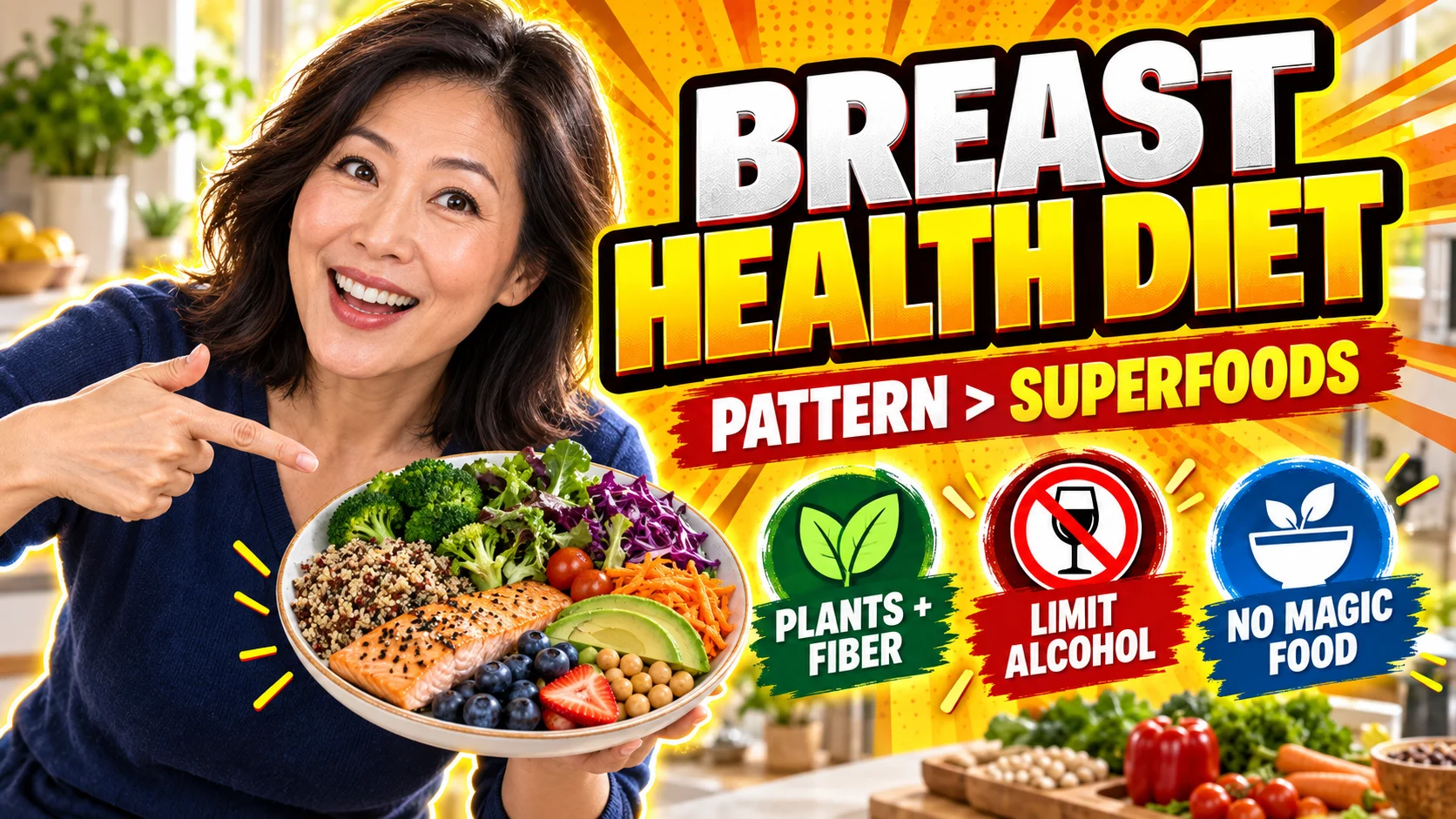
A breast health diet is best understood as a pattern, not a list of miracle foods. Fill most meals with minimally processed plant foods, include adequate protein and healthy fats, keep portions compatible with a healthy weight, treat soy foods as normal foods rather than something to fear, and give alcohol more attention than any advertised “superfood.”
That approach is less dramatic than a detox or supplement protocol, but it matches the evidence more closely. It also gives you a way to eat that supports the rest of your health without making promises nutrition cannot keep.