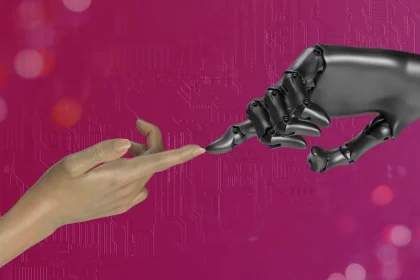
The question of whether a robot can make you cry is a perennial one. While we can’t imagine a robotic soul shedding tears over a human’s inaction, the fact is that we might cry over our own lack of progress. We might even become so frustrated by the lack of progress that we give up on something, if only for the sake of a simple robot. The answer is “yes,” and it may not be too far off.
In the sci-fi classic Short Circuit, a cyborg named John Conner makes his final farewell to his creator, a man he created as a guard for Edward Furlong. In the movie, he becomes his son’s father, protecting him from a world he can’t control. He tears up and wailing, mourning his lost son, and then destroys the computer chip in his head to spare the life of the real one. Likewise, in Blade Runner, a violent replicant named Roy Batty is seen crying over a baby, and this is a moment of intense sadness.
As a cyborg, we feel sadness for the loss of our son, who weeps for his robot father. It is possible that a robot could make us cry for our beloved John Conner, who weeps for the robot. In Blade Runner, a replicant named Roy Batty is programmed to be violent and vengeful. This scenario is far from unimaginable, but the possibility of a cry-bot is still a long way off.
Although we don’t know how robots’ minds work, they do offer a strategy that will help us solve problems. It is called a heuristic. The ability to discover things on our own through emotion has been a key feature of the evolution of life. Research is ongoing in the field of artificial intelligence, and scientists are working to create an artificial intelligence that will mimic human emotions. If a robot can make you cry, it can help you make the right decisions in the future.
The emotions of a robot are a common feature in human society. It can help us solve problems. For example, a robot can make a human cry because it was taught to express emotion in a particular situation. A computer can also make you cry when it is triggered by a particular experience. It can even do this with a robot’s eyesight. It can even learn the feelings of humans.
But is a robot really a robot capable of making you cry? This is the question being debated by AI researchers. In the end, the answer will depend on the specifics of the problem. The heuristic mechanism that a robot has is its capacity to understand and act. As a result, the human emotional response is a heuristic. When a robot experiences emotions, it learns from these experiences.
A robot’s emotional responses may help it solve problems. They are a heuristic, and emotion serves to help humans solve problems. It helps them make rational decisions by guiding them to better decisions and helping them reach their goals. The emotional responses of a robot may even be influenced by a human’s emotion. In this case, emotions are a good thing to be programmed in a machine.
The answer is a simple one: it is not possible to build a robot with emotional reactions. The human brain is capable of experiencing emotions, and a robot can learn from this. The same is true of a robot’s feelings. The latter will be more effective than the former in assessing the emotional reactions of its user. If a robot cannot understand what they’re feeling, it will be useless for them.
Another possible way to make a robot cry is to make it mimic the human. As a result, the emotion of a human will be perceived as a response to a human’s actions. In addition, emotion is an important part of a human being. It helps to feel happy and sad. Its ability to respond to emotions will be appreciated. It will also make a robot’s behavior more natural.