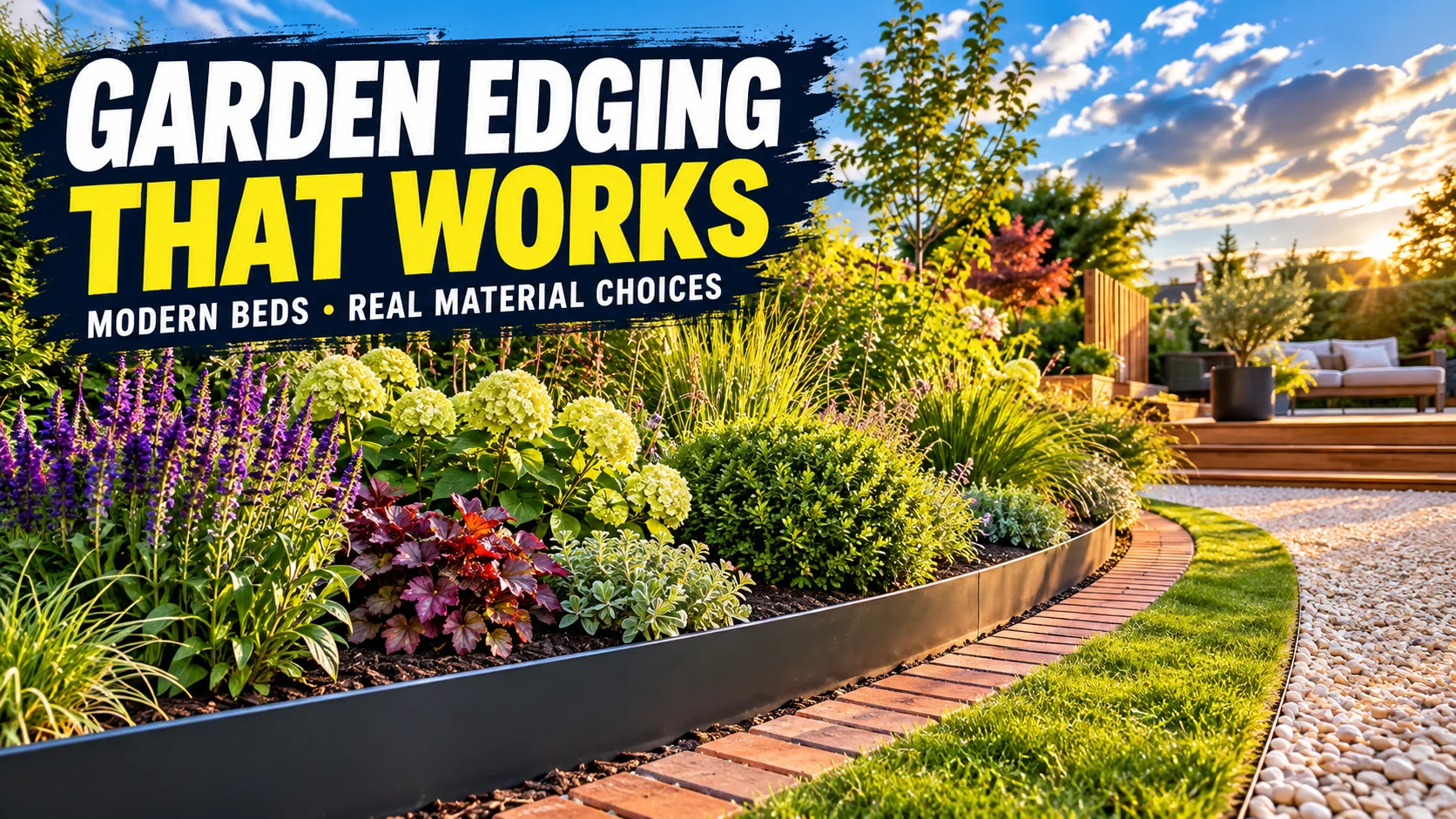

The best modern garden edge is the one that does the work your bed needs: a flush mowing strip beside grass, a restrained metal line for curves, or a stable masonry edge beside a path. Decide first whether it must contain mulch, meet a mower, tolerate foot traffic, or hold back a change in level; those jobs call for different details.
Start with the edge’s job
Look at both sides of the proposed border before choosing its material. Lawn against planting needs a repeatable trimming line; gravel against soil needs a continuous divider; a path beside a raised bed needs a durable face and a firm base. A decorative row of objects can mark a boundary, but gaps and movement make it a poor substitute for a constructed edge.
Use this quick check while sketching the bed:
- Lawn: Can the mower wheel travel beside or across the border without striking a raised lip?
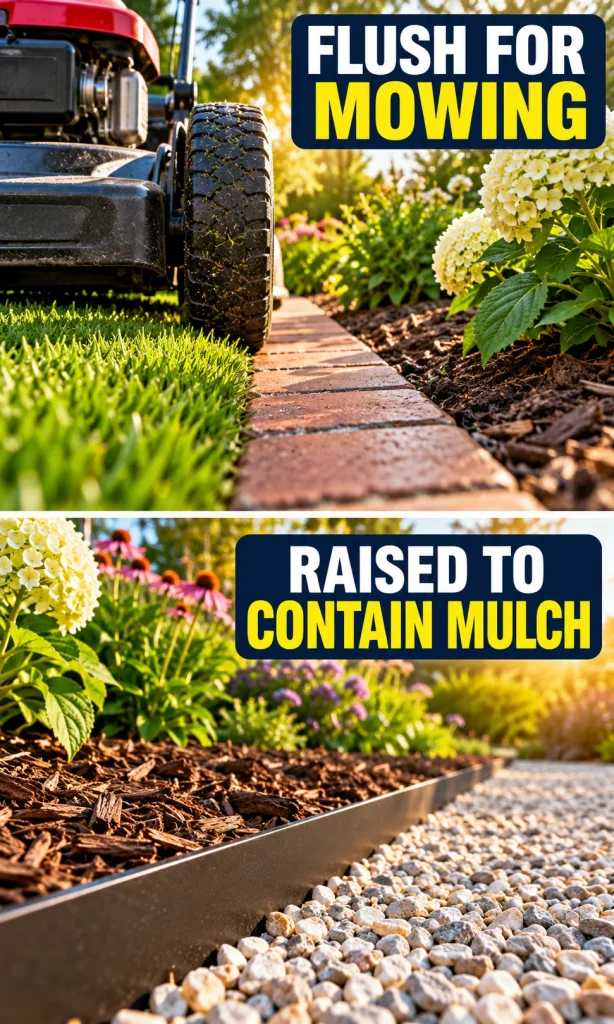
- Mulch or gravel: Is the exposed height sufficient to contain loose material after rain and raking?
- Shape: Will the product follow the actual curve without a series of awkward joints?
- Level: Is the edge merely defining a bed, or resisting soil pressure? Significant height differences need a designed retaining solution.
- Maintenance: Can you replace a damaged unit and still reach grass or weeds at the seam?
The RHS guidance on creating a lawn edge describes cut edges and wood or metal edging as ways to define a border and make trimming easier. It also notes that a distinct drop can help keep mulch in the bed. Those are useful design aims, but the exact depth and construction must suit the soil, product, and use of the space.
Six edging ideas that earn their place
1. Dark steel for a quiet, continuous line
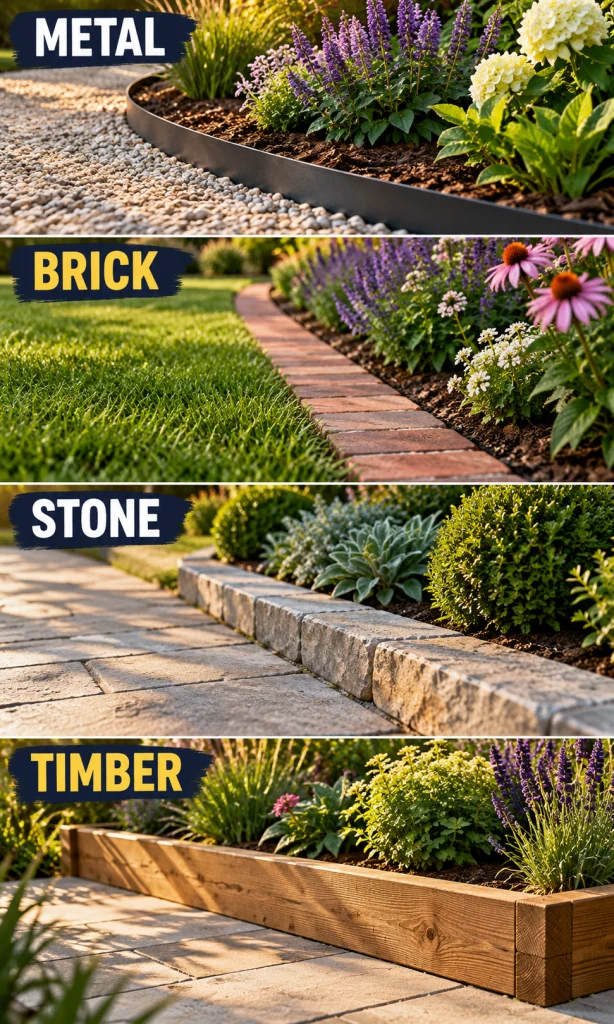
A slim metal profile gives curved beds a precise outline without making the edge the main attraction. Choose a suitable coating or corrosion specification for your climate and keep joints and stakes consistent with the supplier’s installation detail. Avoid exposed sharp corners in places where people or pets brush past the bed.
2. Flush brick or pavers beside lawn
Set a level strip of brick or paving on a prepared base where the mower wheel can pass over it. The strip can reduce the need to hand trim directly against planting, provided joints stay stable and grass does not colonize them. Select units and bedding appropriate to local frost, drainage, and pedestrian use; a loose line of bricks simply placed on soil tends to shift.
3. Stone for a wider, more tactile border
Stone reads as a deliberate material choice when its width and color relate to nearby paving or walls. Irregular pieces can suit a relaxed bed, while cut units can make a crisp contemporary course. If the edge will carry a person’s weight or border a path, build its base for that use rather than relying on the weight of the stones alone.
4. Timber for a warm, replaceable frame
Timber is useful for straight beds and small changes in planting height, especially where it echoes a deck or fence. Keep wood clear of persistent standing water, use suitable fixings, and expect weathering and eventual replacement. For edible beds, check the treatment and intended use of the exact product instead of assuming every reclaimed or treated timber is equivalent.
5. Concrete or precast units for a robust straight run
Precast units work where you want a regular module and predictable alignment. They need a compacted and drained base, especially beside paving, and curves may call for purpose-made pieces or careful cuts. Use actual retaining products and an appropriate design when the bed is high enough to impose meaningful soil pressure.
6. A cut lawn edge for the simplest garden line
Where the planting bed meets lawn and there is no need for a hard border, a neatly cut drop can look exceptionally clean. It costs less in materials, though it requires periodic recutting as grass advances and rain softens the profile. See the RHS lawn-edge maintenance advice for the ongoing trimming involved.
Compare the trade-offs before buying
| Material | Best use | Watch for |
|---|---|---|
| Metal strip | Curves and narrow visual lines | Sharp ends, anchors, product-specific height |
| Flush brick or pavers | Mower passage and straight or broad curved edges | Base preparation and migrating joints |
| Stone | Broad, tactile borders | Trip hazards and movement on poor bases |
| Timber | Warm straight framing | Ground-contact life and treatment suitability |
| Cut edge | Simple lawn-to-bed separation | Recurring maintenance |
A border can slow material migration, but it does not make a planting bed weedproof. Windblown seed can establish in mulch and roots can cross underneath or around an edge. The Oregon State Extension discussion of mulch and weeds explains why even fabric below mulch cannot permanently prevent weeds above it.
Detail the transition, then choose the finish
Mark the final bed line with a hose or string and view it from the main approach, seating area, and windows. Confirm the finished level of the lawn, path, and mulch before setting the top of the edge; a lip that looks modest on paper can catch a mower or become a trip point. Locate buried irrigation, cables, and utilities before digging, and follow the product instructions for depth, base, anchoring, and joints.
Keep a small test run in place long enough to see where water flows and where wheels or feet travel. If the site slopes, drains toward a building, or needs to retain a substantial depth of soil, ask a qualified local professional to detail that section. A lightweight decorative border should never be expected to act as a retaining wall.
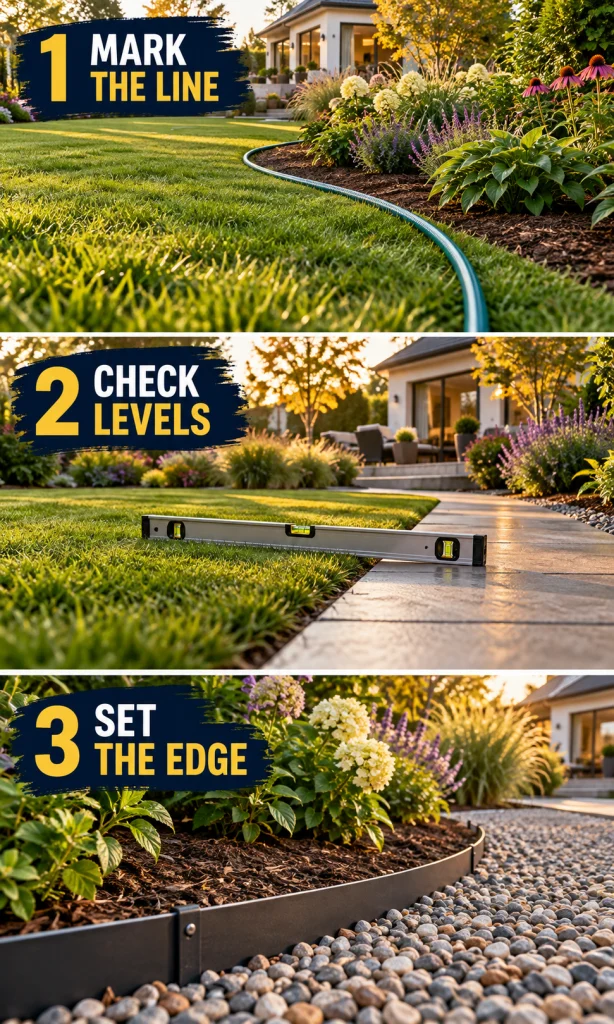
For a wider design context, see garden borders and edging ideas, gardens on slopes, and small garden design. A narrow strip can often be the strongest choice when planting, paving, and the edge each have a clear role.
Frequently asked questions
What edging is easiest to mow beside?
A flush, stable paver or brick mowing strip often lets a wheel run over the border. Check the mower, joint stability, and finished levels before committing to the full run.
Does metal edging stop weeds?
It defines the boundary and can slow encroaching grass if installed appropriately. It does not prevent seeds germinating on the bed side or persistent roots bypassing the barrier.
Can I use bottles or logs as a modern bed edge?
They can be decorative in a low-traffic area, but they vary in stability and are awkward to trim against. Avoid glass where it can break or be struck by a mower; use a more dependable constructed edge where the border must contain soil or support traffic.
Can ordinary edging hold back a raised bed on a slope?
Do not assume it can. Once the edge must resist retained soil or a change in grade, its foundation, drainage, and structure need to be designed for that load.
Next step
Pick one short section that represents the hardest junction in your garden: the tightest curve, the mower crossing, or the wettest part of the path. Mock up the edge there, check its height and stability, then carry the same construction through the rest of the bed. Consistent installation will do more for the final appearance than adding another decorative material.
Edging Choice Studio
Find a border that fits the bed, the surface beside it, and the work it has to do.
Material fitInstallation checksDescribe the junction
Your edging direction
Choose the conditions and press “See suitable edges.”