
Baked potatoes do not automatically make you gain weight. The portion, added fat and toppings, and your overall eating pattern matter more than the fact that a potato was baked. Start by checking the potato itself, then the ingredients and foods served with it.
| What changes? | Why it matters | Useful next step |
|---|---|---|
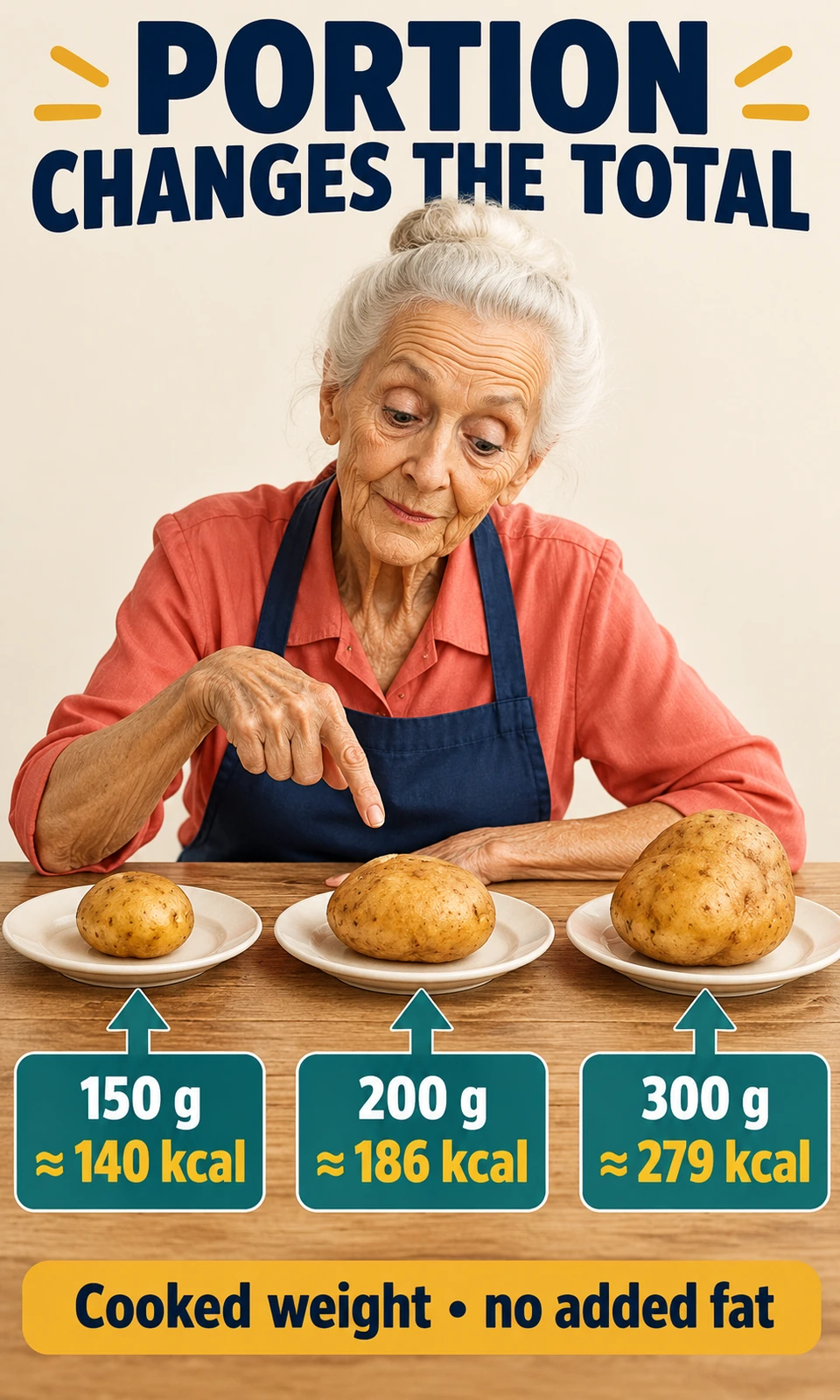
| Potato size | More potato means more energy and carbohydrate. | Compare cooked portions rather than the word “medium”. |
| Toppings and cooking fat | Butter, oil and cheese add their own calories. | Measure the additions you use. |
| The rest of the meal | Replacing rice differs from adding potato alongside rice. | Decide where the potato fits on the plate. |
| Your health needs | Blood glucose, appetite and prescribed diets change portion decisions. | Use your own care plan when one applies. |
How many calories are in a plain baked potato?
A plain, skin-on baked potato has about 93 kcal per 100 g in the USDA baked-potato reference entry. That puts a 200 g cooked portion at about 186 kcal before oil, butter or other toppings. A potato described as small, medium or large can differ substantially in actual weight.
Most of that energy comes from starch, while an uncoated potato contains very little fat. The skin contributes fiber, and the potato also supplies nutrients such as potassium. Baking is a dry-heat cooking method; it does not turn the potato into a deep-fried food.
- Plain means plain: the reference excludes added cooking oil and toppings.
- Match the entry to the food: cooked potato weight belongs with cooked nutrition data.
- Treat calories as estimates: variety, moisture loss and the amount eaten affect the result.
Water loss explains a common counting mistake: a potato weighs less after baking even though water itself has no calories. Using its lighter cooked weight with a raw-potato entry mixes two different reference states. Weighing the finished edible portion gives you a more consistent answer to how much potato you actually ate.
Estimate your cooked portion
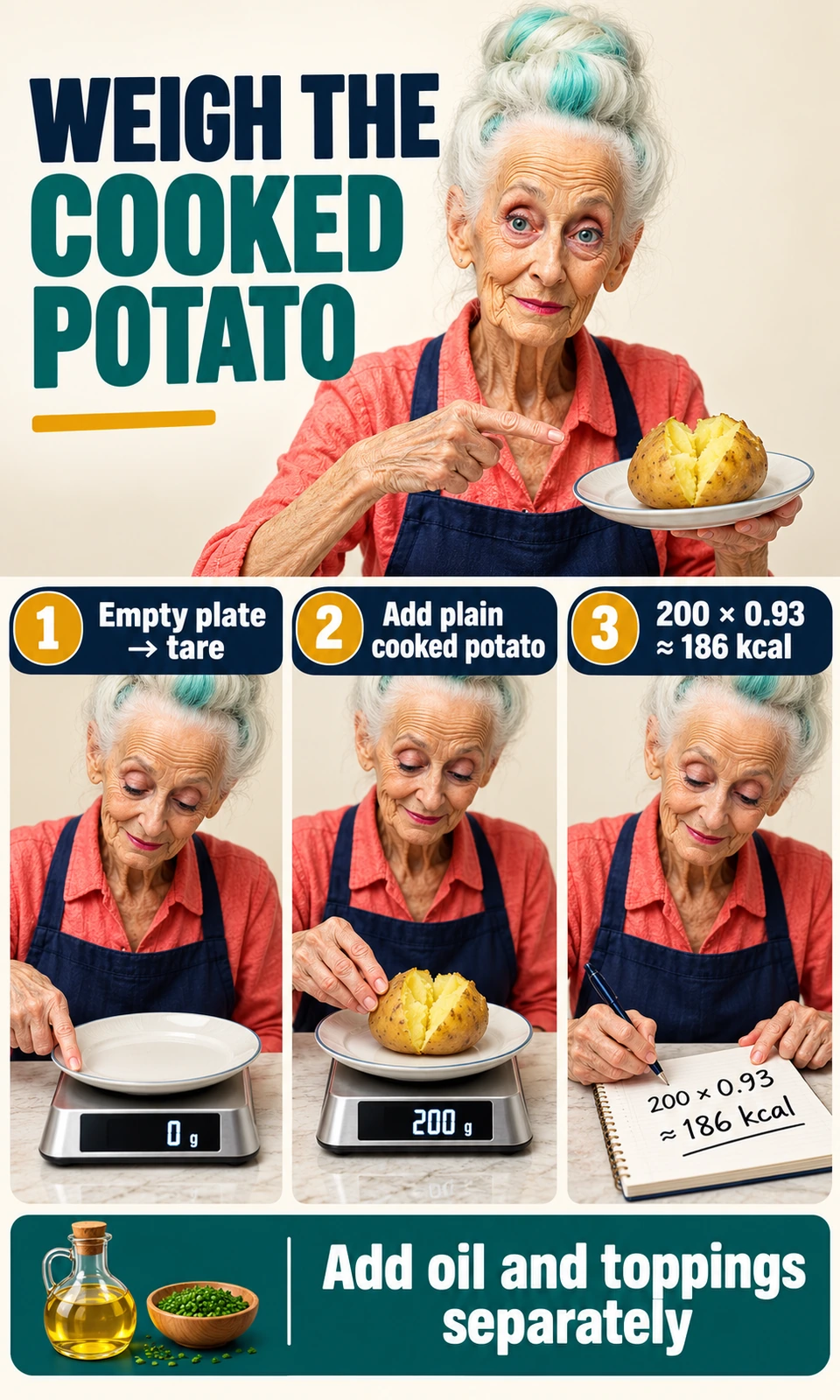
- Place an empty plate on a kitchen scale and press tare so the display returns to zero.
- Add the plain cooked potato, including the skin if you will eat it, and read the weight in grams.
- Multiply the grams by 0.93 for this reference estimate: 200 g × 0.93 = about 186 kcal.
- Count cooking oil and toppings separately; if you leave some potato, the amount eaten is smaller than the amount served.
You do not have to weigh every meal to eat well. If counting feels burdensome, choosing a smaller potato and keeping the meal proportions consistent is a simpler starting point. The separate baked potato in oven guide covers cooking texture and doneness, rather than weight-management portions.
How much difference do butter, cheese and other toppings make?
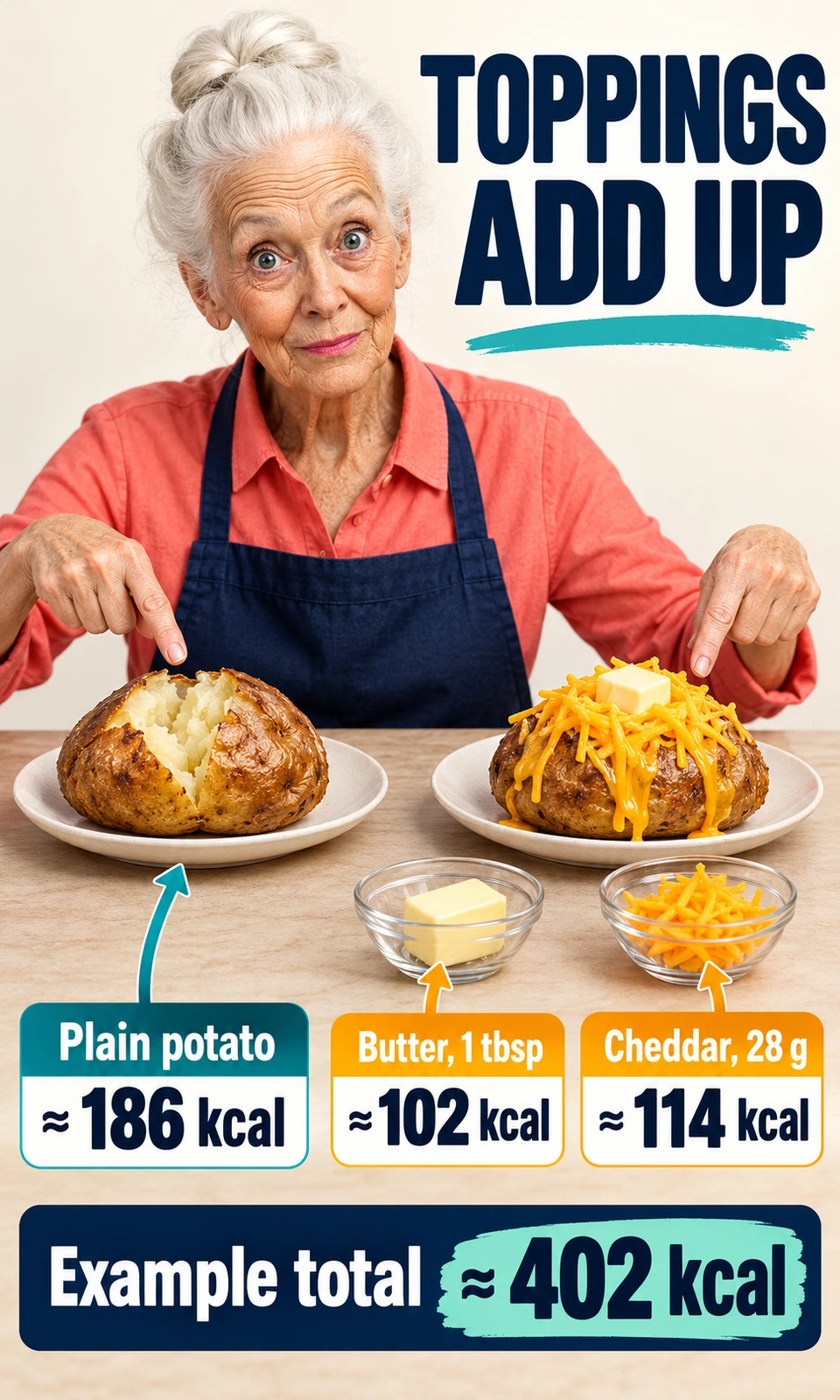
Toppings can add as much energy as the potato, depending on their portions. A spoonful is not a reliable measurement because a level teaspoon, a tablespoon and a heaped serving spoon hold different amounts. Oil used on the skin also belongs in the total, even when the potato looks plain after cooking.
For an illustrative comparison, start with the same 200 g potato in every row below. The additions change while the base portion stays fixed, so you can see which ingredient changes the arithmetic. These rounded generic values are estimates; the nutrition label on your product is the better guide when available.
| Serving example | Approximate energy | Interpretation |
|---|---|---|
| 200 g plain baked potato | 186 kcal | Base potato only. |
| Base + 1 tbsp butter (about 14 g) | 288 kcal | About 102 kcal added. |
| Base + 28 g cheddar | 300 kcal | About 114 kcal added. |
| Base + both butter and cheddar | 402 kcal | About 216 kcal added. |
The butter-and-cheddar example is about 402 kcal because the three ingredient estimates are added together. It is not a threshold above which a food becomes “fattening,” and it does not predict a specific amount of weight gain. Your actual portion, brand and other meal ingredients can produce a different total.
Plain yogurt, salsa, chives and cooked vegetables can offer different flavors and textures, but none needs a weight-loss label to be useful. Compare the amount you would actually use, including sweetened yogurt or oily sauces if those are your choices. Butter or cheese can still fit; measuring them simply makes the decision more deliberate.
Check a topping without guessing
- Choose the topping and find the label’s serving weight or household measure.
- Measure the portion you intend to use with a scale or level measuring utensil that matches those units.
- Work out how many label servings that portion represents, then multiply by the calories per serving.
- Add the topping to the potato after measuring; include any separate oil or sauce you used.
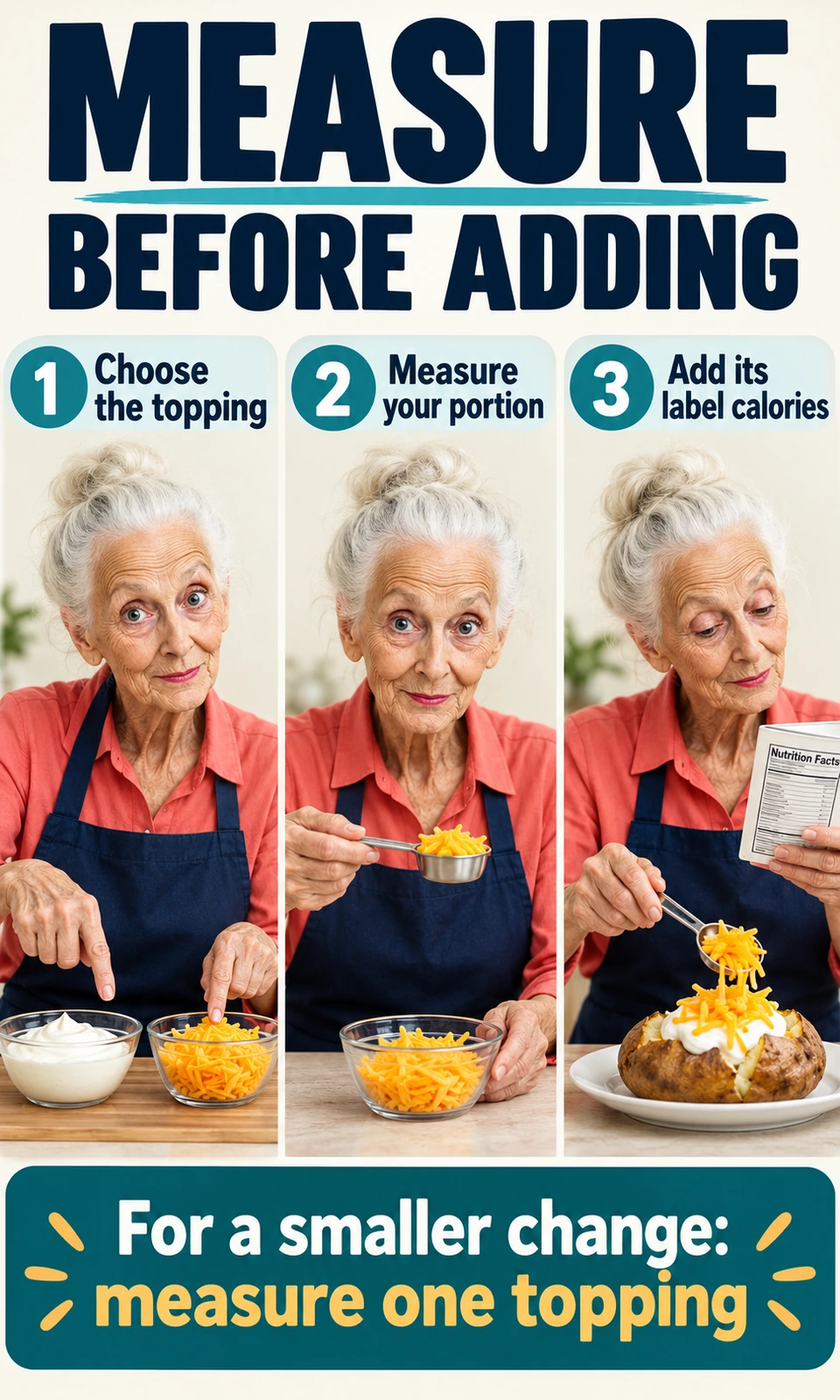
If you want one manageable adjustment, measure just the topping you use most often. That gives you a useful comparison without replacing every familiar ingredient at once. For the broader question of keeping meals satisfying, filling foods for weight loss explains how meal composition can matter alongside energy.
Can a baked potato fit into a filling weight-management meal?
A baked potato can fit into a weight-management meal when the complete meal suits your needs. It supplies carbohydrate and some fiber, but it is not a complete meal by itself. Adding a protein food and nonstarchy vegetables broadens the nutrient mix and can make a more substantial meal than relying on potato alone.
- Give the potato a role: decide whether it replaces another starch or is an intentional extra.
- Include protein: use an option such as fish, chicken, tofu or another food you normally eat.
- Keep vegetables visible: broccoli, salad greens or other nonstarchy vegetables provide a different food group.
- Adapt the portion: appetite, activity and any prescribed diet matter more than a universal potato count.
The Diabetes Plate method offers a practical starting arrangement: half nonstarchy vegetables, one quarter protein and one quarter carbohydrate foods. In that method, potato belongs in the carbohydrate quarter rather than the nonstarchy-vegetable half. Plate proportions are a visual guide, not a fixed gram allowance or a guarantee about glucose or weight.
Build the plate
- Start with a roughly 9-inch / 23 cm plate, using the inner eating surface rather than a wide decorative rim.
- Fill about half with nonstarchy vegetables, such as broccoli and salad.
- Use about one quarter for a protein food, such as cooked chicken or tofu.
- Put a suitable portion of baked potato in the carbohydrate quarter, then add measured toppings if desired.
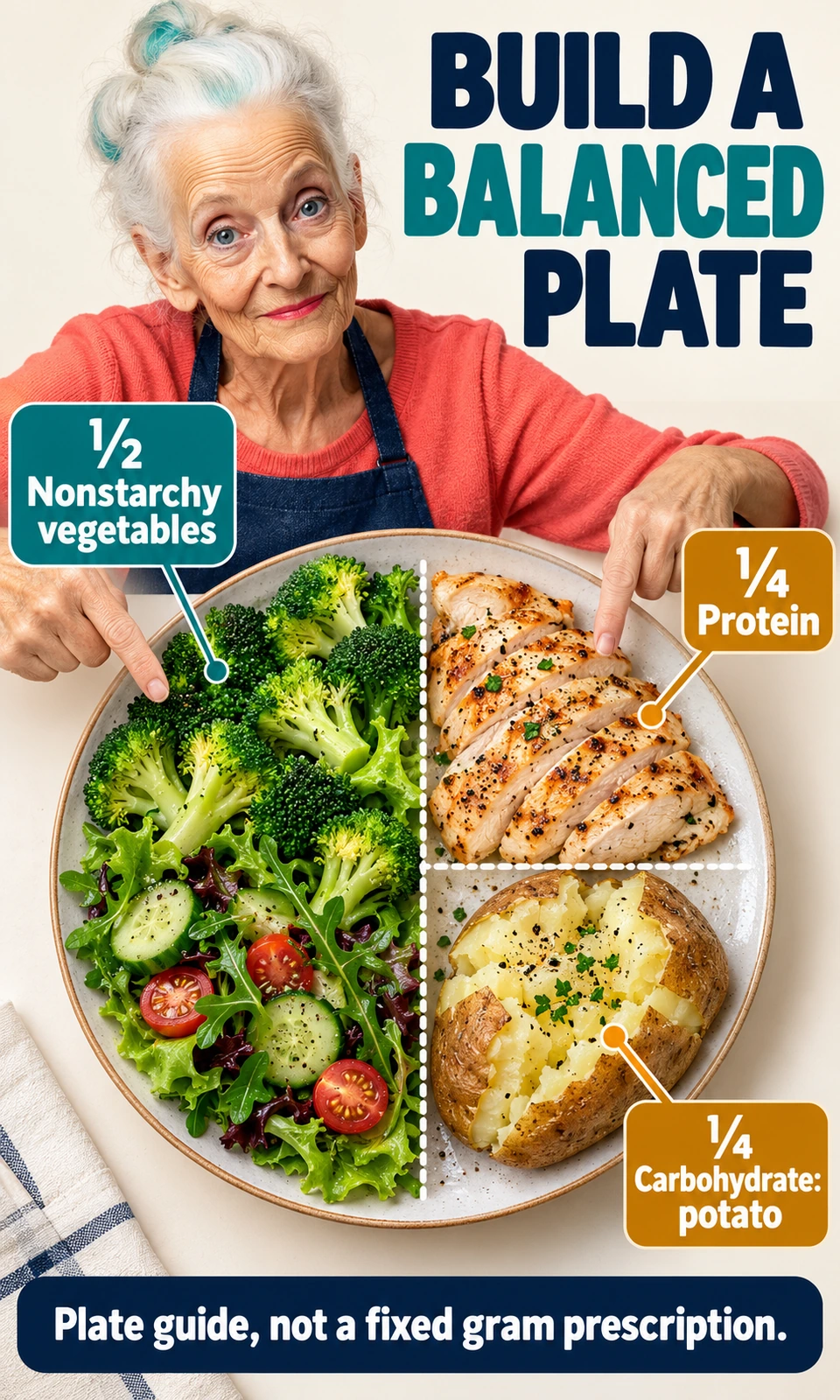
For example, a meal of chicken, broccoli and potato uses the potato as its starch. You can make the same arrangement with ready-to-eat protein and vegetables when cooking energy is limited. Beans can provide protein too, but they also contribute carbohydrate, so a beans-and-potato meal needs a little more individual portion judgment.
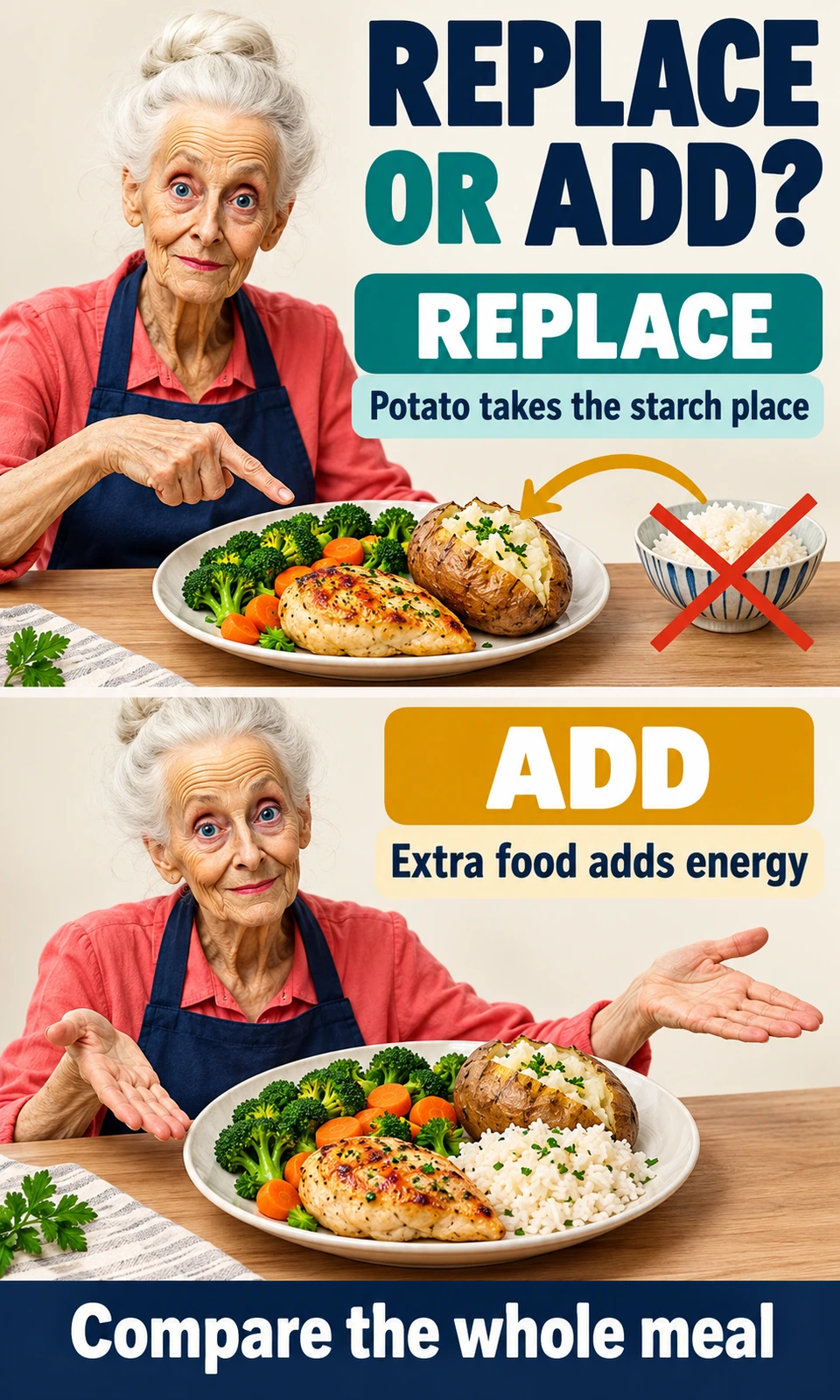
The question “What is the potato replacing?” often reveals more than asking whether potatoes are good or bad. Swapping a usual rice portion for potato creates a different meal from keeping all the rice and adding a potato. A smaller potato will not necessarily reduce the total if every other part of dinner stays the same.
Weight-loss research supports including potatoes within an eating pattern rather than treating them as a special fat-burning food. In a 12-week randomized trial involving 90 adults, all groups were asked to eat five to seven potato servings a week and modest weight loss occurred, without significant between-group differences. Because there was no potato-free comparison and adherence to the intended glycemic-index diets was difficult, the trial does not establish that potatoes independently cause weight loss.
For a wider food-group explanation, continue with MyPlate explained. Its general framework is distinct from the diabetes-specific plate proportions used for the example above. The practical goal here is a meal with a deliberate starch portion, an adequate protein choice and vegetables you will actually eat.
Check your own serving
Use the Potato Portion Check to combine a cooked potato estimate with the label calories for your measured additions. The result describes the serving you enter, rather than predicting weight change or choosing a personal calorie target. The manual weighing, topping and meal-building instructions above remain available without the experience.

Potato Portion Check
See the potato estimate, then add the calories from your toppings.
Cooked weight Printable A4 cardFood-energy estimate only. This does not predict weight change, set a calorie target, or replace a prescribed diet.
Illustrative starting portion
186 kcal200 g × 0.93 ≈ 186 kcal potato + 0 kcal additions.
Compare the whole meal: the potato takes the place of your usual starch.
Rounded generic estimate. Variety, moisture and products vary. Numbers describe this serving, not a “good” or “bad” food.
Manual method and limits
Tare a plate, weigh the plain cooked portion, and multiply grams by 0.93. Add label calories for the measured oil and toppings. The reference is approximately 93 kcal per 100 g for baked potato, flesh and skin, without salt. This is an estimate, not laboratory analysis of your meal. A potato portion does not establish weight loss, glucose response or medical suitability.
Use your care team's advice for carbohydrate or potassium restrictions. No entries are stored or sent by this experience.
Do blood sugar and cooled potatoes change the weight-gain answer?
Blood glucose response and body-fat gain are different outcomes. Potato starch is digested into glucose, and the response varies with portion, preparation, the rest of the meal and the individual. A glycemic-index value describes a standardized test response; it cannot by itself predict body-weight change or the exact glucose result for one person’s meal.
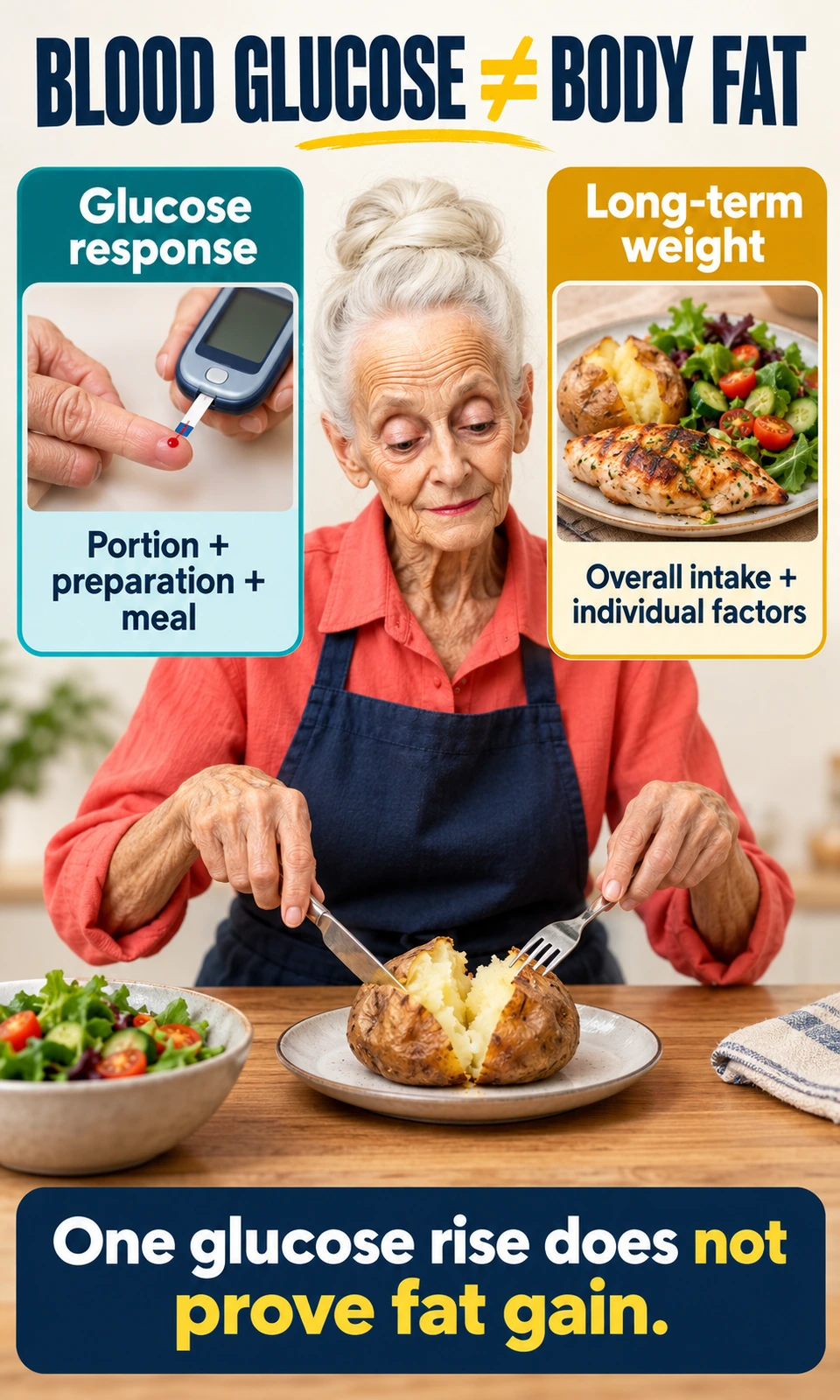
Long-term weight is affected by sustained energy intake relative to use, alongside factors such as medications, sleep, medical conditions and biology. The NIDDK explanation of weight-related factors covers those influences. A single glucose rise after a potato meal is not evidence that the potato has immediately become belly fat.
What cooling can and cannot do
Cooling cooked potato can increase the fraction of starch that resists digestion in the small intestine. That is a change in starch structure, not removal of the carbohydrate on the plate. It does not justify treating a chilled potato as calorie-free or subtracting a fixed percentage from its estimated energy.
A small crossover study of baked-and-chilled versus boiled potatoes found lower glucose readings at some early time points in 30 women with elevated fasting glucose and insulin. Overall glucose area under the curve and subjective satiety did not differ, and preparation as well as temperature differed between meals. Those short-term results do not demonstrate long-term fat loss or guarantee the same response after reheating.
If you are keeping leftovers
- Use protected hands to remove any foil, then place leftovers in a shallow food-storage container. Do not wait for a whole batch to become completely cold on the counter.
- Refrigerate within 2 hours of cooking, or within 1 hour when the surrounding temperature is above 32°C / 90°F. Keep the refrigerator at 4°C / 40°F or colder.
- Date the container and use refrigerated leftovers within 3–4 days. Discard potatoes left out beyond the relevant time limit; reheating cannot reliably rescue unsafe storage.
- Reheat safely stored leftovers to 74°C / 165°F in the center, checked with a food thermometer. Treat cold storage and reheating as safety steps, not a weight-loss method.
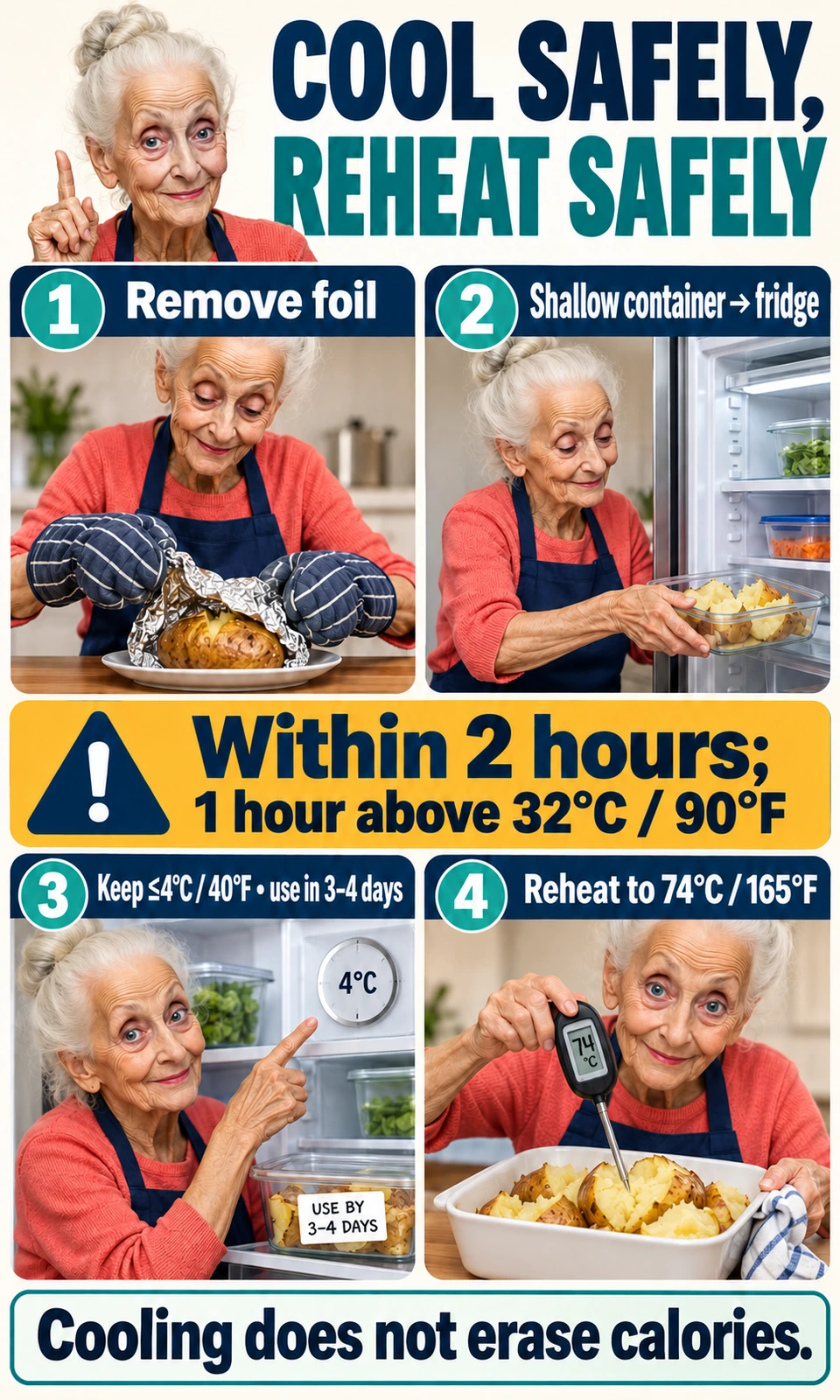
These handling limits follow USDA leftover food-safety guidance. The oven-baking guide linked above covers the cooking and leftover workflow in more detail. A cooled potato is optional; enjoying a freshly baked one can also fit a balanced meal.
If you have diabetes, choose portions with your diabetes care team rather than using a blanket ban on potatoes or a fixed “few servings a week” rule. If you have a prescribed carbohydrate or potassium restriction, that plan takes priority over this general example. Seek professional advice for unexplained weight changes or when food tracking becomes distressing.
Frequently asked questions
Can I eat a baked potato every day?
For many people, a baked potato can be part of a varied daily eating pattern. Its portion and accompanying foods still matter, and eating one daily does not guarantee weight loss or weight gain. Follow any carbohydrate, potassium or other dietary limits prescribed for your health needs.
Are sweet potatoes automatically better for weight loss?
No. Sweet potatoes and white potatoes differ in nutrients and flavor, but either can fit a balanced meal. Compare the actual serving and preparation rather than assuming that one variety cancels out large portions or energy-dense toppings.
Does eating a potato at night automatically cause weight gain?
No. Eating a potato in the evening does not automatically determine whether you gain body fat. Consider the overall eating pattern and whether the potato is part of dinner or an extra meal; individual schedules, sleep and health needs can also influence eating choices.
Is a baked potato suitable for a strict ketogenic diet?
A usual baked-potato portion contains enough carbohydrate to be difficult to fit into a strict ketogenic plan. That is a compatibility issue with a particular eating pattern, rather than proof that potato causes weight gain. Medically prescribed ketogenic diets need specialist guidance.
Do I need to remove the skin?
You can eat the skin of a sound, well-cleaned baked potato if you enjoy it and tolerate it. Keeping it retains some fiber, but removing it does not automatically make the potato fattening. The edible amount and additions remain relevant either way.
Your next meal: a quick action checklist
- Choose a potato portion that fits your appetite and meal.
- Measure the topping you want to understand better.
- Decide which other starch the potato replaces, if any.
- Serve protein and nonstarchy vegetables alongside it.
- Use your prescribed diet when one applies, and refrigerate leftovers promptly.