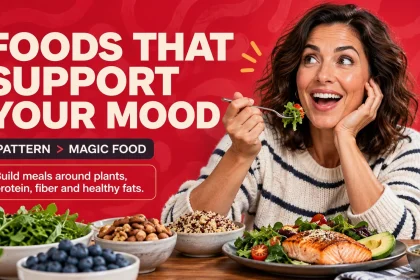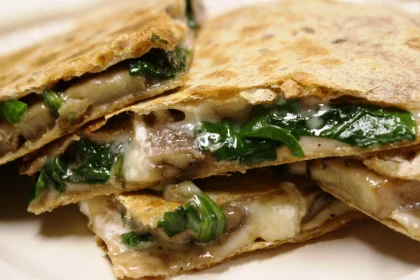

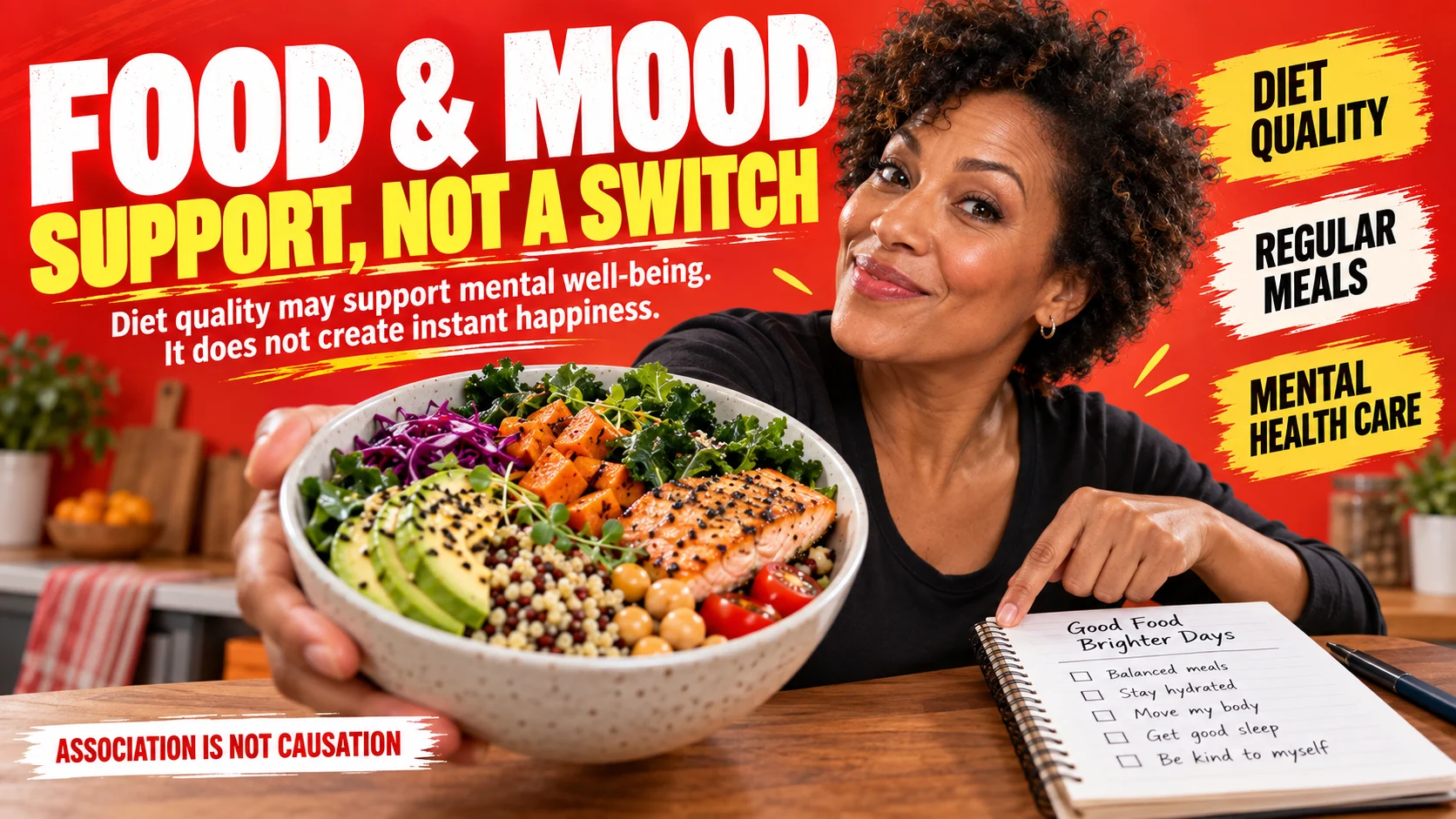

Food can support mental well-being, but no single “feel-good food” can make you happy instantly or treat depression on its own. The most defensible advice is to build a consistently nourishing eating pattern, notice how meal timing and caffeine affect you personally, and treat persistent or severe mood symptoms as a health issue rather than a nutrition problem to solve alone.
That distinction matters because the research is promising in places but not settled. Some randomized-trial reviews report improvements in depressive symptoms with Mediterranean-style dietary interventions, while other reviews find the evidence too inconsistent or low-certainty to conclude that diet itself treats depressive disorders. The practical takeaway is useful without overselling the science: eat in a way that supports your overall health, but do not turn a plate of food into a mental-health promise.
Can food really improve your mood?
There are two different questions hiding inside that sentence. The first is whether eating can change how you feel over the next few hours; the second is whether a long-term dietary pattern can prevent or treat a mental-health condition. Those are not the same claim, and the evidence is much stronger for some parts than others.
In the short term, food can affect hunger, fullness, energy availability, hydration and the effects of caffeine. If you have gone a long time without eating, for example, having a normal meal may make you feel more comfortable, less distracted or more physically steady. That is a real experience, but it is not evidence that one ingredient “boosted serotonin” or switched happiness on.
Over the longer term, healthier dietary patterns are associated with better mental-health outcomes in many observational studies. Randomized trials are harder to interpret, and recent systematic reviews do not all reach the same conclusion about the size or certainty of any antidepressant effect. Association is therefore not the same thing as proof of causation.
What matters more than a list of “happy foods”
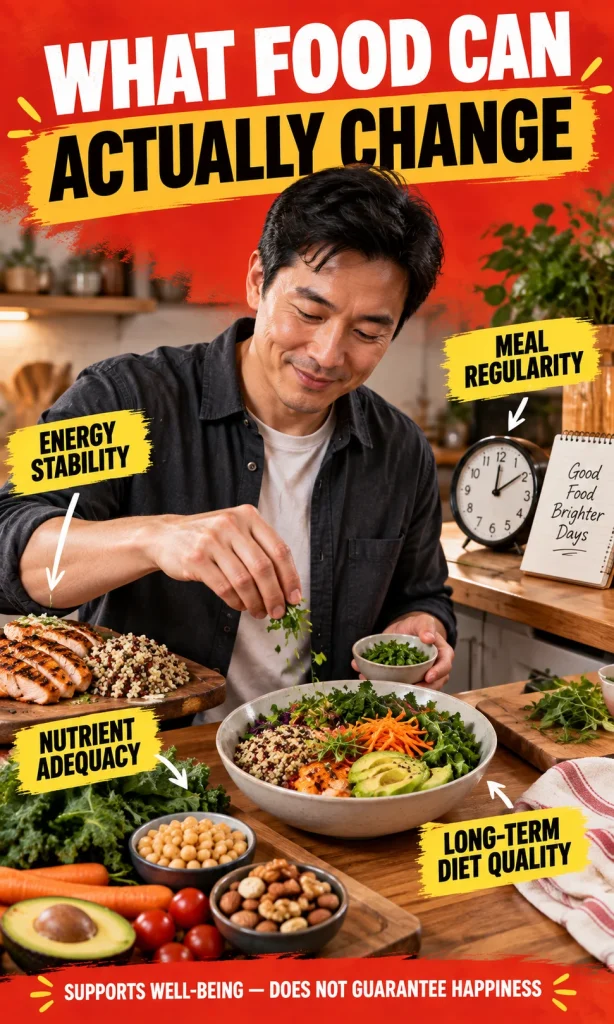
A better question is not “Which food makes me happy?” but “What eating pattern is realistic enough to support me repeatedly?” A useful pattern is varied, nutritionally adequate, flexible, affordable and compatible with your culture, preferences and medical needs. The World Health Organization’s healthy-diet guidance emphasizes whole grains, vegetables, fruit, pulses, nuts and other nutrient-dense foods rather than one special ingredient.
If your current meals feel chaotic, start with structure before optimization. The article on getting healthy eating habits back on track is a useful companion when the main problem is consistency rather than food knowledge. For day-to-day choices, these daily diet tips for eating healthy can help turn broad nutrition advice into routine decisions.
| Food pattern | Why it is useful | What not to claim |
|---|---|---|
| Vegetables and fruit | Add fiber, micronutrients, variety and volume to meals. | One fruit does not “cure” low mood or guarantee happiness. |
| Whole grains, beans and lentils | Provide high-fiber carbohydrate and useful nutrients in a balanced pattern. | They do not provide a direct, predictable serotonin boost. |
| Protein foods | Help build a more complete meal and support normal body functions. | More protein does not automatically mean a better mood. |
| Nuts, seeds, olive oil, avocado and fish | Can contribute unsaturated fats and other nutrients. | Omega-3-rich foods are not a substitute for depression treatment. |
| Enjoyable foods, including chocolate | Pleasure, culture and satisfaction can be legitimate parts of eating. | A cocoa percentage does not turn chocolate into an antidepressant. |
Build the plate before you chase the nutrient
Nutrition headlines often isolate magnesium, folate, omega-3 fats, vitamin C, tryptophan or antioxidants and then jump directly to a mood claim. Nutrients matter, especially when a true deficiency exists, but most readers do not need to micromanage a meal around neurotransmitter chemistry. A balanced plate is a more reliable starting point.
A practical meal can combine a generous plant component, a high-fiber carbohydrate, a protein source and an unsaturated-fat source. That might look like lentils with brown rice, vegetables and olive oil; eggs with whole-grain toast, tomatoes and avocado; or fish with potatoes, greens and a seed-based topping. The exact foods can change while the structure remains useful.
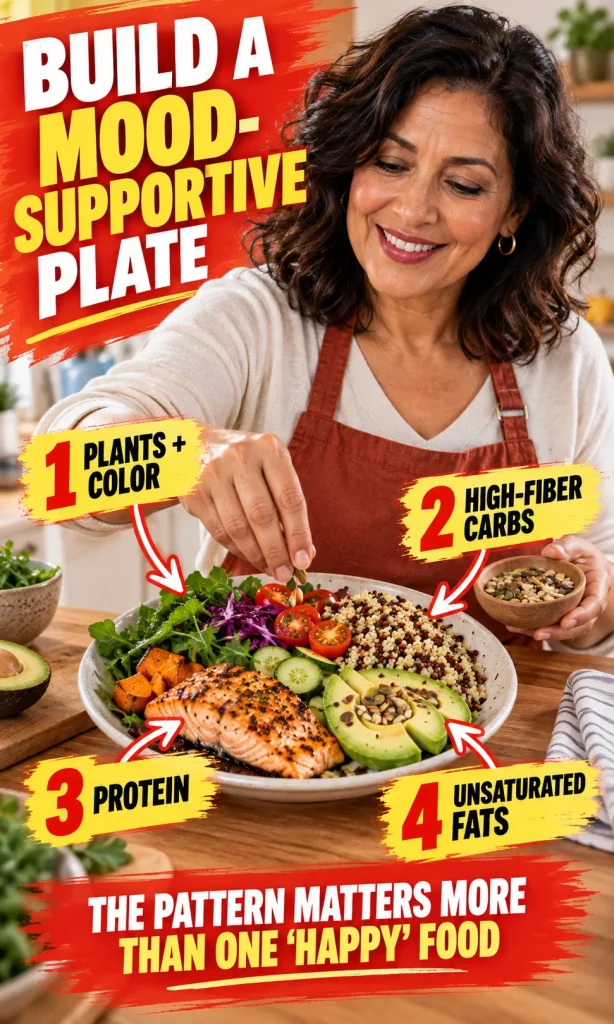
If cost is the main barrier, a balanced pattern does not require expensive wellness products or supplements. Use staples you can repeat: oats, rice, potatoes, frozen vegetables, canned beans, eggs, tinned fish where suitable, seasonal fruit, peanut butter, yogurt or tofu. The guide to healthy meal plans on a budget can help make that structure more realistic.
What about salmon, walnuts, berries and dark chocolate?
These foods can all fit into a healthy diet, but they should not be marketed as instant mood medicine. Fish can contribute long-chain omega-3 fatty acids, yet the NIH Office of Dietary Supplements notes that evidence for omega-3 supplements in major depressive disorder has not been strong enough to treat them as a stand-alone solution. Food sources remain nutritious choices without needing a psychiatric claim attached to them.
Walnuts and seeds contribute unsaturated fats and other nutrients. Berries and citrus are useful fruit choices. Dark chocolate can be enjoyable and may fit comfortably into a balanced diet, but the idea that a specific cocoa percentage makes it inherently “healthy” or antidepressant is too simplistic.
The same caution applies to fermented foods and the gut-brain axis. The gut and brain communicate through multiple biological pathways, and this is an active area of research, but it is still a leap to say that a specific probiotic food will fix anxiety or depression. If digestion itself is the issue, start with the fundamentals in how digestion actually works rather than assuming every mood change begins in the gut.
Meal timing can matter even when the food is ordinary
Sometimes the most useful change is not adding a superfood. It is avoiding the pattern where breakfast disappears, lunch happens at 4 p.m., caffeine carries the afternoon and dinner arrives when you are exhausted. That pattern can make hunger, concentration and sleep harder to read.
Try identifying the longest disruptive gap in your day and fixing only that first. A simple breakfast, planned snack or more reliable lunch may be more useful than buying an expensive powder. This is also why “processed” does not automatically mean nutritionally useless; convenience foods can sometimes make a consistent eating pattern possible. The article on reasons to eat processed food according to a dietitian explains why the category needs more nuance.
Use this food-and-mood reality check
The interactive experience below does not score your mental health and does not pretend to measure neurotransmitters. It looks at a few practical food-pattern factors, then separates nutrition changes from situations where professional mental-health care deserves priority.
Mood Meal Reality Check
See which parts of your eating pattern may support steadier energy and long-term diet quality—and when mood symptoms deserve more than nutrition self-care.
Build the foundation
What to do next
What this does not mean
Your food-pattern priorities
Practical nutrition support for well-being. Not a diagnosis or mental-health treatment plan.
Priority actions
Important limit
When low mood is not a food problem
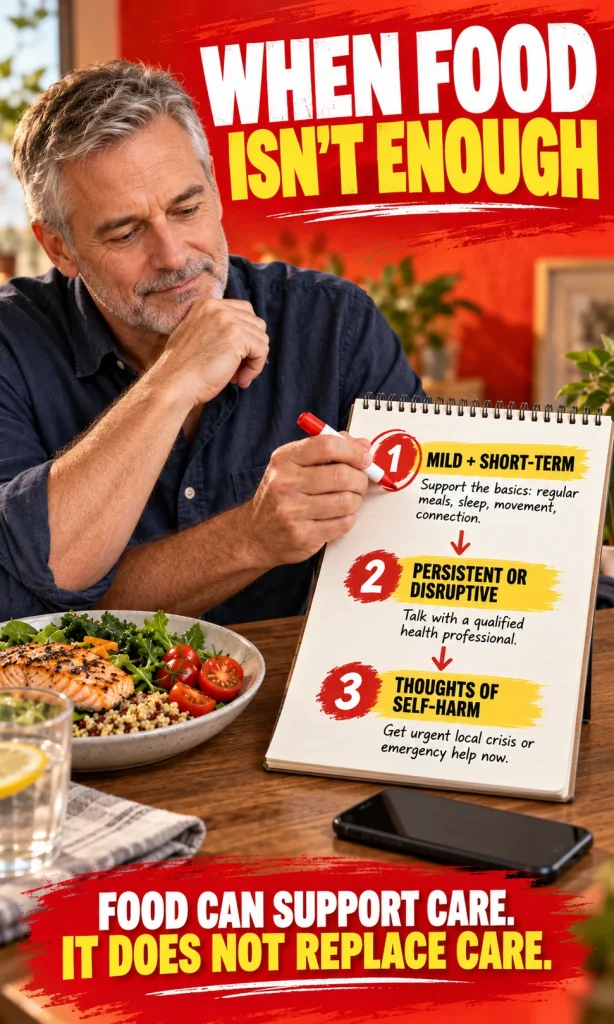
Nutrition self-care is most appropriate when you are making ordinary lifestyle improvements and can still manage your usual activities. If low mood, loss of interest, sleep changes, appetite changes, concentration problems or other symptoms persist for around two weeks, feel severe or interfere with daily functioning, the National Institute of Mental Health advises seeking professional help.
If you are having thoughts of suicide or self-harm, treat that as urgent. Contact your local emergency service or crisis service, or reach a trusted person who can stay with you. Food choices are not the priority in that situation.
A simple way to eat for well-being without overthinking it
Choose one repeatable change, not a complete diet overhaul. You might add a protein source to breakfast, make one meal include two different plant foods, move late caffeine earlier, or keep a reliable snack available for days when lunch gets delayed. Once that change is easy, add another.
This approach also leaves room for pleasure. Food can be comforting, social, cultural and enjoyable without needing to “optimize” every bite. If you want to check common nutrition assumptions before changing your diet, see healthy eating common myths about food and nutrition.
Bottom line
There is no scientifically defensible list of foods that makes everyone happy instantly. A varied, balanced and repeatable eating pattern can support overall health and may support mental well-being, but mood is also shaped by sleep, stress, movement, relationships, medical conditions, medications and mental-health conditions.
Build the foundation, notice your own patterns and keep the claim modest. If symptoms are persistent, severe or unsafe, move beyond food advice and get the appropriate professional support.
Frequently Asked Questions
What food makes you happy instantly?
No food can reliably make everyone happy instantly. Eating may improve hunger, comfort or energy in the short term, but that is different from treating depression or producing a guaranteed mood change.
What should I eat to support a better mood?
Build meals around a varied pattern that includes vegetables and fruit, whole grains or other high-fiber carbohydrates, protein foods and unsaturated-fat sources. The overall pattern matters more than finding one “mood-boosting” ingredient.
Does salmon help depression?
Salmon is a nutritious source of omega-3 fats, but it should not be treated as a depression treatment by itself. If you have persistent depressive symptoms, speak with a qualified health professional rather than relying on one food or supplement.
Is dark chocolate a mood-boosting food?
Dark chocolate can be enjoyable and can fit into a balanced diet, but there is no reliable cocoa-percentage threshold that turns it into a mental-health treatment. Enjoyment and nutrition are different claims.
When should I get help for low mood instead of changing my diet?
Seek professional help when symptoms are severe, last around two weeks or more, or interfere with daily life. Thoughts of self-harm or suicide require immediate local crisis or emergency support.
Sources
- Systematic review and meta-analysis of Mediterranean-diet interventions and depressive symptoms
- Systematic review and meta-analysis of diet quality and depression risk
- Systematic review and meta-analysis of dietary patterns in depressive disorders
- World Health Organization healthy-diet guidance
- NIH Office of Dietary Supplements: Omega-3 fatty acids
- National Institute of Mental Health: Depression