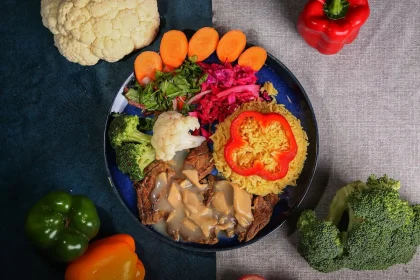

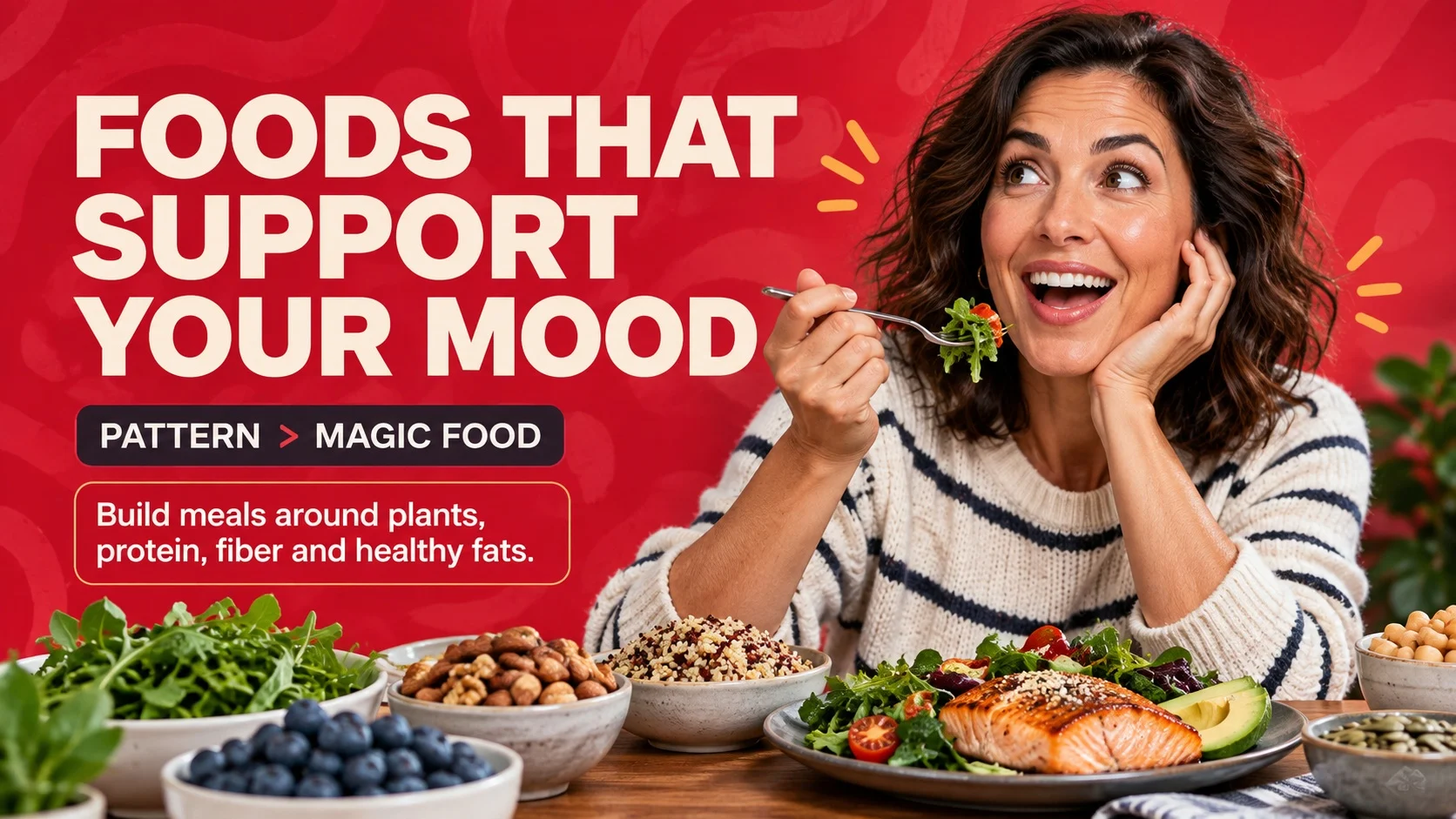

No single food can reliably switch a bad mood into a good one, but the way you eat can still support mental well-being, steady energy and normal brain function. The strongest practical approach is not to chase one “happy food,” but to build regular meals around minimally processed plants, adequate protein, whole-food carbohydrates and healthy fats. If low mood is persistent, severe or affecting daily life, food should be treated as supportive care rather than a substitute for professional mental-health treatment.
The research is encouraging in places but not settled. Randomized trials of Mediterranean-style dietary interventions have reported improvements in depressive symptoms, yet certainty has often been rated low and results vary across reviews, which means the effect is not strong or predictable enough to promise that a specific diet will treat depression. That uncertainty is exactly why a useful food-and-mood guide should focus on nutritious patterns you can repeat, not dramatic claims about serotonin, dopamine or instant happiness.
The fast answer: build the pattern before you chase the “mood food”
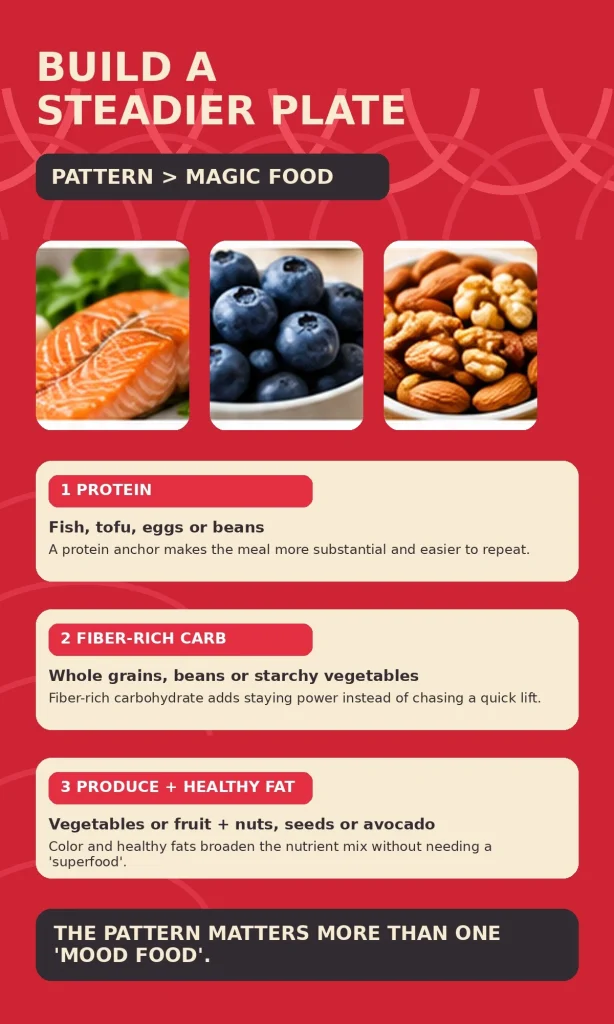
If you want food choices that are reasonable for mood support, start with the same building blocks that make a meal nutritionally solid: vegetables or fruit, a protein source, a fiber-rich carbohydrate and a source of unsaturated fat. Fatty fish, beans and lentils, leafy greens, whole grains, berries, nuts, seeds, yogurt or fortified alternatives can all fit because they contribute nutrients your body and brain use every day. Their value comes from the pattern they create together, not from any one ingredient acting like a medication.
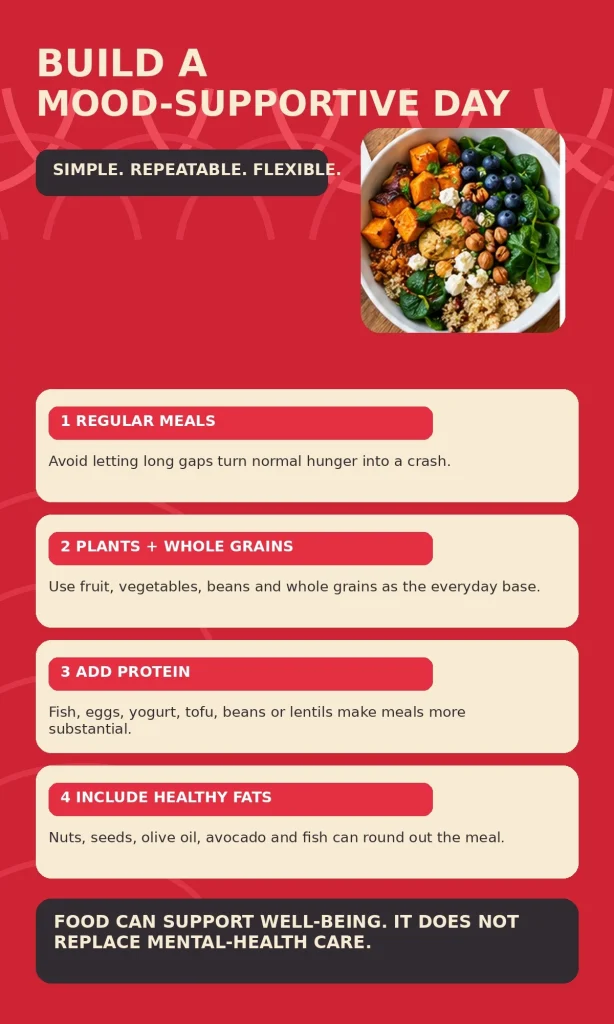
Regularity also matters. Long gaps between meals can leave some people hungry, tired, irritable or more likely to grab whatever is fastest, so a consistent eating rhythm can make the day feel more manageable even without a special “mood-boosting” ingredient. The NHS includes regular meals and a healthy diet among practical self-care steps for low mood because stable routines can support energy and day-to-day functioning.
What the evidence actually says about food and mood
Diet and mood are connected through more than one route, including overall nutrient intake, energy availability, cardiometabolic health, inflammation, the gut-brain axis and the habits that surround eating. That does not mean each pathway is proven to cause a specific emotion, and it does not mean eating more of one nutrient will necessarily improve depression. Human trials are difficult because diet changes many things at once, from food quality and meal timing to social routines, weight and sleep.
One systematic review of Mediterranean-style interventions found a reduction in depressive symptoms across five randomized trials, but the authors rated the certainty of evidence low and reported substantial variation between studies. A separate review of dietary interventions found small or uncertain effects and limited confidence in many comparisons, while another review of Mediterranean-diet trials did not find a significant benefit and rated much of the evidence very low certainty. Taken together, the safest conclusion is that a high-quality diet may be a useful part of mental-health support for some people, but the evidence does not justify promising that a particular menu will treat depression.
Foods worth building meals around
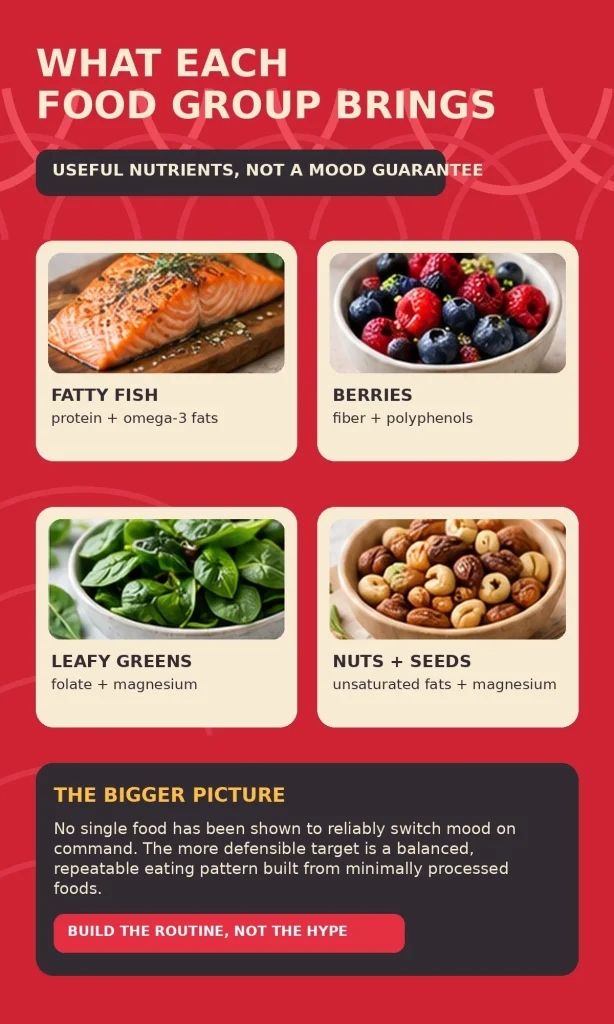
The foods below are useful because they contribute protein, fiber, folate, magnesium, unsaturated fats, omega-3 fats or other nutrients commonly found in high-quality eating patterns. That is different from saying each food has been proven to “boost mood” on its own. Think of them as reliable components that help you construct meals with more nutritional coverage and less dependence on ultra-processed snacks.
| Food or group | What it contributes | Easy way to use it | Keep the claim realistic |
|---|---|---|---|
| Fatty fish | Protein plus EPA/DHA omega-3 fats | Salmon, sardines, trout or mackerel with vegetables and a whole grain | Useful as part of a balanced pattern; not a stand-alone depression treatment |
| Beans and lentils | Fiber, plant protein, folate and magnesium | Add to soups, grain bowls, curries or salads | Good everyday nutrition without requiring a “superfood” label |
| Leafy greens | Folate, magnesium, potassium and other micronutrients | Use spinach, kale or other greens in stir-fries, soups, eggs or bowls | Supportive nutrition, not an instant emotional switch |
| Whole grains | Fiber, carbohydrate and B vitamins | Oats, brown rice, barley, whole-grain bread or other intact grains | Most useful as part of regular, filling meals |
| Nuts and seeds | Unsaturated fats, magnesium, fiber and some protein | Add a small handful to oats, yogurt, salads or snacks | Energy-dense, so portion size can still matter |
| Berries and other fruit | Fiber, vitamin C and diverse plant compounds | Pair with yogurt, oats, nuts or a meal rather than treating fruit as medicine | A nutritious food group, not a guaranteed mood enhancer |
| Yogurt, kefir or fortified alternatives | Protein and micronutrients; some options also contain live cultures | Use with fruit and oats or as part of a savory meal | Gut-brain research is promising, but probiotic effects are strain-specific and still developing |
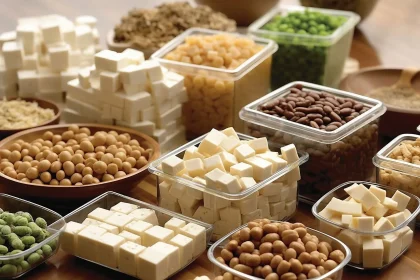
| Eggs or tofu | Convenient protein; eggs also provide B12 and choline, while tofu can provide iron and calcium depending on preparation | Use in breakfast, rice bowls, wraps or stir-fries | Practical building blocks rather than mood treatments |
Dark chocolate often appears on “happy food” lists, and it can certainly be enjoyable, but pleasure is not the same as a clinically meaningful antidepressant effect. A small amount can fit into a balanced diet if you enjoy it, but the evidence is not strong enough to make chocolate a mental-health prescription. The same caution applies to bananas, coffee, fermented foods and other single ingredients that are frequently promoted with simplified brain-chemical explanations.
Why meal composition can matter more than a “happy ingredient”
A bowl of berries can be nutritious, but berries alone may not keep you satisfied for long. Pairing fruit with protein and fat, such as yogurt and nuts or fortified soy yogurt and seeds, changes the meal from a single-food snack into something more substantial. The same principle works at lunch and dinner: combine produce with protein, a fiber-rich carbohydrate and a source of healthy fat instead of expecting one ingredient to do all the work.
This matters because the way you feel after eating is influenced by hunger, fullness, digestion, caffeine, alcohol, hydration, sleep and the amount of time since your last meal. A person who feels shaky or irritable because they skipped lunch may feel better after eating, but that does not prove the chosen food directly treated their mood. The practical lesson is to notice patterns in your own routine without turning every emotional change into a nutrient diagnosis.
Mood Plate Studio
Choose your goal, eating pattern and effort level. Get practical meal ideas built around protein, fiber-rich foods, plants and healthy fats.
Balanced options
Keep the plate logic simple
A simple mood-supportive meal formula
For most everyday meals, a useful starting point is one protein anchor, one fiber-rich carbohydrate or legume, at least one fruit or vegetable, and a modest source of unsaturated fat. That could be salmon with brown rice, greens and olive oil; lentils with roasted vegetables and whole-grain bread; or yogurt with oats, berries and walnuts. The exact foods can change with culture, budget, allergies, appetite and dietary preference while the structure stays useful.
Vegetarian and vegan meals can follow the same logic. Use beans, lentils, tofu, tempeh, soy foods, nuts, seeds and fortified foods to cover protein and key micronutrients, and pay particular attention to nutrients that may require more deliberate planning, such as vitamin B12 on a vegan diet. If you have a diagnosed deficiency, gastrointestinal condition, eating disorder, pregnancy, medication interaction or other medical concern, individualized advice matters more than a generic mood-food list.
What about the gut-brain connection?
The gut and brain communicate through neural, immune, metabolic and hormonal pathways, and the microbiome is an active area of mental-health research. Recent reviews suggest that probiotic interventions may reduce depressive symptoms in some groups, but effects are not consistent enough to assume that any yogurt, fermented food or supplement will improve mood. Strains, doses, study populations and background diets differ, so broad “fix your gut, fix your mood” claims go beyond the evidence.
A safer way to use the gut-brain idea is to support dietary diversity. Fiber-rich plants, legumes, whole grains, fruit, vegetables, nuts and seeds provide substrates used by gut microbes while also improving the overall nutrient density of the diet. That gives you a practical target without pretending the microbiome can be optimized by one branded food or supplement.
Meal timing, caffeine and alcohol can change how the day feels
Food choices do not exist in isolation from stimulants and sleep. Caffeine can be useful for alertness, but too much or too late in the day can increase jitteriness or disturb sleep in susceptible people, which can make mood and concentration worse the next day. Alcohol can temporarily feel relaxing while also disrupting sleep and worsening mental-health symptoms for some people, so using it as a mood strategy is a poor trade.
If your current pattern is irregular, you do not need to redesign your entire diet in one week. Start by fixing the meal that is most often skipped or nutritionally thin, then make one repeatable improvement such as adding protein at breakfast, bringing a planned afternoon snack or including vegetables at dinner. This gradual approach also fits well with our guide to Getting Healthy Eating Habits Back on Track.
A realistic one-day example
Breakfast could be oats with yogurt or fortified soy yogurt, berries and walnuts. Lunch might be a lentil-and-grain bowl with vegetables and olive oil, while dinner could use salmon or tofu with potatoes, greens and another vegetable. If you need a snack, fruit with nuts, hummus with whole-grain crackers, or yogurt can be more sustaining than relying on sweets alone.
The point is not to eat a “perfect” day or copy someone else’s menu. It is to reduce the number of meals that are missing a major component, such as protein, fiber or produce, and to make the better pattern easy enough to repeat on busy days. For more everyday structure, see Daily Diet Tips for Eating Healthy.
Foods can support care, but they should not carry the whole burden
Low mood has many possible causes, and nutrition is only one part of the picture. Sleep, grief, chronic stress, medication effects, medical conditions, social isolation, financial pressure, physical activity and mental-health disorders can all affect how someone feels. If you are struggling, a better diet may still be worthwhile, but it should not become another way to blame yourself for symptoms that need broader support.
If low mood lasts for around two weeks, keeps returning, or begins to interfere with work, relationships, sleep or self-care, consider speaking with a qualified healthcare professional. If you are having thoughts of self-harm or suicide, seek urgent help from local emergency services or a crisis service rather than waiting to see whether dietary changes help. Food can be part of care; it is not emergency treatment.
How this fits with other food-and-mood advice
You may also see stronger claims that certain foods make you happy instantly. Those articles can be useful when they encourage nutritious choices, but the scientific wording needs to stay disciplined because a short-term pleasant feeling is not the same as treating depression or anxiety. Our related Eat to Be Happy guide is most useful when read with that distinction in mind.
Stress can also change eating behavior in both directions, making some people snack more while others lose their appetite. If stress is the bigger issue, compare food choices with sleep, caffeine, workload and coping habits instead of assuming the menu is the only lever. You can continue with Stress-Relieving Foods That Help With Stress for a broader look at the relationship between eating and stress.
The bottom line
The most defensible “mood foods” are not magic ingredients; they are ordinary nutritious foods that help you build a balanced eating pattern. Fish, beans, lentils, whole grains, leafy greens, berries, nuts, seeds, yogurt or fortified alternatives can all contribute, but no single item has been shown to reliably create happiness or treat depression on demand. Build regular meals, notice how your routine affects energy and appetite, and treat persistent low mood as a health issue that deserves appropriate care.
Frequently Asked Questions
Can one food boost my mood instantly?
Not reliably. Eating can improve hunger, comfort or energy in the short term, but research does not support a single food that predictably switches mood on command or treats depression. A balanced dietary pattern is a more useful target than chasing one “happy food.”
What eating pattern has the best evidence for mood support?
Mediterranean-style patterns are among the most studied because they emphasize vegetables, fruit, whole grains, legumes, nuts, olive oil and fish. Some randomized trials report improvements in depressive symptoms, but reviews disagree and the certainty of evidence is often low or very low. Treat the pattern as a nutritious framework, not a guaranteed depression treatment.
Are dark chocolate and bananas really mood-boosting foods?
They can be enjoyable and can fit into a balanced diet, but the popular explanation that they directly raise brain “happy chemicals” is too simplistic. Their nutritional value should be judged in the context of the whole diet, and neither food should be presented as a treatment for low mood or depression.
Should I take supplements for mood instead of changing my diet?
Not automatically. Supplements can be useful for a diagnosed deficiency or a specific clinical reason, but they can also interact with medicines, duplicate nutrients or provide doses that are unnecessary. If you are considering supplements for depression, anxiety or persistent low mood, discuss the decision with a qualified clinician.
When should low mood be treated as more than a food issue?
If low mood lasts for about two weeks, keeps returning or interferes with daily life, professional assessment is reasonable. If you have thoughts of self-harm or suicide, seek urgent local crisis or emergency help. Food can support health, but it should not delay appropriate mental-health care.
Evidence sources
This rewrite was grounded in recent systematic reviews of dietary interventions for depression, a randomized-trial review of Mediterranean-style diets, general healthy-eating guidance, and NHS low-mood self-care guidance. The evidence is mixed enough that the article deliberately avoids promising that an individual food or dietary pattern will treat a mood disorder.
- Moderate- to Long-Term Effect of Dietary Interventions for Depression and Anxiety: A Systematic Review and Meta-analysis
- The Impact of the Mediterranean Diet on Alleviating Depressive Symptoms in Adults
- Effect of Different Dietary Patterns on Patients with Depressive Disorders
- A Practical Guide to the Mediterranean Diet
- NHS: Get Help With Low Mood, Sadness or Depression