


A successful summer garden is less about doing more and more about preventing heat, water and root-zone stress from compounding. Check the soil before watering, soak the active root zone when it is genuinely dry, keep bare soil covered and protect vulnerable plants from punishing afternoon exposure; containers and new plantings need closer monitoring than established beds.
The most useful summer routine is therefore diagnostic rather than calendar-based. A plant that wilts in hot afternoon sun may need shade rather than another soaking, while a plant that stays limp early in the morning with dry soil usually needs water sooner.
Start with the condition, not a fixed summer schedule
Use the Summer Garden Response Studio below when the symptom and the soil seem to tell different stories. It does not assign a fake health score; it converts your growing setup, weather, root-zone moisture and visible stress into a practical next-step sequence.
| What you see | Check first | Best first move | Why |
|---|---|---|---|
| Dry soil below the surface and persistent wilt | Moisture 5-10 cm (2-4 in) down | Water slowly at the root zone | A deeper soaking reaches roots better than repeated surface sips. |
| Afternoon wilt but soil is still moist | Morning recovery and root-zone moisture | Reduce heat load and recheck before watering | Heat can outpace water uptake even when roots are not dry. |
| Yellowing leaves and persistently soggy soil | Drainage and how long the soil stays wet | Pause routine watering and restore drainage | Adding more water can worsen oxygen-starved roots. |
| Containers dry rapidly in hot wind | Moisture in each pot, not the garden bed | Check more often; move sensitive pots out of harsh afternoon sun | Small root volumes heat and dry faster than in-ground soil. |
Summer Garden Response Studio
Turn weather, soil moisture and visible stress into the next practical garden move.
Describe what the garden is doing now
Use the actual root-zone condition, not a preset summer calendar. The result is a response sequence, not a diagnosis or a fixed watering schedule.
Your next move
Do now
Avoid for now
Check next
Need local plant help?
Search for a plant clinic, horticulture extension service or garden center near you without fabricating provider data.
1. Diagnose moisture before reaching for the hose
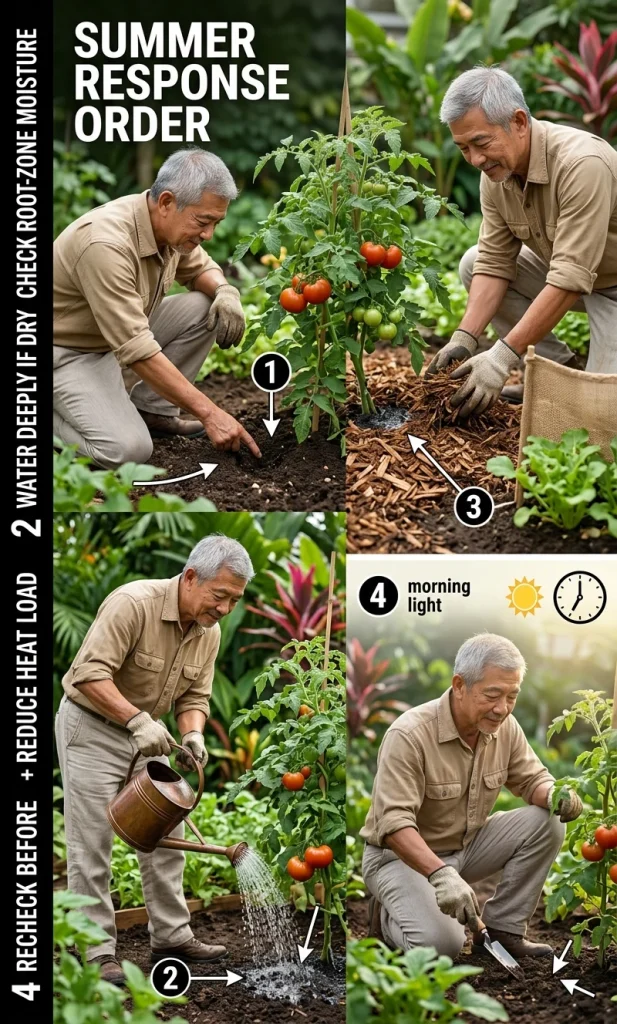
The surface can be misleading in both directions. A dry-looking crust may sit over damp soil, while a brief shower may wet only the top few centimetres and leave the active root zone dry. Before adding water, push a finger or narrow trowel into the soil and check below the surface; Kansas State Extension recommends checking roughly 2-4 inches down before deciding whether heat-stressed plants actually need more water.
This is especially useful after a run of hot days or heavy rain. If the bed remains wet below the surface, the problem may be drainage rather than thirst, so use the site guides on soil that looks dry on top but stays wet underneath and how long soil should stay wet after watering before increasing irrigation.
2. Water for root depth, not for the clock
Early morning is usually the most efficient watering window because plants can enter the hottest part of the day hydrated and less water is lost to evaporation. University of Vermont Extension and University of Minnesota Extension both emphasize generous root-zone watering rather than frequent light sips, while the Royal Horticultural Society recommends thorough watering that reaches below the surface.
Direct the water to the soil, not the foliage, and let the rate match the soil’s ability to absorb it. A slow hose, drip line or watering can aimed at the root zone reduces runoff and gives moisture time to move downward; the exact interval still depends on soil texture, wind, plant size, rooting depth, rainfall and whether the plant is in a pot or the ground.
For a practical walkthrough, see how to water plants correctly. The key summer rule is simple: recheck moisture before repeating the watering, because yesterday’s heat does not automatically mean today’s root zone is dry.
3. Use mulch to stabilize the root zone
Mulch slows evaporation, shades the soil surface and reduces weed competition. Extension guidance commonly recommends a substantial but not excessive layer; for many beds, roughly 5-8 cm (2-3 in) of suitable organic mulch is a practical starting point, adjusted for the material and plant type.
Keep mulch away from crowns, stems and tree trunks rather than piling it against living tissue. If using grass clippings, Kansas State Extension also warns against using clippings from lawns recently treated with herbicides, because residues can damage garden plants.
4. Learn the difference between heat stress and water stress
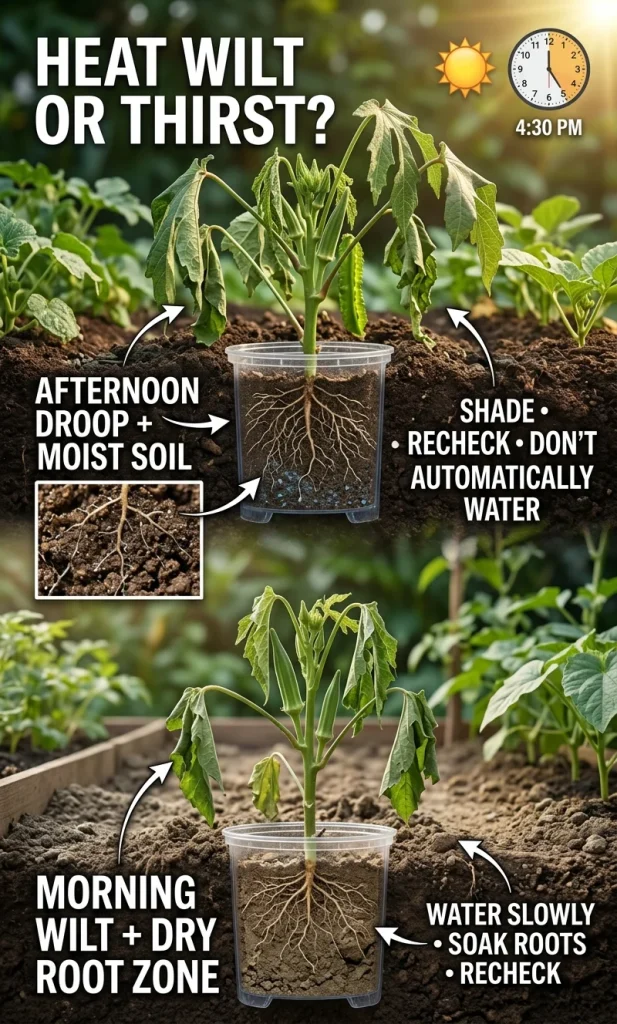
Heat stress and drought stress overlap, but they are not identical. University of Minnesota Extension notes that hot, windy conditions can make leaves lose water faster than roots can replace it, so a plant can temporarily wilt even when the soil still contains moisture; Oregon State Extension similarly advises checking root-zone moisture before assuming every drooping leaf needs more water.
| Sign | Possible meaning | Check | Response |
|---|---|---|---|
| Wilts only in the hottest afternoon period | Heat load may be temporarily exceeding uptake | Does it recover by evening or early morning? Is the root zone moist? | Shade vulnerable plants and recheck soil before adding water. |
| Still limp early in the morning | Water deficit is more likely if soil is dry | Moisture several centimetres down | Water the root zone slowly and thoroughly. |
| Rolled, curled or scorched leaves | Heat, intense sun or hot wind may be contributing | Soil moisture plus afternoon exposure | Stabilize moisture and reduce extreme exposure temporarily. |
| Yellowing with persistently wet soil | Poor drainage or root stress may be involved | Drainage holes, soil smell and wetness duration | Reduce watering and investigate drainage; see how to save a plant from root rot if decline continues. |
5. Give vulnerable plants afternoon protection
Temporary shade can be more useful than extra water when leaves are scorching but the root zone is still moist. Iowa State University Extension recommends moving containers to shade or using screening or light-coloured fabric during extreme heat, while University of Minnesota Extension notes that temporary shade can protect sensitive annuals, vegetables and containers during peak heat.
Shade is a stress-management measure, not a reason to keep sun-loving plants dark all season. Use it strategically during the hottest part of a heatwave, then restore normal light as conditions ease.
6. Treat containers as a separate summer climate
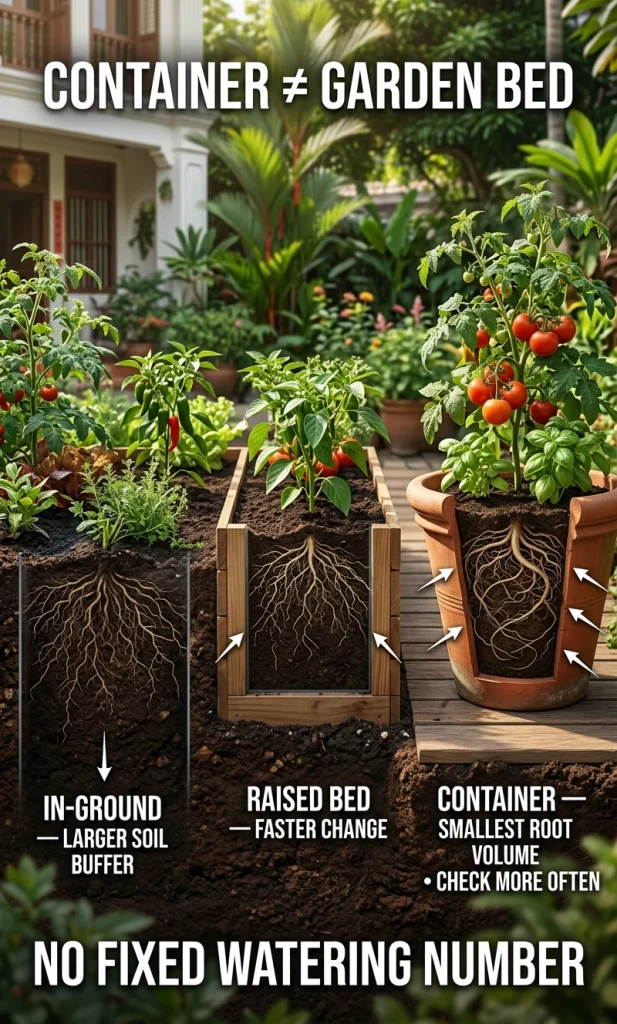
Containers are surrounded by warm air and often direct sun, so the root ball can heat and dry faster than soil in a bed. The RHS advises checking container moisture individually and notes that pots may need daily or every-other-day watering during dry summer spells, but there is no universal fixed schedule.
Watch drainage as closely as dryness. A pot that stays saturated can lose root oxygen even while the foliage wilts, so confirm that water can leave freely and read why some pots never drain even with holes if water remains trapped after watering.
7. Do not pile more stress onto a heat-stressed plant
During severe heat, delay major transplanting, aggressive pruning, division and unnecessary fertilizing. University of Vermont Extension advises avoiding those jobs while plants are already under heat stress; once temperatures moderate and moisture is stable, normal maintenance can resume.
Necessary jobs still have a place. Harvest ripe produce, remove obvious diseased material, water when needed and work in the cooler hours so both plants and gardener experience less stress.
8. Keep weeds, pests and disease from taking advantage
Weeds compete directly for summer water and nutrients, so removing them before they seed reduces both competition and future workload. Mulch helps here too, but it does not replace observation: lift leaves, inspect stems and check the soil surface for changes in insects, spots, mildew or rot.
Humid summers need a slightly different emphasis from dry summers. Keep foliage reasonably dry when irrigating, maintain airflow around crowded plants and avoid turning every wilt response into more water, because warm saturated soil can create its own root problems.
9. Match planting decisions to your local summer, not a generic calendar
“Summer” can mean dry heat, humid heat, monsoon rain or relatively mild weather depending on location. Choose plants and planting dates around local temperature, rainfall and light patterns rather than copying a single month-by-month list from another climate.
If you are choosing new plants, start with the conditions you can actually provide. The guides to choosing the right plants for your garden and beginner-friendly plants are more useful than chasing a plant that needs a fundamentally different summer environment.
10. Build a repeatable weekly summer routine
- Check root-zone moisture before watering. Use the soil, not the calendar, as the decision trigger.
- Water deeply when needed. Aim at the soil and avoid repeated shallow sips.
- Refresh thin mulch. Keep it off crowns, stems and trunks.
- Inspect containers separately. They can dry or overheat faster than the rest of the garden.
- Look for heat-stress patterns. Note whether wilt is afternoon-only or still present the next morning.
- Remove weeds before they seed. This protects water and nutrients for the plants you want.
- Delay heavy work during extreme heat. Save major pruning, transplanting and feeding for more stable conditions.
- Harvest and scout regularly. Pick ripe produce and catch pest or disease changes early.
Evidence and practical limits
The summer recommendations above are consistent across recent extension guidance, but exact watering frequency cannot be universal. University of Minnesota Extension, University of Vermont Extension, Kansas State University Extension, Iowa State University Extension and Oregon State University Extension all emphasize checking actual moisture and plant condition rather than relying on a blind fixed schedule.
Plant species, root depth, soil texture, pot material, drainage, wind and local humidity can all change how quickly a root zone dries. If a valuable plant continues declining despite corrected moisture and heat exposure, use a local horticulture extension service, plant clinic or qualified garden professional for species-specific diagnosis.
Frequently Asked Questions
How often should I water my garden in summer?
There is no reliable universal summer schedule. Check moisture below the surface and water when the active root zone is becoming dry; containers, new plants, shallow-rooted crops, sandy soil and hot wind usually require closer monitoring than established plants in deeper soil.
Is afternoon wilting always a sign that a plant needs water?
No. Heat and wind can make leaves lose water faster than roots can replace it even when the soil is still moist. If the plant recovers later and the root zone is moist, temporary shade or lower heat exposure may be more appropriate than another soaking.
Should I fertilize plants during a heatwave?
Usually wait if the plants are visibly heat- or drought-stressed. Restore stable moisture and more moderate conditions first, then resume feeding only when the plant actually needs nutrients and the product instructions support the application.
Do I need to water after a light summer rain?
Possibly. A brief shower may wet only the surface, especially in containers or dry compacted soil. Check moisture below the surface before deciding that rainfall reached the root zone.
How much mulch should I use in summer?
For many garden beds, about 5-8 cm (2-3 in) of an appropriate organic mulch is a useful starting range. Keep it away from stems, crowns and trunks, and adjust the depth to the material, plant type and drainage conditions rather than piling it on indefinitely.
What makes a summer garden successful
The biggest improvement is replacing automatic reactions with quick checks. Look below the soil surface, distinguish heat stress from true dryness, keep the root zone cooler and more stable, and make containers their own monitoring category.
Once those basics are controlled, the rest of summer gardening becomes easier: weeds are less competitive, pests and disease are easier to spot, plants recover from heat more reliably and your maintenance decisions stop fighting the conditions.