
Healthy eating habits for kids grow from predictable routines, varied nutrient-dense foods, positive adult modeling, and enough freedom for children to listen to hunger and fullness. Parents and caregivers can decide what foods are offered, when meals and snacks happen, and where eating takes place, while the child decides whether to eat and how much from what is available. The goal is not a perfect plate at every meal; it is a pattern that makes nutritious choices familiar, low-pressure, and repeatable.
The 7 habits that matter most
Most families do not need a complicated nutrition system. A small set of repeatable habits covers the biggest day-to-day decisions, and these habits can be adjusted for culture, budget, allergies, school schedules, sensory preferences, and the child’s developmental stage. Start with the habit that creates the most friction in your home, then stabilize it before adding another.
- Keep a meal and snack rhythm: predictable eating times reduce all-day grazing and help children arrive at meals with an appetite.
- Offer variety across the week: rotate vegetables, fruits, protein foods, grains or starchy foods, and dairy or suitable fortified alternatives rather than trying to make every plate identical.
- Include a familiar food: when a meal contains something the child already accepts, a new food feels less threatening.
- Keep pressure low: avoid forcing bites, demanding a clean plate, or using dessert as payment for eating another food.
- Make water the easy default: keep it visible and available, especially between meals and around active play.
- Model the behavior: children learn from seeing adults eat a range of foods, sit for meals, and speak neutrally about food.
- Give children useful jobs: choosing produce, washing ingredients, stirring, assembling, and serving can build familiarity before tasting.
| Family habit | What the adult controls | What the child practices |
|---|---|---|
| Meal rhythm | What, when, and where food is offered | Whether to eat and how much |
| Food variety | Repeated access to different foods | Seeing, touching, smelling, tasting, and eventually accepting |
| Drinks | Which drinks are routinely available | Learning that water is a normal everyday choice |
| Family meals | A calm eating environment and realistic menu | Watching, participating, and responding to hunger and fullness |
Build a routine before trying to fix the menu
A child who snacks continuously may have little appetite when dinner arrives, even if the dinner is a food they usually like. Regular meals and planned snacks create natural pauses between eating opportunities and make hunger cues easier to notice. The American Academy of Pediatrics also recommends structured meal and snack times and a table setting with fewer distractions for selective eaters.
That does not mean every household needs identical clock times. A school day, sports practice, long commute, or late-working parent can shift the schedule, but the sequence should still be understandable to the child: meal, pause, snack, pause, meal. If you want ideas for the school portion of that rhythm, the site’s healthy school lunch guide can help you build a lunch that fits the same pattern.
Offer balanced meals without turning the plate into a test

A balanced meal is easier to repeat when you think in food roles rather than chasing a perfect visual formula. Include a fruit or vegetable, a protein source, a grain or other starchy food, and a dairy food or appropriate fortified alternative when it fits the child’s needs, then let appetite determine how much is eaten. The current Dietary Guidelines for Americans emphasize whole, nutrient-dense foods such as protein foods, dairy, vegetables, fruits, healthy fats, and whole grains while reducing highly processed foods high in added sugars and excess sodium.
Variety matters more across days and weeks than on one Tuesday night. One dinner may be heavy on rice and chicken while another has beans, vegetables, yogurt, and fruit; the pattern can still be strong when the broader week covers multiple food groups. For ingredient ideas, see these practical lists of protein food examples and calcium-rich foods.
Use a familiar food as the bridge to something new
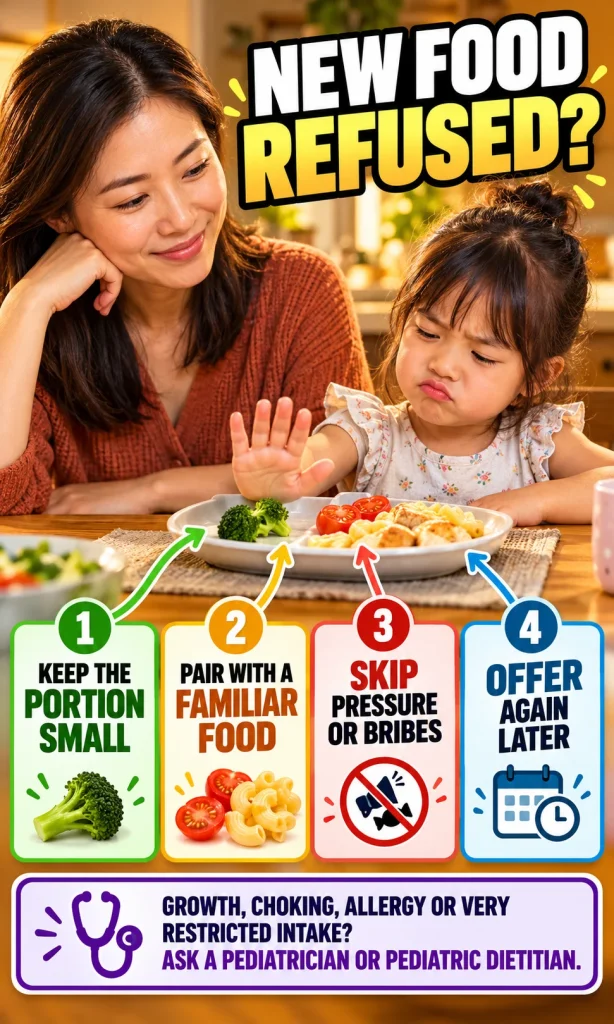
Selective eating is common in early childhood, and refusal is not proof that a child will never accept a food. The CDC’s picky-eater guidance recommends pairing a new food with foods the child already likes, offering choices, modeling the food yourself, and trying it again over time. Repeated exposure works best when the portion is small enough that the child does not feel trapped by it.
Think of acceptance as a sequence rather than a single bite. A child may first tolerate peas on the plate, then touch them, smell them, taste one, and only later eat a serving; each step builds familiarity. Pressure, punishment, and food bribes can turn the table into a contest, while a neutral response leaves the door open for the next exposure.
Let children listen to hunger and fullness

Adults are responsible for the food environment, but children need practice deciding how much their bodies need. The American Academy of Pediatrics’ guidance on whether a child is eating enough describes the adult role as providing healthy food in appropriate portions and the child’s role as deciding how much to eat. That division reduces the temptation to count bites, negotiate spoonfuls, or demand a clean plate.
Appetite also changes from meal to meal because growth, activity, sleep, illness, and the previous meal all affect hunger. A small lunch followed by a larger dinner can be normal, just as a hungry day can be followed by a lighter one. When growth or intake is concerning, the right question is not how to force more food but whether a pediatrician or pediatric dietitian should review the pattern.
Make water the easiest drink to choose
Water works well as the default drink through the day because it hydrates without added sugar. The CDC’s guidance on water and healthier drinks notes that replacing sugary drinks with plain water can reduce calorie intake, while individual fluid needs vary with age, activity, weather, and health. Milk or a suitable fortified alternative can also contribute nutrients when it is appropriate for the child’s age and dietary needs.
Practical changes usually work better than lectures about sugar. Keep a water bottle within reach, serve water at the table, and avoid making sweet drinks the automatic response to thirst. If you are comparing packaged drinks or snacks, the guide to what a food label tells you can help you check added sugars, sodium, serving size, and nutrients more systematically.
Model the habits you want children to learn
Children notice what adults do more than what adults say. If vegetables are served to the child but never eaten by anyone else, or if adults describe a food as disgusting before the child tries it, the lesson is different from the rule. Eating together when practical, putting phones away for at least part of the meal, and showing curiosity about unfamiliar foods create a more believable model.
Family meals do not need to look formal, and they do not need to happen every evening to be useful. Breakfast at the counter, weekend lunch, or a simple shared dinner can all provide the same modeling opportunity if people are actually eating and interacting. Keep the standard achievable enough that it survives busy weeks instead of becoming another source of guilt.
Family Food Rhythm Studio
Choose the friction point in your routine and build one realistic 7-day focus without pressure, perfection, or invented nutrition scores.
Build the next week around one useful change
This experience prioritizes routine and behavior. It does not diagnose nutrition problems, calculate calorie needs, or replace individualized pediatric advice.
Do these 3 things
Keep steady
Avoid this trap
General education only. This experience does not diagnose feeding disorders, allergies, growth problems, or nutrient deficiencies and does not replace advice from your child's clinician.
Give kids a real job with food
Participation changes food from something imposed on a child into something they understand and help create. Younger children can rinse berries, tear lettuce, carry napkins, or choose between two vegetables, while older children can measure ingredients, use age-appropriate kitchen tools with supervision, pack lunch components, or help select a recipe. The aim is not to guarantee that they eat the finished food immediately; the aim is repeated, low-pressure contact with ingredients and meal routines.
Shopping can do the same job. Ask a child to choose one fruit for the week, compare two whole-grain products, or find a protein food for a snack, then use that choice soon so the connection is visible. If fruit is a sticking point, this explanation of why fruit matters in a balanced diet gives you a simple way to discuss its role without labeling foods as morally good or bad.
Adjust the habit to the child’s age
The basic principles stay consistent, but independence, chewing ability, school access, social influences, and energy needs change quickly through childhood. A toddler needs more control over food size and choking risk, while a teenager needs more involvement in shopping, preparation, after-school snacks, and choices made outside the home. Use the age guide below as a practical starting point rather than a rigid prescription.
| Stage | Useful focus | Common mistake to avoid |
|---|---|---|
| Ages 2-4 | Routine, safe food shapes, tiny portions of new foods, sensory exploration | Expecting adult-size portions or forcing tastes |
| Ages 5-8 | Simple choices, lunch participation, family modeling, water habit | Letting grazing erase appetite for meals |
| Ages 9-12 | Food skills, snack assembly, label literacy, activity-day planning | Using weight-focused or shame-based food talk |
| Ages 13-17 | Independence, portable meals, cooking, budgeting, choices away from home | Trying to control every food choice instead of teaching decision skills |
Keep choking safety separate from nutrition goals
A nutritious food can still be unsafe if its shape or texture creates a choking hazard for a young child. The American Academy of Pediatrics’ choking-prevention guidance identifies foods such as whole grapes, popcorn, nuts, raw hard vegetable pieces, thick chunks of nut butter, and chunks of meat or cheese as foods that may need to be avoided or modified for young children. Food should be prepared to match the child’s chewing and swallowing skills, and young children should be seated and supervised while eating.
This is one reason a family habit guide cannot replace age-specific medical or feeding advice. A child with swallowing difficulty, developmental differences, food allergy, or a history of choking may need individualized recommendations that differ from general nutrition guidance. When safety and nutrition goals conflict, safety comes first.
Know when “picky” needs a closer look
Many selective eating phases are temporary, but some patterns deserve professional assessment rather than more home strategies. Contact the child’s pediatrician or another qualified clinician if eating is accompanied by poor growth or weight loss, repeated choking or coughing with meals, pain with swallowing, recurrent vomiting, suspected allergic reactions, dehydration, or an extremely restricted range of foods that is getting narrower. A pediatric dietitian or feeding specialist may also be helpful when a child’s intake, sensory response, or mealtime distress is affecting nutrition or daily life.
Do not wait for a child to “grow out of it” when there is a clear safety concern or growth concern. Bring a short record of what the child eats, drinks, refuses, and what happens during meals so the clinician can see the pattern instead of judging one meal. That record is often more useful than trying to remember the difficult days during an appointment.
A simple 7-day reset for family eating habits
A reset should simplify the environment, not put the child on a diet. Choose one meal or snack period that happens most days, use it as the practice window, and keep the rest of the family’s routine reasonably normal. The sequence below is deliberately small so you can see what changes the mealtime dynamic before adding more rules.
- Day 1: Set the next week’s approximate meal and snack rhythm.
- Day 2: Put water where the child can reach or request it easily.
- Day 3: Add one familiar food to a meal that often creates conflict.
- Day 4: Let the child choose between two nutritious options for one component.
- Day 5: Invite the child to wash, mix, assemble, or serve one ingredient.
- Day 6: Re-offer one previously refused food in a very small portion without asking for a required bite.
- Day 7: Review what reduced conflict, what improved appetite, and what still needs a different approach.
Healthy habits should make family meals easier, not stricter
The strongest long-term system is one the family can repeat on ordinary days. Predictable eating opportunities, varied foods, water, familiar-food anchors, adult modeling, and child autonomy work together because they reduce the need for negotiation at every bite. If one habit is already working, keep it; improve the part of the routine that currently causes the most conflict or leaves the biggest nutrition gap.
Progress may look like a child sitting calmly at the table, touching a new food, asking for water, helping prepare lunch, or stopping when full before it looks like eating every food served. Those are useful skills, not failures to finish a plate. Build the environment first, then give the child time to practice inside it.
Frequently asked questions
What is the most important healthy eating habit for kids?
A predictable routine is a strong place to start because it supports appetite, makes nutritious foods easier to offer consistently, and reduces constant negotiation. Keep meals and snacks reasonably regular, include varied foods, and let the child decide whether and how much to eat from what is served. Once the rhythm is working, improving food variety becomes easier.
Should I make a separate meal for a picky eater?
Usually, it is more practical to serve one family meal while including at least one familiar food the child normally accepts. This avoids turning refusal into a reliable route to a preferred replacement meal while still giving the child something comfortable on the table. Individual medical, allergy, sensory, or feeding needs may require a different plan.
How many times should I offer a food my child refuses?
There is no magic number that works for every child, and acceptance may take many exposures. Keep portions small, pair the food with something familiar, and re-offer it on another day without turning each exposure into a required bite. Seeing, touching, smelling, or tasting can all be part of learning a food.
Is snacking unhealthy for children?
Snacks can support healthy eating because children often need eating opportunities between meals. The problem is usually continuous grazing rather than the existence of snacks, especially when it removes appetite for the next meal. Plan snacks at useful times and make them another chance to offer fruit, vegetables, protein foods, whole grains, dairy, or appropriate alternatives.
What should kids drink most often?
Plain water is a practical everyday default for thirst, while age-appropriate milk or a suitable fortified alternative can contribute nutrients when appropriate. Sugary drinks are easier to limit when they are not the automatic household option. A child’s exact fluid needs depend on age, activity, climate, and health.
When should picky eating be discussed with a doctor?
Seek professional advice when selective eating is linked with poor growth or weight loss, repeated choking or coughing, swallowing pain, recurrent vomiting, suspected allergy, dehydration, severe distress, or an increasingly restricted diet. These signs can require individualized evaluation rather than more pressure at meals. Bring notes about foods, drinks, symptoms, and mealtime behavior to make the discussion more useful.