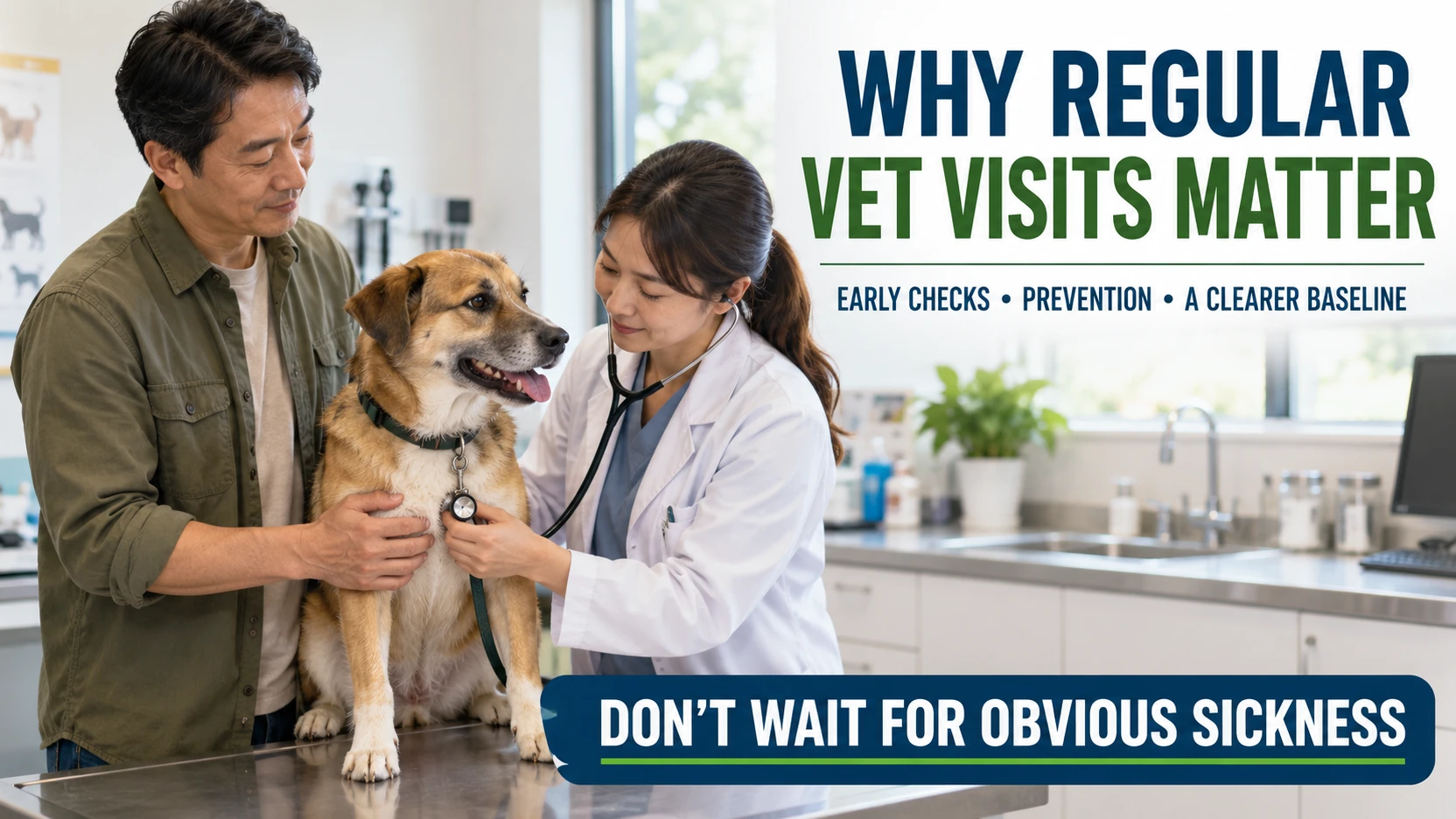

Regular vet visits matter because pets can develop dental disease, weight changes, pain, parasite problems, or internal illness before the changes are obvious at home. For dogs and cats, the American Animal Hospital Association recommends routine veterinary care at least once per year, while senior pets, animals with chronic conditions, and some species may need more frequent care. The right schedule is the one your veterinarian sets for your individual pet’s age, species, health, lifestyle, and risk.
A preventive visit is more than a vaccine appointment. It gives the veterinary team a chance to compare your pet’s current weight, body condition, mouth, skin, heart and lung sounds, mobility, behavior, and history with earlier visits, which helps turn small changes into useful clinical information instead of isolated observations.
Routine care also creates a place to adjust vaccination, parasite prevention, nutrition, dental care, behavior support, and screening as your pet’s life changes. That is why a pet who looks perfectly normal can still benefit from making the trip.
When Should You Make the Trip?
| Situation | Best next step | Why |
|---|---|---|
| Pet seems well, but the routine exam is due | Schedule preventive care | A normal-looking pet can still have changes worth finding early. |
| Senior pet, chronic condition, or major life-stage change | Ask whether visits should be more frequent | Monitoring needs often increase when health risk or treatment complexity increases. |
| New but stable change in appetite, behavior, bathroom habits, skin, movement, or energy | Call the clinic and describe the change | The veterinary team can decide how quickly your pet should be examined. |
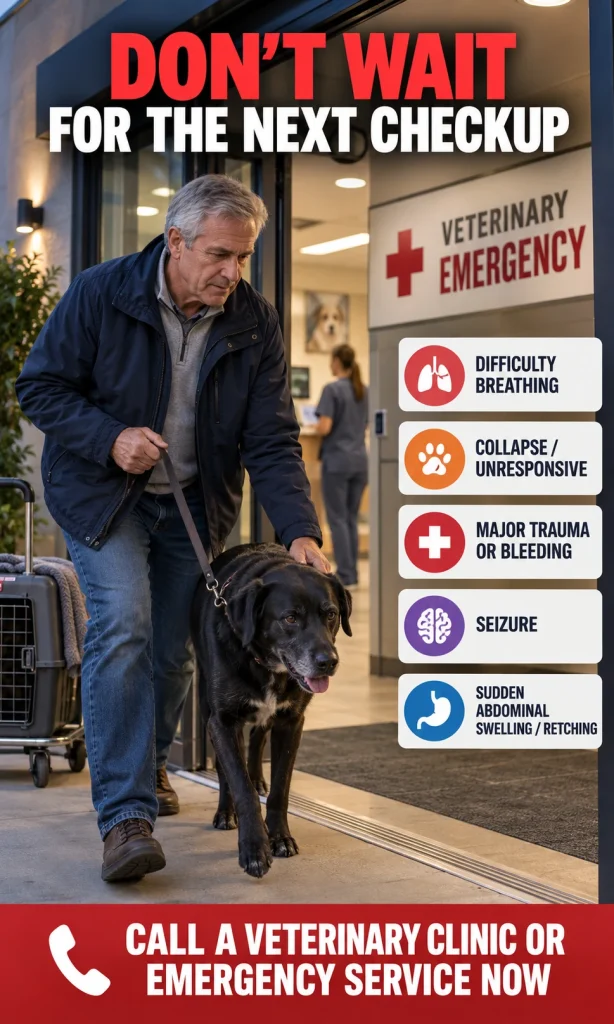
| Difficulty breathing, collapse, major trauma or bleeding, seizure, or sudden abdominal swelling/retching | Contact a veterinarian or emergency service now | These can be time-sensitive emergency signs. |
| Your primary vet recommends advanced testing or specialist care | Follow the referral plan | Primary and specialty teams can coordinate care instead of duplicating it. |
Know the next practical step before you leave home
Pet Visit Readiness Check
Turn the reason for your pet's visit, timing, and urgent warning signs into a clear action and a clinic-ready checklist.
Your result
Bring this to the visit
Clinic type to search
This is a category suggestion, not a clinic endorsement or ranking.
Find local help
Enter any city, ZIP/postcode, or area. The search stays worldwide; Austin, Texas is only an example.
No clinic names, ratings, hours, distances, or availability are invented here. Use the live search results, then compare the candidates below.
Compare up to 3 clinics you find
Candidate 1
Candidate 2
Candidate 3
What a Routine Vet Visit Can Reveal
A hands-on examination gives your veterinarian information you cannot get from a photo, a home scale, or a quick online symptom search. They can listen to the chest, feel the abdomen, examine the mouth and eyes, assess body and muscle condition, look for pain or reduced mobility, and connect those findings with changes you have noticed at home.
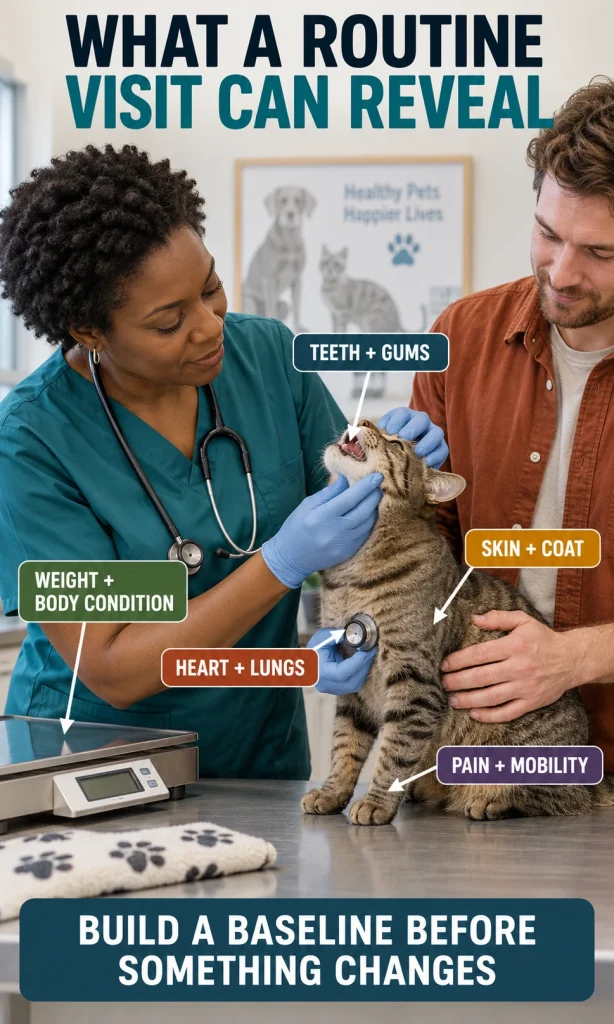
The value is often in the comparison. A two-pound weight change, a new heart murmur, reduced joint movement, tartar progression, a skin lesion, or a shift in body condition means more when the clinic has a previous baseline and medical record to compare it with.
Dental disease is a good example of a problem that can progress quietly. Home care still matters, and our guide to how to take care of your cat’s teeth can help between appointments, but a veterinary oral exam is the place to identify problems that home brushing cannot diagnose.
Why Waiting for Obvious Sickness Can Be a Mistake
Pets do not reliably advertise discomfort. Some continue eating, greeting you, or following normal routines while pain, dental disease, kidney problems, arthritis, skin disease, or other conditions are developing. The goal of routine care is not to hunt for disease in every healthy animal; it is to notice meaningful change before the pet reaches a crisis.
This matters especially when the change is subtle: sleeping more, taking longer to jump, drinking differently, becoming irritable when touched, losing weight slowly, or changing litter-box habits. If you are unsure whether a behavior change is stress, discomfort, fear, or something else, learning to read your pet’s body language can give you better observations to report to the clinic.
- Call promptly for a new change: appetite, thirst, urination, stool, coughing, vomiting, limping, skin lesions, sudden behavior shifts, or unusual fatigue.
- Do not wait for a routine appointment when your pet has difficulty breathing, collapses, is unresponsive, has major trauma or uncontrolled bleeding, has a seizure, or develops sudden abdominal swelling with retching.
- Use the clinic’s triage advice: the same symptom can have very different urgency depending on species, age, severity, duration, and other signs.
- Keep an emergency backup: know which emergency service you would use before you need it, and keep a practical pet first-aid reference available for preparation, not as a substitute for veterinary care.
The AAHA emergency-sign guide lists breathing difficulty, unresponsiveness, seizures, significant bleeding or trauma, sudden abdominal swelling, abnormal gum color, eye injuries, and sudden paralysis or extreme weakness among signs that warrant urgent veterinary attention. If you are uncertain and your pet appears seriously unwell, contacting a veterinary professional is safer than waiting for the symptom to become easier to interpret.
Preventive Care Is More Than Vaccines
Vaccination is one part of preventive care, not the whole visit. Depending on your pet, the veterinarian may also review parasite risk, dental health, nutrition, weight, mobility, behavior, reproductive status, medications, screening tests, travel exposure, and lifestyle factors such as indoor versus outdoor access.
The useful plan is individualized. A young indoor cat, a working dog that travels frequently, a senior dog on long-term medication, and a reptile with specialized husbandry needs do not need identical preventive care just because they are all called pets.
Choose a Clinic You Can Actually Use
A good veterinary relationship is partly about medical quality and partly about access. The clinic should be appropriate for your species, easy enough to reach when you need it, clear about routine versus emergency coverage, comfortable discussing estimates and options, and willing to explain when a referral or second opinion would add value.
In the United States and Canada, voluntary AAHA accreditation is one quality signal you may encounter; other countries use different professional, licensing, hospital, or accreditation systems. Wherever you live, the practical questions are similar: who sees your species, who covers after hours, how records are shared, what diagnostics are available, and where the clinic sends emergencies or specialty cases. AAHA’s guide to choosing a veterinarian is a useful example of the criteria to compare.
| Clinic question | What you are really checking |
|---|---|
| Do you routinely treat my pet’s species? | Species-specific experience and equipment. |
| What happens after hours? | Whether you need a separate emergency hospital plan. |
| Can I get an estimate before non-emergency tests or treatment? | How clearly the clinic communicates cost and options. |
| How do referrals work? | Whether records and care can move smoothly to a specialist. |
| How do you reduce fear and handling stress? | Whether the visit process is realistic for your pet’s temperament. |
Make the Vet Visit Easier on Your Pet
A stressful trip can make routine care harder, but stress is not a reason to avoid care indefinitely. The better approach is to tell the clinic what happens during travel, waiting, handling, or previous visits so the team can suggest practical preparation before the appointment.
For cats, the carrier itself can be part of the problem if it only appears before unpleasant trips. Leaving it available at home, adding familiar bedding, carrying it level, and choosing a secure carrier that can be opened easily can make transport less chaotic. For dogs, a secure leash or harness, calm arrival routine, and advance warning about fear or reactivity can help the team plan the visit.
The AAHA visit-preparation guidance recommends practicing calm handling and taking species-appropriate steps before travel. What matters most is telling the clinic early if your pet is extremely fearful, difficult to transport, or has previously struggled with examination or handling.
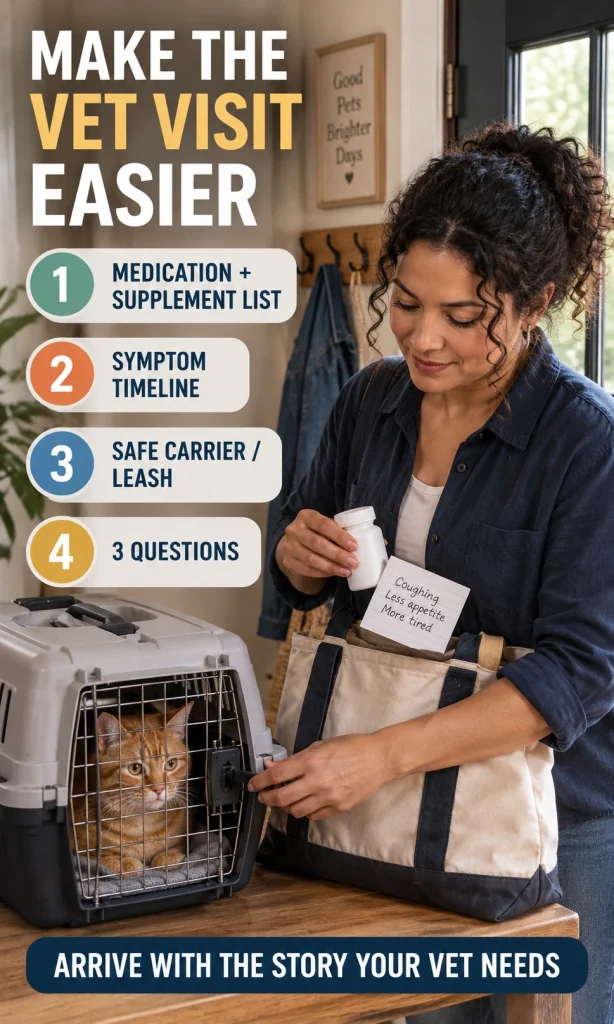
What to Bring to the Appointment
The veterinary team can make better decisions when the story is clear. You do not need a perfect medical summary; you need the details that change the interpretation of what the veterinarian sees.
- A list or photos of all prescription medicines, over-the-counter products, supplements, preventives, and doses you are currently giving.
- A short symptom timeline: what changed first, when it started, whether it is getting better or worse, and anything that seems to trigger it.
- Photos or videos of intermittent coughing, limping, tremors, unusual breathing, behavior changes, stool changes, or other signs that may not happen in the exam room.
- Recent records, laboratory results, imaging reports, vaccination history, or referral notes when changing clinics.
- Three questions you most want answered so the important decisions do not get lost in the appointment.
When a General Veterinary Clinic Is Not Enough
Primary-care veterinarians handle a wide range of preventive care, common illnesses, diagnostics, procedures, and ongoing management, but referral can be the right next step when a case needs advanced imaging, surgery, cardiology, neurology, oncology, dermatology, dentistry, ophthalmology, behavior expertise, or another specialty. A referral is not a failure of the regular clinic; it is a way to add a different level of expertise while keeping the primary team involved.
Species fit matters too. Birds, reptiles, rabbits, and other exotic pets may need a veterinarian with specific training and equipment, so confirm this before an urgent problem occurs. If you keep reptiles, our guide to Tokay geckos as pets is a useful reminder that husbandry and species-specific veterinary care belong in the same health plan.
New kittens deserve the same kind of advance planning because they can deteriorate quickly when ill. If you are caring for a young cat, review the signs in our guide to common kitten sickness that requires a vet visit, then use your veterinarian’s advice for the actual timing of care.
If Cost Is the Reason You Keep Delaying
Tell the clinic early instead of disappearing from care. Ask what is most important today, what can safely wait, what information each recommended test would add, whether there are reasonable alternatives, and what the expected follow-up costs may be. A clear estimate does not make every option affordable, but it turns an unknown bill into a set of decisions you can discuss.
Preventive care also gives you more chances to plan. It is easier to budget for routine examinations, vaccines, parasite control, dental discussions, and scheduled monitoring than to build an entire care plan for the first time during an emergency.
Key Takeaway
The trip to the vet is worth making before your pet looks obviously sick because routine care builds a baseline, supports prevention, and gives subtle changes a place to be checked. Keep a regular clinic, know your emergency backup, choose a veterinarian who actually treats your species, and arrive with a clear history so the appointment can focus on decisions instead of reconstruction.
Frequently Asked Questions
How often should my pet go to the vet?
For dogs and cats, at least one routine examination per year is a common preventive baseline. Senior pets, animals with chronic disease, young animals completing preventive care, and some species may need more frequent visits, so the schedule should be individualized by your veterinarian.
Does my pet need a vet visit if they seem healthy?
Yes, routine preventive visits can still be useful when a pet appears healthy. They establish a baseline and give the veterinarian a chance to find changes in weight, teeth, skin, mobility, heart and lung sounds, or other areas before those changes become obvious at home.
What should I bring to a veterinary appointment?
Bring medication and supplement information, a short symptom timeline, relevant photos or videos, recent records when available, and a few questions you want answered. Use a secure carrier, leash, or other species-appropriate transport method.
When should I use an emergency vet instead of waiting for my regular clinic?
Difficulty breathing, collapse or unresponsiveness, major trauma or uncontrolled bleeding, seizures, sudden paralysis or extreme weakness, abnormal gum color, serious eye injury, or sudden abdominal swelling with retching can require urgent evaluation. Call your veterinarian or an emergency service immediately when a pet appears seriously unwell or you are unsure how urgent the problem is.
How can I make a vet visit less stressful for my cat or dog?
Start before the appointment: make the carrier or leash routine familiar, practice calm handling, bring familiar bedding or treats when appropriate, and tell the clinic about fear or reactivity in advance. The veterinary team can then suggest a lower-stress arrival or handling plan for your individual pet.
How do I choose a veterinary clinic?
Confirm that the clinic routinely treats your species, check normal and after-hours access, ask how emergencies and referrals are handled, and make sure the team communicates clearly about examinations, tests, options, and costs. Convenience matters because a clinic is only useful if you can reach and work with it when care is needed.