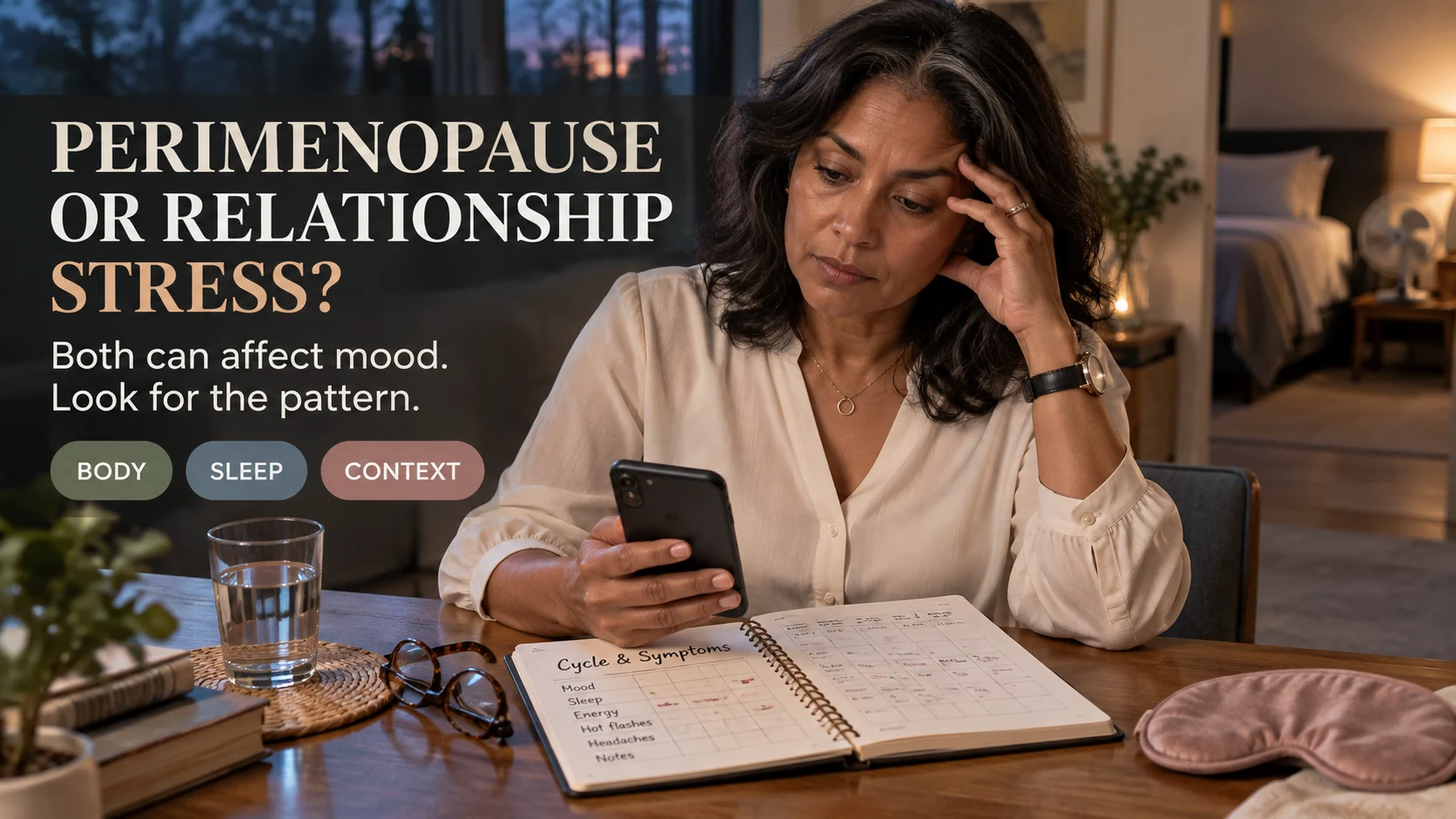

Perimenopause can make mood, sleep, concentration, and stress tolerance feel less predictable, but it does not make every painful emotion “just hormones.” Relationship conflict, betrayal, grief, fear, and other life stressors can affect you at the same time, and the most useful question is often not which one is real, but how the patterns overlap.
Perimenopause is the transition before menopause, when ovarian hormone production becomes more variable and menstrual cycles often change. The Menopause Society’s perimenopause guidance describes irregular periods, hot flashes, sleep disturbance, migraine changes, mood symptoms, and brain fog among the experiences that can occur during this stage.
Stressful life circumstances can add another layer. ACOG’s guidance on mood changes during perimenopause notes that hormonal changes, physical symptoms, poor sleep, and the pressures of midlife can all contribute to emotional symptoms, so it is reasonable for a difficult relationship period and perimenopause to feel tangled together.
Perimenopause does not explain away relationship hurt
If a partner has hurt you emotionally, physically, or sexually, that experience deserves to be taken seriously on its own terms. Hormonal changes may affect how intensely you experience stress or how well you recover after a bad night, but they do not make harmful behavior acceptable, and they should not be used to dismiss fear, grief, anger, or a need for boundaries.
The same distinction matters in the other direction. A painful relationship can worsen sleep and anxiety, but it cannot fully explain classic menopausal-transition clues such as changing cycle patterns, hot flashes, night sweats, or new vaginal and urinary symptoms.
This is why sequence matters. If menstrual changes and temperature symptoms began before the relationship crisis, that points toward a biological transition that may be interacting with stress; if distress appears mainly around arguments, contact with a specific person, or a period of fear, the context itself may be doing more of the work.
Why sleep can blur the line between hormones and stress
Sleep is one of the main bridges between physical symptoms and emotional symptoms. Night sweats can wake you repeatedly, while rumination or relationship tension can keep your nervous system activated after you get into bed, and either route can leave you more irritable, tearful, anxious, or mentally foggy the next day.
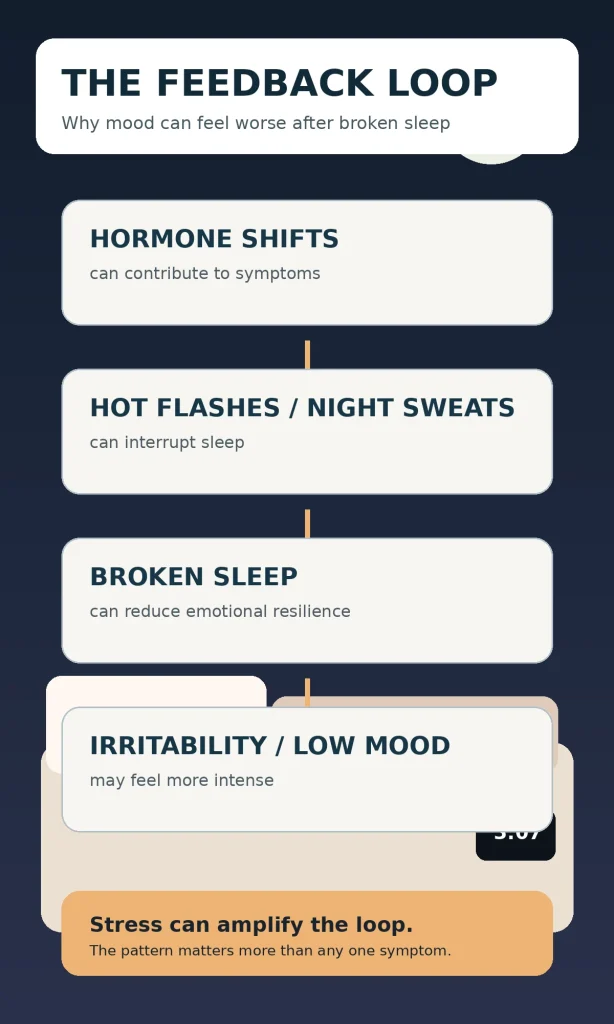
ACOG’s sleep guidance lists trouble falling asleep, staying asleep, frequent waking, and early waking among sleep problems reported around menopause. Poor sleep also makes it harder to regulate emotion and cope with change, which means a small conflict can feel much bigger when several nights of sleep have already been disrupted.
That does not mean every low mood after poor sleep is a menopause symptom. It means sleep quality is a practical checkpoint: improving it may reduce the intensity of several overlapping complaints and make the remaining pattern easier to interpret.
What changed first is often more useful than what feels strongest
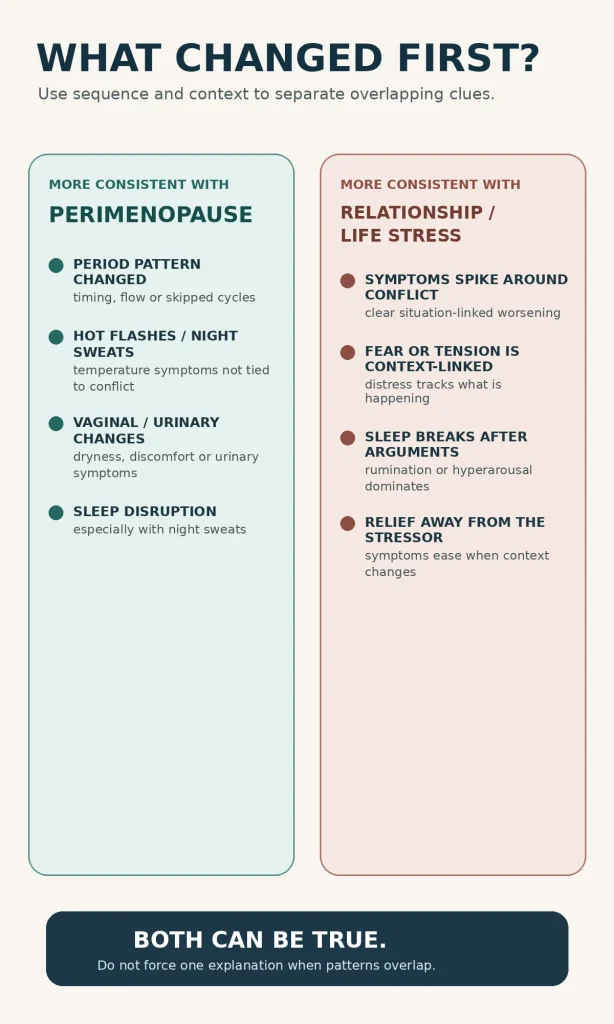
Start with a simple timeline rather than trying to label yourself. Write down when your cycle changed, when hot flashes or night sweats started, when sleep became unreliable, and when the relationship or life stressor became significant.
Then look for symptoms that travel together. A cluster of menstrual changes, vasomotor symptoms, vaginal or urinary changes, and sleep disruption is more consistent with the menopause transition than an emotional reaction alone, while distress that rises and falls with a specific relationship context may reflect a separate stress response.
Both patterns can exist at the same time. In fact, the overlap is often the clinically useful answer because a clinician can address bothersome menopause symptoms while you separately address relationship stress, anxiety, depression, trauma, or safety concerns.
Midlife symptom decision support
Perimenopause Pattern Check
Separate menopause-transition clues from stress context, then build a concise summary you can take to a healthcare appointment.
Build the pattern, not a label
Select only what has actually changed. The result explains which clues fit perimenopause, which clues point more strongly to stress or relationship context, and which selections deserve medical or safety follow-up.
Your selected pattern
Summary
What the pattern suggests
Most useful next step
Bring to an appointment
This is educational decision support, not a diagnosis or a substitute for care from a qualified healthcare or mental-health professional.
| Pattern | What it may suggest | Useful next check |
|---|---|---|
| Period timing or flow changed, with hot flashes or night sweats | A menopause-transition pattern is plausible | Track cycles, sleep, and temperature symptoms together |
| Distress spikes around conflict or contact with one person | Relationship or situational stress may be a major contributor | Note the trigger, your physical response, and how long recovery takes |
| Both symptom clusters are present | Perimenopause and psychosocial stress may be interacting | Bring both the symptom pattern and the life context to your appointment |
| Low mood, anxiety, hopelessness, or loss of interest persists and affects daily function | A mental health condition may need direct assessment | Discuss symptoms with a healthcare or mental health professional |
Mood changes are real, but they still need context
Perimenopause is a period of increased vulnerability to depressive and anxious symptoms for some women, particularly when there is a prior history of mood problems, severe vasomotor symptoms, poor sleep, or stressful life events. That does not mean depression is inevitable, and it does not mean a clinician should automatically attribute every emotional symptom to reproductive hormones.
If irritability or low mood is new, intermittent, and appears alongside hot flashes, sleep disruption, and cycle changes, it may fit the menopause transition. If you are experiencing persistent hopelessness, loss of interest, severe anxiety, panic, or difficulty functioning, the symptom deserves a mental health assessment whether or not perimenopause is also present.
The distinction matters because treatment is not one-size-fits-all. NICE menopause guidance recommends considering hormone replacement therapy for depressive symptoms that begin around the same time as other menopause symptoms when those symptoms do not meet criteria for depression, while suspected or diagnosed depression should also be managed according to depression guidance.
Track the pattern before you try to solve everything at once
You do not need a perfect diary. A short, consistent record is enough to reveal whether symptoms are cyclical, random, linked to hot flashes, linked to poor sleep, or closely tied to a relationship event.
- Cycle: note first day of bleeding, skipped periods, and major changes in flow or timing.
- Temperature symptoms: record hot flashes and night sweats, especially when they wake you.
- Sleep: note trouble falling asleep, repeated waking, early waking, and the likely reason.
- Mood: record irritability, anxiety, low mood, tearfulness, or emotional numbness and how long each episode lasts.
- Context: note arguments, major stressors, grief, fear, work strain, caregiving, or other events that clearly precede symptoms.
- Function: record whether symptoms interfere with work, relationships, self-care, exercise, or concentration.
Patterns are more useful than isolated bad days. If you are already tracking symptoms related to sleep problems and depression or relationship conflict and depression, bring the same notes into the perimenopause conversation rather than creating separate explanations for each symptom.
When bleeding changes need medical review
Irregular periods are common in perimenopause, but abnormal bleeding should not be ignored. ACOG’s guidance on perimenopausal bleeding advises discussing bleeding between periods, bleeding after sex, unusually heavy bleeding, and bleeding that lasts longer than usual with an ob-gyn or other healthcare professional.
Any vaginal bleeding after 12 months without a period should be assessed. Most causes are not cancer, but postmenopausal bleeding can sometimes signal a condition that needs treatment, so it is not a symptom to watch indefinitely at home.
What can help if perimenopause is part of the picture?
Treatment should target the symptoms that are actually bothering you rather than the label alone. For vasomotor symptoms such as hot flashes and night sweats, hormone therapy is an effective option for many people, but the decision depends on medical history, personal risk factors, symptoms, preferences, and whether there are reasons hormone therapy may not be suitable.
The ACOG hormone therapy overview explains both potential benefits and situations in which systemic hormone therapy is usually not recommended. Nonhormonal prescription options also exist, and The Menopause Society’s hot-flash guidance describes approved and off-label nonhormone treatments for people who cannot or do not want to use hormones.
Cognitive behavioural therapy can also be useful for some menopause-related sleep, vasomotor, or depressive symptoms. It is not a way of saying the symptoms are “in your head”; it is a structured approach that can improve coping, sleep, and symptom burden while medical causes and treatment options are addressed.
What can help if relationship hurt is part of the picture?
If the main problem is betrayal, conflict, intimidation, grief, or emotional injury, medical treatment for hot flashes will not resolve the relationship itself. Support may include individual therapy, couples work when it is safe and appropriate, practical boundary-setting, time away from a stressor, trusted friends or family, or legal and safety support when needed.
If a partner frightens you, controls you, threatens you, hurts you physically, coerces sex, or makes you feel unsafe, prioritize safety rather than trying to determine whether perimenopause made you “too sensitive.” The World Health Organization’s clinical handbook on intimate partner violence emphasizes immediate emotional, physical, safety, and ongoing support needs for women who have experienced violence.
If you are in immediate danger, contact local emergency services or a trusted local support service. If you are having thoughts of harming yourself or feel unable to stay safe, seek urgent mental health support where you live.
What to bring to a healthcare appointment
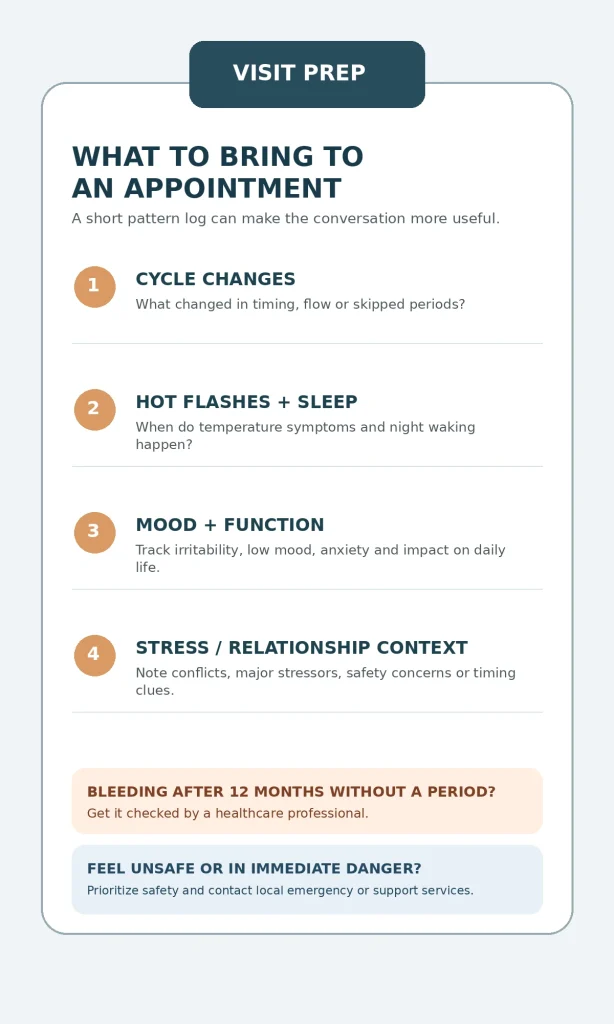
You will usually get a better conversation if you bring a short symptom timeline instead of trying to remember everything in the room. Include cycle changes, hot flashes or night sweats, sleep, mood, medications or contraception, major life stress, and anything that makes you feel unsafe or unable to function normally.
For otherwise healthy people aged 45 or older with typical symptoms, some clinical guidelines identify perimenopause from symptoms and menstrual changes without routine hormone testing. If you are younger, have an atypical pattern, use hormonal contraception, have had surgery affecting the ovaries or uterus, or have symptoms that could have another cause, your clinician may need a different evaluation.
Frequently asked questions
Can perimenopause make relationship problems feel worse?
It can make emotional regulation, sleep, irritability, and stress tolerance less predictable for some people, which may intensify how conflict feels. That does not mean the relationship problem is imaginary or that harmful behavior should be excused.
How do I know whether mood changes are hormonal or caused by stress?
Look at timing and clustering. Mood changes that appear with cycle changes, hot flashes, night sweats, and disrupted sleep may fit perimenopause, while distress that rises mainly around a specific stressor may have a stronger situational component; both can occur together.
Do I need a hormone blood test to know if I am in perimenopause?
Often not when you are 45 or older and have a typical combination of menopause symptoms and menstrual-cycle changes. Testing may be useful in younger people or when the diagnosis is uncertain, so the decision should be individualized.
Can hormone therapy treat depression caused by perimenopause?
Hormone therapy may be considered for some depressive symptoms that begin with other menopause symptoms, but clinical depression still needs its own assessment and treatment plan. A clinician should consider symptom severity, medical history, risks, preferences, and whether vasomotor symptoms are also present.
When should bleeding during perimenopause be checked?
Discuss bleeding between periods, bleeding after sex, unusually heavy bleeding, or bleeding that lasts longer than usual with a healthcare professional. Any bleeding after 12 months without a period should also be assessed.
Next steps
Do not force yourself to choose between “hormones” and “relationship stress” before you have enough information. Track the sequence, note what clusters together, take bleeding or persistent mental-health symptoms seriously, and bring the full picture to a clinician who is comfortable discussing both menopause and emotional wellbeing.