
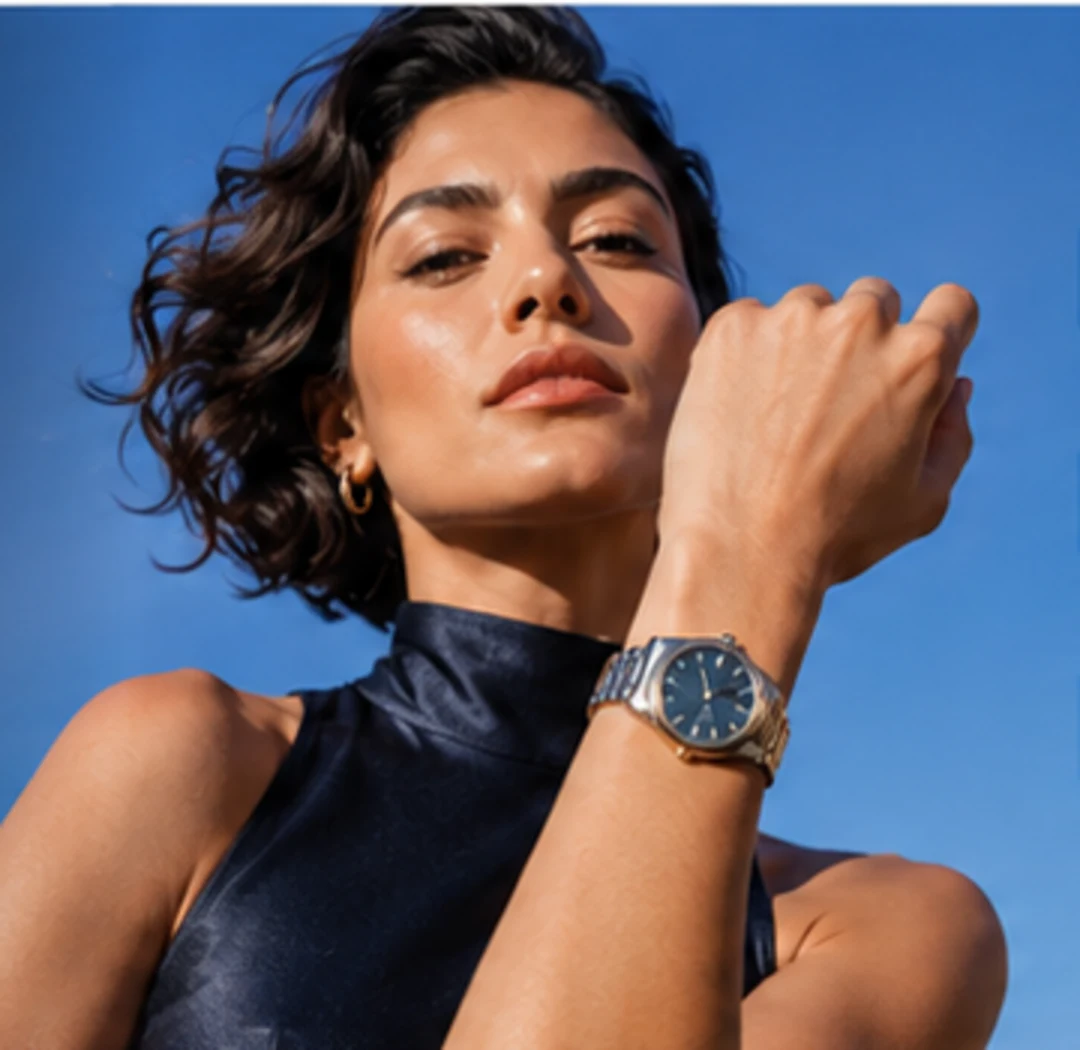
Choosing a women’s watch starts with fit rather than fashion. A watch should sit securely on the usable surface of the wrist, remain comfortable when the hand bends, offer enough adjustment for normal changes in wrist size, and suit the situations in which it will actually be worn. Once those requirements are satisfied, case shape, dial design, color and decorative details become much easier to choose.
The label “women’s watch” is therefore only a starting category. It does not mean every woman needs a tiny case, a narrow bracelet or a jewellery-style design, because two people with the same wrist circumference can have different wrist widths and very different preferences for wrist presence. A compact rectangular watch may feel substantial despite its small dimensions, while a larger round watch with short lugs can sometimes sit surprisingly neatly.
Start With How the Watch Sits on Your Wrist
Measure the wrist where the watch will actually sit, normally just above the prominent wrist bone. Circumference tells you whether the supplied strap or bracelet has enough adjustment, while the flatter width across the top of the wrist gives additional information about how much watch case it can support. If you already own a watch that fits particularly well, measuring that watch can be even more useful because it provides a real-world reference rather than an abstract size recommendation.
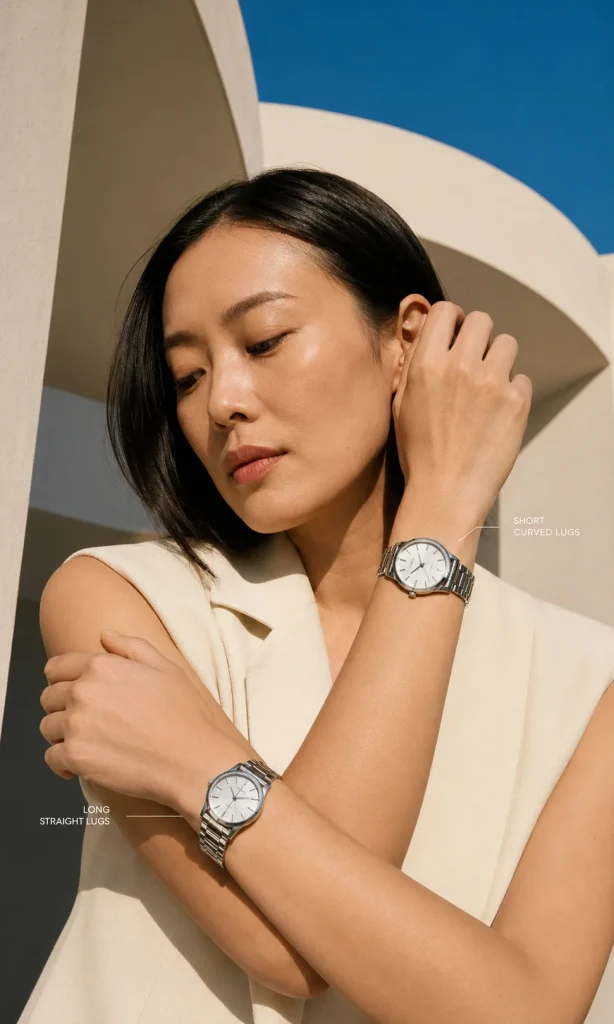
Case diameter describes the width of a round watch case, usually without including the crown, but it should never be treated as a complete sizing system. Two watches with the same diameter can feel completely different because one may have short curved lugs while another stretches much farther across the wrist. Rectangular, oval and tonneau-shaped cases complicate diameter comparisons further, so overall footprint matters more than a single number.
Lug-to-lug length is the distance from the tip of the upper lug to the corresponding lower lug. This measurement helps show whether the case will remain supported by the upper surface of the wrist or whether its ends are likely to project beyond it. When online listings provide both case diameter and lug-to-lug length, use both numbers together rather than assuming diameter alone predicts fit.
Wrist Fit Studio
Enter your wrist and watch measurements to see whether the case footprint, lug length, thickness and adjustment system work together - before a beautiful watch becomes an uncomfortable one.
 CASE
WRIST
FIT
CASE
WRIST
FIT
Your wrist
Measure where the watch normally sits, just above the wrist bone. Flat wrist width is optional; if you skip it, the experience uses a conservative estimate.
The watch
Use the manufacturer's listed dimensions where possible. Lug-to-lug is especially important because two watches with the same diameter can wear very differently.
Attachment and adjustment
A well-sized case can still be uncomfortable if the strap or bracelet cannot reach a useful intermediate setting.
How it behaves
If you have tried the watch already, choose the issue that best describes it. This helps separate size problems from adjustment and balance problems.
Thickness, weight and crown position change comfort even when the watch appears correctly proportioned from above. A thick automatic case can feel top-heavy, while a large crown positioned close to the hand can become irritating when the wrist bends. A substantial steel bracelet may also change how a watch balances compared with the same-sized case on leather, so the full watch should be judged as a wearable object rather than a dial attached to a strap.
A useful fit test is to bend the wrist normally rather than holding the hand perfectly straight for a photograph. The case should remain reasonably stable, the crown should not repeatedly press into the back of the hand, and the bracelet should not require excessive tightness just to stop the watch rotating. Comfort during movement often reveals problems that are invisible while the wrist is resting flat on a counter.
Fit also has a visual component, and personal preference still matters once obvious physical problems have been eliminated. Some people want a discreet watch that leaves plenty of visible wrist around the case, while others deliberately prefer a stronger contemporary presence. A larger-looking watch is not automatically incorrectly sized if the lugs remain supported, movement is comfortable and the wearer likes the proportion.
Decide What Job the Watch Needs to Do
Before choosing gold versus steel or round versus rectangular, decide where the watch will spend most of its time. An everyday watch needs different qualities from a jewellery piece worn mainly for dinner, while a travel watch may place more value on comfort, legibility and durability than an ultra-thin dress watch. Beginning with the use case prevents attractive specifications from distracting you from how the watch will actually behave.
If the terminology itself feels confusing, understanding the main different types of watches can make the decision easier. Dress watches, sport watches, field-inspired designs, chronographs, dive-style watches and jewellery watches tend to prioritize different combinations of thickness, legibility, durability and visual presence. You do not need to become a watch collector to understand those distinctions, but recognizing them prevents comparisons between watches designed for completely different purposes.
For Everyday Wear
An everyday watch should be easy to read, comfortable for several continuous hours and adaptable to more than one outfit. Moderate thickness, a secure adjustable strap or bracelet and a dial that remains clear at a quick glance usually matter more than decorative complexity. If it is going to be worn through work, commuting, errands and weekends, pay particular attention to weight and how the case feels after the wrist warms up.
For Dress and Formal Wear
A dress-oriented watch can prioritize refinement and proportion over ruggedness. Slimmer cases tend to work more easily around cuffs, while cleaner dials and restrained bracelets or leather straps usually create less visual competition with formal clothing. Rectangular and smaller round cases can work especially well here, although a larger understated watch can still look appropriate when its proportions are controlled.
For Sport, Travel and Active Days
Active use changes the specification priorities considerably. Secure attachment, useful water resistance, good legibility and a case that does not constantly shift on the wrist become more important than delicate finishing, while a strap material that tolerates heat and moisture may be preferable to untreated leather. For frequent travelers, our guide to watches for travel explores the use case in greater depth.
For Jewellery and Statement Wear
A watch can also function as a piece of jewellery, in which case case shape, bracelet design, dial texture, gemstones and metal tone may deliberately carry more weight in the decision. Even then, jewellery styling should not excuse poor physical fit because an uncomfortable watch eventually stays in the drawer. Make sure decorative bracelets still offer enough sizing control and that projecting cases or crowns do not interfere with normal hand movement.
Before shopping seriously, answer these questions:
- Where will I wear the watch most often?
- How many hours at a time will it stay on my wrist?
- Do I prefer a subtle, balanced or deliberately oversized appearance?
- Does the watch need to tolerate regular water exposure?
- Do I want a watch that can sit unused for days and immediately be ready?
- Will it need to fit beneath shirt or jacket cuffs?
- Am I comfortable with periodic mechanical servicing?
- Does the bracelet or strap provide fine enough adjustment for my wrist?
Quartz, Automatic or Solar?
A quartz watch is often the simplest choice for someone who primarily wants accurate timekeeping with little day-to-day attention. The movement is electronically regulated and normally powered by a replaceable battery, allowing the watch to remain ready even after sitting unused for an extended period. Quartz also makes it possible to build relatively slim watches at many price levels, which can be valuable when comfort and compact proportions are priorities.
An automatic watch uses a mechanical movement whose mainspring can be wound through the movement of a rotor as the watch is worn. It appeals to buyers who value mechanical construction, traditional watchmaking and the experience of owning a machine that operates without a conventional disposable watch battery. The trade-off is greater ownership involvement, and anyone considering several automatic watches may eventually wonder which watches actually need a winder rather than assuming every automatic watch must remain continuously running.
Solar-powered watches use light to recharge an internal energy-storage system while retaining the practical timekeeping characteristics associated with electronic watches. They can be particularly appealing to someone who wants low routine intervention without moving into mechanical ownership. The important buying question is therefore less about which movement is universally “best” and more about whether you value convenience, mechanical character, thinness, maintenance simplicity or the ownership experience itself.
Choose the Bracelet or Strap for Real Life
A metal bracelet can make a watch feel substantial, durable and visually integrated with the case. It can also last for many years when properly maintained, but its comfort depends heavily on link length, clasp design and the amount of fine adjustment available. A bracelet that can only change size in relatively large increments may be frustrating on a wrist that falls between two settings.
Leather gives a watch a softer visual character and often reduces the overall weight on the wrist. It can work particularly well with office, dress and everyday watches, although moisture, perspiration and frequent wetting generally make leather less suitable for sustained aquatic or very active use. Check the strap length as carefully as the case dimensions, especially when buying a watch marketed toward unusually small or large wrists.
Rubber, silicone and fabric straps can be excellent choices when flexibility, easy cleaning or active use matters more than formal appearance. Their numerous adjustment positions may also make it easier to achieve a precise fit than a bracelet with relatively coarse removable links. Strap choice can transform the way the same watch wears, so it is worth checking whether the model uses easily replaceable straps if versatility matters.
Crystal and Water Resistance Affect Everyday Durability
The transparent cover over the dial is normally made from a watch crystal material such as mineral glass, sapphire or acrylic. Sapphire is valued for strong resistance to ordinary scratching, while mineral crystal can provide a practical balance between cost and durability and acrylic has advantages of its own in certain traditional or vintage-inspired designs. Crystal choice matters most when the watch will regularly encounter desks, door frames, bags, equipment or other surfaces capable of marking it.
Water resistance should be chosen according to realistic use rather than because a large number sounds reassuring on a product page. A watch worn around frequent swimming, wet outdoor activities or water sports needs a different level of protection and maintenance attention from a dress watch that mainly needs to tolerate incidental splashes. Water resistance can also depend on the condition of seals, crown and case components over time, so an older watch should not automatically be treated as though its original rating has been permanently preserved.
| Specification | What to check | Why it matters | Common warning sign |
|---|---|---|---|
| Case footprint | Diameter, shape and lug-to-lug | Controls how much of the wrist the case occupies | Lugs visibly extend beyond the supported wrist surface |
| Height and weight | Thickness, case material and bracelet weight | Affects stability, cuff clearance and long-term comfort | Watch constantly tips or feels top-heavy |
| Adjustment | Link increments, holes, half-links and clasp adjustment | Determines whether a comfortable intermediate fit is possible | One setting feels tight while the next is clearly loose |
| Movement | Quartz, automatic or solar | Changes maintenance, ownership routine and sometimes thickness | Buying mechanical purely for prestige when convenience is the priority |
| Durability | Crystal, water resistance and strap material | Needs to match actual daily exposure | Specifications chosen for appearance rather than real use |
Use the Four-Part Wrist Fit Check

A useful way to evaluate a women’s watch is to separate fit into four questions: footprint, motion zone, adjustment range and wearing context. This prevents one attractive measurement from hiding another problem and gives you a repeatable method for comparing watches from completely different brands. It is especially useful online, where a perfect studio photograph tells you very little about how the watch will behave on your particular wrist.
Footprint asks whether the case is physically supported by the upper wrist. Look at case shape and lug-to-lug distance together, because long straight lugs can make an otherwise moderate case wear much larger. If a watch overhangs substantially, the strap may fall almost vertically from the lugs rather than wrapping naturally around the wrist.
Motion zone asks what happens when the wrist and hand move. Bend the wrist, reach for an object and rotate the forearm rather than judging fit from a perfectly posed top-down image. Persistent crown contact, sharp bracelet edges or a case that repeatedly collides with the hand can become far more important after several hours than whether the dial initially looked elegant.
Adjustment range asks whether you can actually reach the fit you want. Leather and other perforated straps usually provide several settings, while bracelet fit depends on removable links and whatever adjustment the clasp offers. This is why two watches with nearly identical case dimensions can produce very different comfort on the same wrist.
Wearing context asks whether the chosen fit remains appropriate throughout the situations in which you will use the watch. A loose jewellery-style bracelet may be intentional for occasional wear, whereas a top-heavy sport watch generally needs enough stability that the case does not repeatedly roll to the outside of the wrist. There is no single universal fit because the acceptable movement and snugness depend partly on the watch’s design and purpose.
Case Shape and Dial Design Change Perceived Size
Round watches are easy to compare by diameter, but rectangular and square watches need more careful visual judgment because width and length create different proportions. A narrow rectangular watch can look elegant while extending farther along the wrist, whereas a cushion or tonneau case may occupy more surface area than its nominal width suggests. Compare the complete silhouette instead of trying to convert every shape into an imaginary round-case equivalent.
Metal color should be treated as a compatibility decision rather than a rule about what women “should” wear. Steel and silver-toned finishes tend to feel neutral and versatile, yellow gold creates greater warmth, rose tones can sit between jewellery and watch styling, and mixed-metal bracelets can make coordination easier for someone who regularly wears different jewellery metals. The finish of the surface also matters because brushed metal appears quieter while highly polished surfaces reflect far more light.
Dial legibility deserves more attention than it receives in many style-led buying guides. Small hands, low-contrast markers, highly reflective dials or dense decorative elements can make an attractive watch frustrating to read quickly. If the watch is intended for daily timekeeping rather than primarily jewellery use, evaluate the hands and hour markers from a normal viewing distance rather than relying on enlarged product photography.
Buying a Women’s Watch Online Requires More Information
Before purchasing online, look for actual dimensions rather than relying on descriptions such as petite, classic, medium or oversized. Useful listings provide the case width, thickness, strap or bracelet dimensions and ideally the lug-to-lug distance and weight. If an important dimension is missing, compare independent specifications or ask the seller rather than estimating scale from photographs taken with unknown lenses and wrist sizes.
Seller quality matters alongside the product itself, particularly when the watch is expensive or pre-owned. Read the return conditions before purchase, check what happens if bracelet sizing has been performed and understand whether removing protective packaging changes return eligibility. Our overview of platforms to search for watches online can help when comparing where to look rather than focusing solely on an individual model.
For a pre-owned watch, condition should be evaluated as part of total ownership cost rather than merely asking whether the asking price seems attractive. Bracelet stretch or damage, heavily polished case edges, worn crowns, missing links and uncertain maintenance history can all change what ownership looks like after purchase. A low purchase price becomes less appealing when immediate servicing, parts or bracelet work are required.
Common Women’s Watch Buying Mistakes
One common mistake is beginning with a famous brand and trying to make whichever model is most recognizable fit afterward. Brand preference is reasonable, but dimensions, adjustment and intended use should eliminate unsuitable models before prestige or popularity makes the decision emotionally difficult. A watch that spends most of its life uncomfortable in a drawer provides little value regardless of the logo on its dial.
Another mistake is assuming that a women’s watch should always be small. Smaller cases remain attractive and practical for many wrists, but modern watch design includes a far wider range of proportions and many women deliberately prefer sportier or more substantial watches. The useful boundary is physical fit and personal preference rather than an arbitrary gender-based diameter limit.
Bracelet adjustability is also easy to ignore until after purchase. A watch may look beautifully proportioned yet become frustrating if one removable-link configuration pinches while the next allows the case to slide around. This exact middle-ground problem is important enough that bracelet adjustment deserves to be evaluated before buying rather than treated as an inconvenience that can always be solved later.
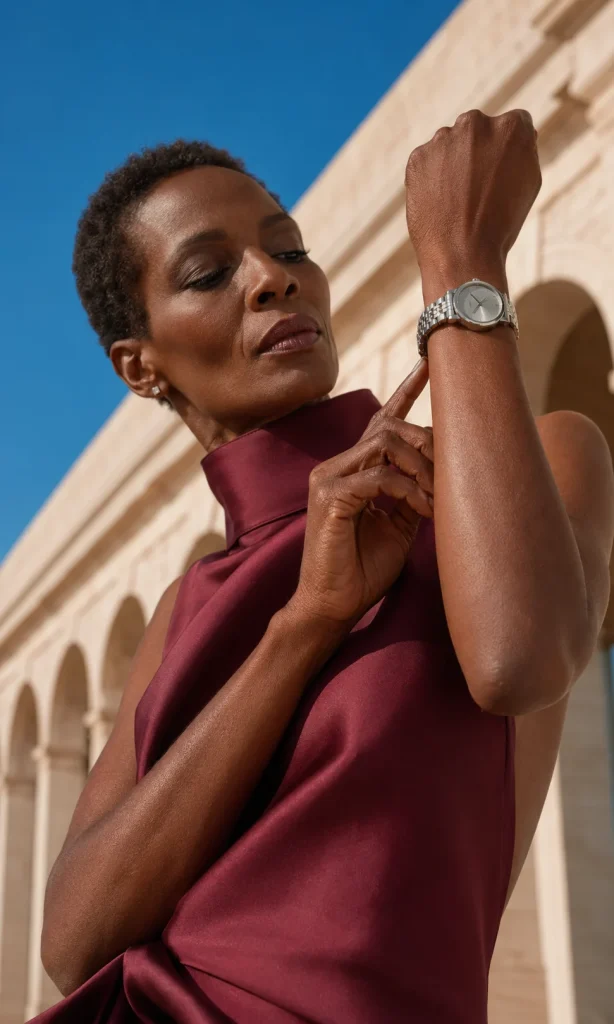
Wrist size can also change slightly during an ordinary day because of heat, activity and other normal factors. A bracelet adjusted at its absolute tightest point in a cool environment may feel very different later, so judge comfort across normal use rather than only during the five minutes spent at a sales counter. If a watch repeatedly leaves painful pressure points or requires excessive tightness to remain stable, the underlying sizing or geometry deserves attention; watches and wrist discomfort require more than simply tolerating the fit.
Finally, avoid paying for specifications that do not improve the way you will use the watch. A high water-resistance rating, complex mechanical movement or unusually heavy bracelet may be technically impressive while adding little value to someone seeking a slim office watch. Decide what the watch must do first, then spend money on the quality and characteristics that support that use.
A strong shortlist normally contains watches that all satisfy the basic functional requirements, leaving style to make the final decision. Compare them on your wrist where possible, check the side profile as well as the dial, move your hand naturally and notice whether the watch remains comfortable without being clamped tightly in place. The right women’s watch should feel convincing after the excitement of the initial appearance has passed.
A Better Shortlisting Method
When two or three watches remain, compare them in this order:
- Eliminate any model whose case or lugs clearly exceed the wrist in a way you dislike.
- Eliminate any model that cannot be adjusted comfortably.
- Check crown and case clearance while bending the hand.
- Compare weight and thickness for the number of hours you expect to wear it.
- Choose the movement that matches the amount of maintenance and interaction you actually want.
- Match water resistance and strap material to realistic use.
- Compare dial readability at normal wrist distance.
- Only then use color, shape, decoration and brand preference to make the final choice.
Frequently Asked Questions
What size watch is best for a woman?
There is no single case diameter that is best for every woman because wrist width, wrist shape, lug-to-lug length and personal style all affect how a watch wears. Start with the physical footprint of the case and make sure the lugs sit comfortably on the supported part of the wrist. After that, a smaller or larger visual presence is largely a matter of preference.
How do I know if a women’s watch is too big?
A watch may be too large if its lugs extend well beyond the usable wrist surface, the strap drops sharply from unsupported lugs, or the case repeatedly shifts because its footprint and weight overwhelm the wrist. Appearance alone does not establish that a watch is too large because some people intentionally prefer oversized styling. Comfort, stability and the amount of overhang provide more useful evidence.
Is 36 mm too big for a women’s watch?
A 36 mm case can fit many women comfortably, while the same diameter can feel large on another wrist because the lug-to-lug length, thickness and case shape differ. Treat 36 mm as one measurement rather than a sizing verdict. Compare the complete case footprint with your wrist before deciding whether it is too large for you.
Is quartz or automatic better for a women’s watch?
Quartz is usually easier for someone who wants accurate, low-attention everyday timekeeping, while automatic movements appeal to buyers who enjoy mechanical watchmaking and do not mind a more involved ownership experience. Neither movement is inherently more appropriate for women. The better choice depends on convenience, case dimensions, maintenance expectations, budget and what you enjoy about owning a watch.
Should a women’s watch be loose or tight?
A watch should normally be secure enough that the case does not constantly rotate around the wrist, yet comfortable enough that normal movement and temporary wrist expansion do not cause painful pressure. Some jewellery-style watches are intentionally worn looser, so design and preference matter. Persistent pinching, numbness or the need to overtighten the bracelet to control a heavy case suggests the fit should be reconsidered.
Does lug-to-lug matter on a women’s watch?
Yes, because lug-to-lug length describes how far the watch extends along the wrist and can reveal fit problems that case diameter misses. A relatively small-diameter watch with long straight lugs may wear larger than a wider watch with short curved lugs. It is one of the most useful measurements to check when purchasing online.
Should I choose a leather strap or metal bracelet?
A metal bracelet is durable and can give the watch greater visual presence, while leather often feels lighter and more traditional. The best choice depends on moisture exposure, clothing, weight preference and how finely each option can be adjusted. If possible, also check whether the watch accepts alternative straps so the same case can serve more than one role.
Final Watch-Buying Checklist
Before paying, confirm that:
- The case footprint suits your wrist.
- The lugs do not create unwanted overhang.
- The crown does not interfere with normal hand movement.
- The bracelet or strap can achieve a comfortable intermediate fit.
- The watch remains comfortable when your wrist moves.
- The movement matches the ownership experience you want.
- The crystal and water resistance suit realistic use.
- The dial remains readable at normal distance.
- The thickness works with the clothing you regularly wear.
- The return policy is acceptable if you are purchasing online.
- You still like the watch after evaluating fit, rather than choosing it because of brand reputation alone.