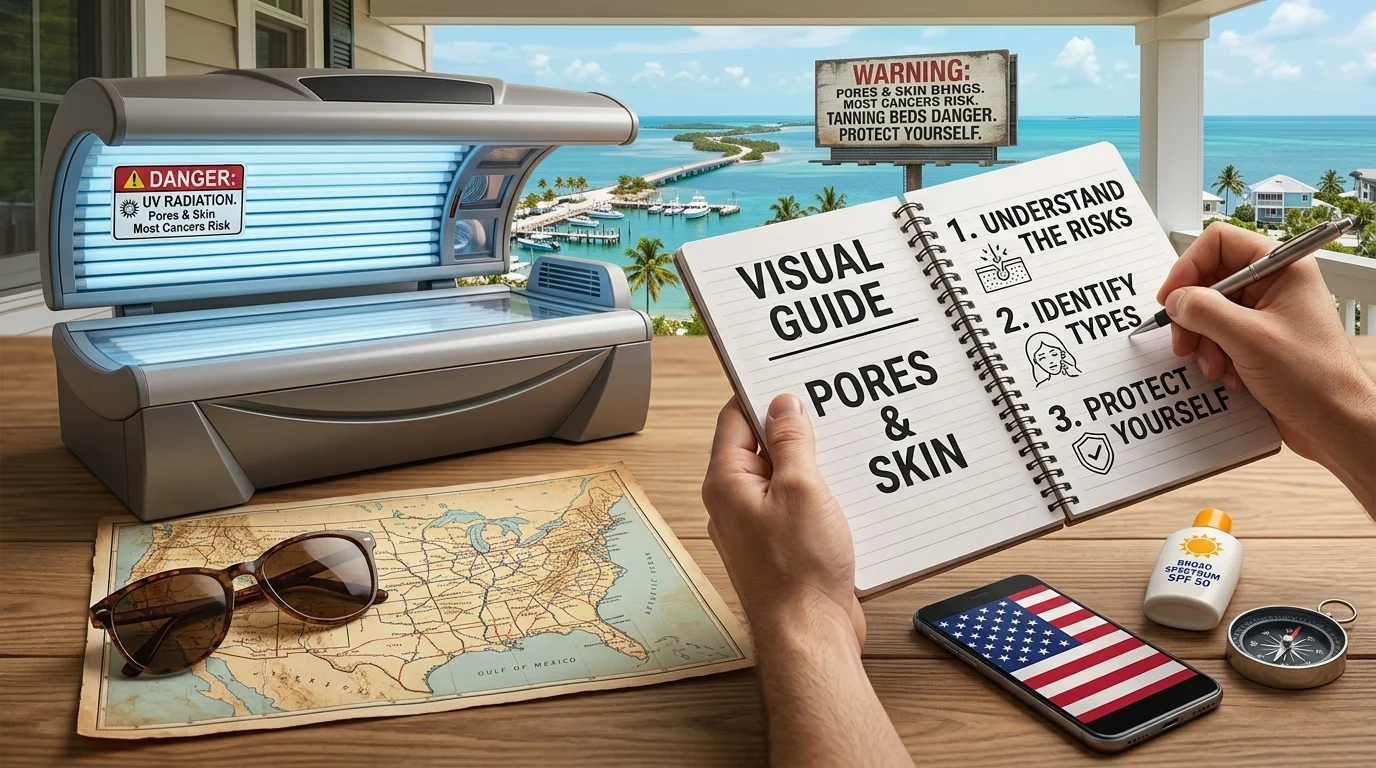

Tanning beds are not a safer way to tan. They expose skin to ultraviolet radiation that can damage DNA and increase the risk of melanoma and other skin cancers, and concern rises when exposure starts young or happens repeatedly. If you use indoor tanning now, the clearest risk-reduction step is to stop UV tanning and choose a sunless option if cosmetic color is the goal.
The short answer: a tan from UV exposure is skin injury
A visible tan is the skin’s response to ultraviolet injury, not proof that the exposure was healthy. The CDC’s skin-cancer prevention guidance says indoor tanning exposes users to high levels of UV radiation and recommends avoiding tanning beds. The FDA’s tanning-risk guidance likewise states that there is no safe tan and that the color change reflects damage.
Indoor tanning devices can emit both UVA and UVB radiation, and both can contribute to skin damage. UVA penetrates more deeply into the skin and is strongly linked with photoaging, while UVB is a major cause of sunburn; both forms of ultraviolet radiation can damage cellular DNA. The important distinction for the reader is simple: changing the source from sunlight to a tanning bed does not remove the carcinogenic UV exposure.
The International Agency for Research on Cancer classifies UV-emitting tanning devices as carcinogenic to humans. That classification does not mean every person who uses a tanning bed will develop cancer, but it does mean the exposure itself is a known cancer hazard and should not be treated as a harmless cosmetic routine.
- Current indoor tanning: stopping future UV tanning is the most direct modifiable step.
- Starting young: younger first exposure is associated with greater melanoma concern, which is why public-health guidance is especially cautious about teen and young-adult use.
- Repeated sessions: more exposure means more opportunities for UV-related DNA injury.
- Skin that burns easily: fair or sun-sensitive skin can burn quickly, but darker skin tones are not immune to UV damage or skin cancer.
- Personal or family history: a history of skin cancer can change how strongly a clinician recommends surveillance.
- Photosensitizing medicines: some medicines and products can make skin more sensitive to UV, so a pharmacist or clinician should be asked if you are unsure.
Why tanning beds raise skin-cancer risk
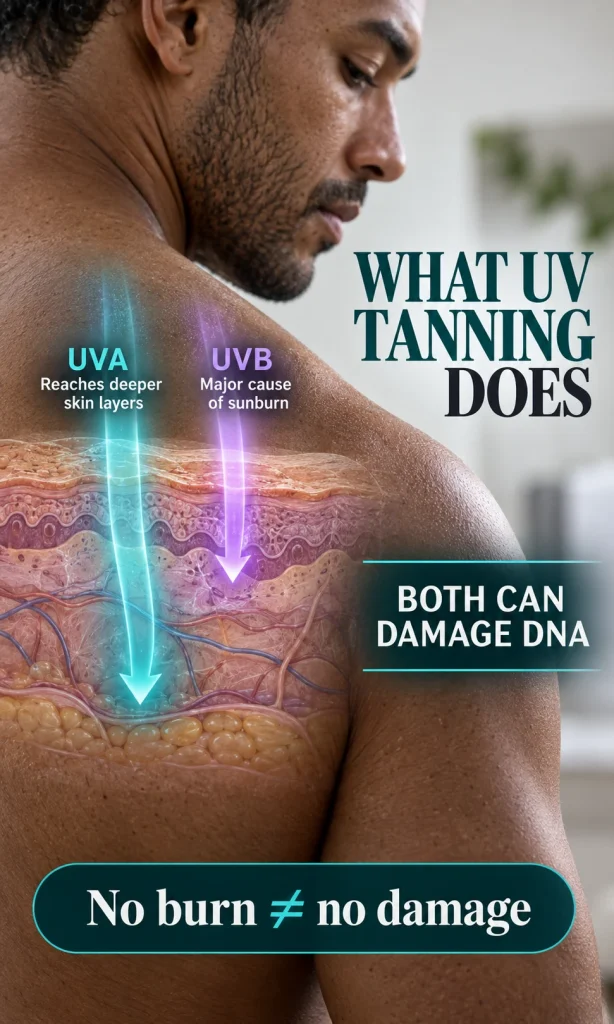
UV radiation can create direct and indirect damage inside skin cells. If that damage affects genes that control cell growth and repair, and the body does not fully correct the damage, abnormal cells can accumulate additional changes over time. Cancer risk is therefore tied to the biological effect of the radiation rather than to whether the skin was exposed indoors or outdoors.
The risk is not limited to melanoma. Dermatology guidance also links indoor tanning with basal cell carcinoma and squamous cell carcinoma, while the FDA lists premature skin aging, burns, and eye injury among the other harms of UV-emitting tanning devices. Those outcomes are separate from cancer risk, but they arise from the same core problem: unnecessary ultraviolet exposure.
A tanning session that does not produce an obvious burn is not automatically harmless. DNA damage can occur without a dramatic visible reaction, and a so-called base tan offers very little protection from later UV exposure. Treating a base tan as sunscreen can therefore increase exposure rather than meaningfully protect the skin.
UV tanning, outdoor sun, and sunless tanning are not the same choice
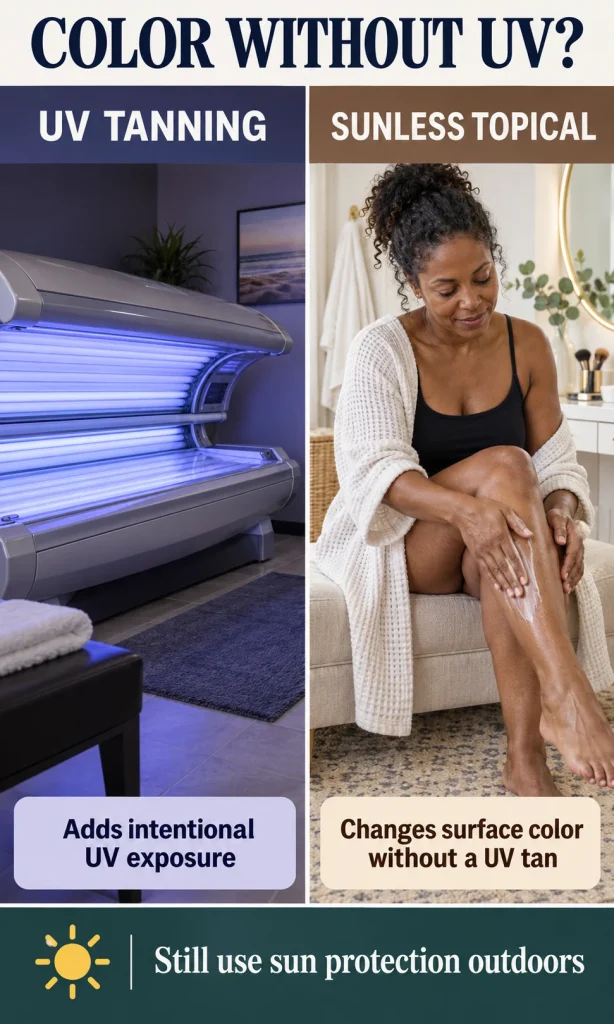
People often compare tanning-bed exposure with a day outdoors as though one must be the safer UV option. That comparison misses the better decision: if the goal is simply cosmetic color, the safer route is to avoid intentional UV tanning rather than to optimize the dose. Outdoor life still matters for exercise and normal activities, but sun protection should be used instead of seeking a tan.
| Method | UV exposure | Main concern | Better decision |
|---|---|---|---|
| Tanning bed | Intentional concentrated UVA/UVB exposure | Skin-cancer risk, burns, photoaging, eye damage | Avoid indoor UV tanning |
| Outdoor sun | Varies with time, season, latitude, cloud, reflection and UV Index | Cumulative UV exposure and sunburn | Use shade, clothing, sunglasses and broad-spectrum sunscreen |
| Sunless topical color | No tanning UV required | Application irritation or misuse depending on product | Follow product directions and still use sun protection outdoors |
Use this exposure check instead of trying to calculate a fake cancer percentage
No simple online form can convert your tanning history into a trustworthy personal cancer probability. Age at first exposure, cumulative UV, natural sun exposure, skin type, number and type of moles, immune status, family history, prior skin cancer and genetics can all matter, and several of those variables are difficult to measure accurately. A useful interactive experience should therefore help you identify modifiable exposure and decide what to do next rather than produce false precision.
Decision support for tanning-bed exposure
UV Exposure
Reality Check
Understand what in your tanning history changes the conversation, what you can still change now, and when a skin check deserves priority.
This does not diagnose skin cancer or calculate your personal cancer probability.
Start with your exposure pattern
Choose the closest answer. The result uses qualitative decision logic rather than inventing a numerical cancer score.
Your exposure context
Result
What matters in your answers
Recommended next actions
Local help
Need a professional skin check?
Search for a dermatologist in your area. The buttons open normal Google Search and Maps queries; no API key is required and no clinics or ratings are fabricated here.
Compare up to 3 candidates you find
Medical note: This experience is general education. It does not diagnose skin cancer, replace a skin examination, or establish a personal screening interval. Seek medical care for a concerning skin change or a severe reaction after UV exposure.
What should you do if you have used tanning beds before?
Past exposure cannot be erased, but future exposure is still under your control. Stopping indoor tanning reduces additional avoidable UV exposure, and everyday sun protection helps reduce further cumulative damage. The CDC recommends shade, protective clothing, a wide-brimmed hat, UV-blocking sunglasses and broad-spectrum sunscreen when UV protection is needed.
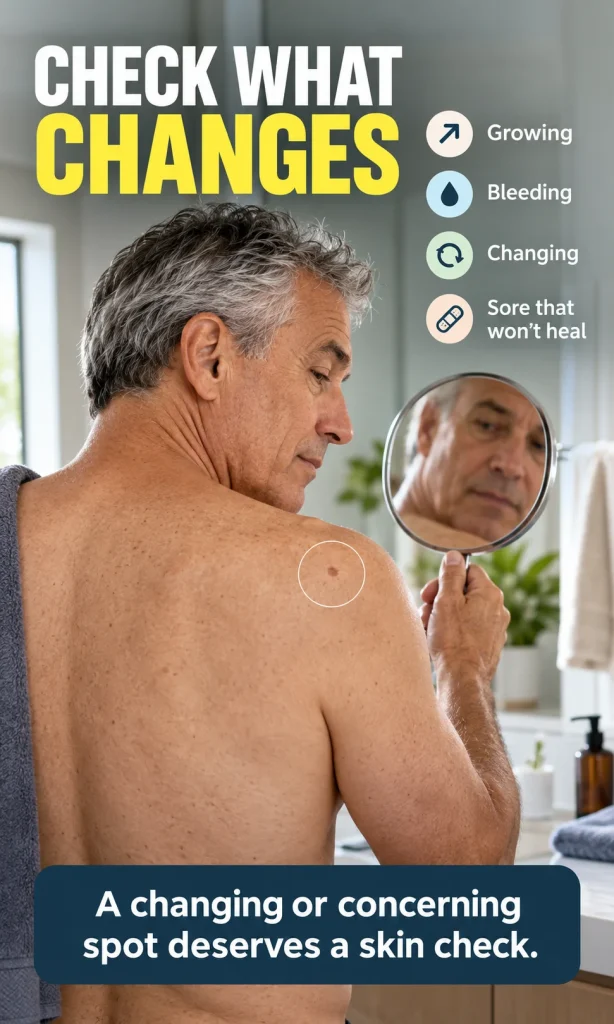
Do not let worry about previous tanning become a reason to ignore your skin or to assume cancer is inevitable. Most skin changes are not cancer, but a new or changing spot deserves attention because early skin cancers are often easier to treat. The American Academy of Dermatology’s skin-cancer guidance highlights growing, bleeding, changing and non-healing spots as changes that should be assessed.
For melanoma specifically, the ABCDE pattern can help organize a self-check: asymmetry, irregular border, varied color, diameter as a clue rather than a strict cutoff, and evolution over time. A spot can still be concerning even if it does not fit every letter, so change compared with your own baseline matters. The AAD melanoma signs guide and the National Cancer Institute’s mole guidance both emphasize change as a reason to speak with a clinician.
When a dermatologist visit moves higher on the priority list
Indoor tanning history alone does not automatically mean every person needs the same screening schedule. A clinician may weigh your age, personal and family history, number of unusual moles, immune status, natural UV exposure and the appearance of your skin before recommending an examination interval. This is one reason a personalized risk conversation is more useful than a universal calendar rule.
Book a skin evaluation sooner if you notice a spot that is growing, changing, bleeding, repeatedly crusting, painful, or not healing. If a mole looks clearly different from your other moles, or it evolves in size, shape or color, do not wait for it to match a textbook photograph. The AAD self-exam guidance can help you check hard-to-see areas and track changes between visits.
A previous skin cancer, a strong family history, many atypical moles, immune suppression or heavy cumulative UV exposure can justify a more individualized discussion with a dermatologist. These factors do not diagnose cancer, but they can change the value of professional surveillance. If you are taking a medication that may increase UV sensitivity, the FDA also advises checking with a doctor or pharmacist before exposure.
Can tanning-bed rules tell you whether a salon is safe?
No. Device warnings and age restrictions can reduce exposure, but legal access is not a declaration that the exposure is medically safe. Regulations also vary by country, state and local jurisdiction, so the most reliable health decision is to evaluate the UV exposure itself rather than to infer safety from what a salon is permitted to sell.
This matters because older articles often treat regulation as though it settled the science. The science and the legal framework are different questions: health authorities can warn against indoor tanning even where adults are still legally able to use commercial tanning devices. For a reader deciding what to do, that distinction is more useful than a long list of changing salon laws.
Safer ways to get the look without intentional UV tanning
Sunless lotions, mousses and creams can provide temporary color without using UV radiation to create a tan. They do not make skin resistant to sunlight, so sunscreen and other sun-protection habits still matter outdoors. If you use a spray product, follow the product’s directions carefully and avoid exposing the eyes, lips or airways to mist that is not intended for inhalation.
If your main concern is looking pale for an event, the trade-off is straightforward: a temporary cosmetic product may require careful application and reapplication, but it avoids deliberately adding carcinogenic UV exposure. That is a meaningful risk reduction, not merely a cosmetic preference. You can also review our guide to reducing avoidable melanoma risk for a broader prevention-focused checklist.
What to remember
Tanning beds expose skin to cancer-causing ultraviolet radiation, and there is no way to turn that exposure into a health-positive tan. The most useful action is not to search for a “safe” session length but to avoid intentional indoor UV tanning, protect skin outdoors and pay attention to new or changing skin findings. If a spot is changing, bleeding or not healing, or your personal risk history is complex, a clinician or dermatologist can give you advice that an online article cannot individualize.
Frequently Asked Questions
Are tanning beds safer than tanning in the sun?
No. Tanning beds deliberately expose skin to UVA and/or UVB radiation, and that radiation can damage DNA and raise skin-cancer risk. The safer comparison is not “which UV tan is safer,” but whether the cosmetic goal can be met without intentional UV tanning.
Does a base tan protect me from burning?
Only minimally, and not enough to make intentional tanning a protective strategy. A base tan is itself evidence of UV injury, so getting one adds exposure before the later sun exposure even begins.
Is occasional indoor tanning safe?
There is no exposure level that health authorities define as a safe cosmetic UV tan. Fewer sessions mean less exposure than frequent sessions, but “less exposure” is not the same as “safe exposure,” especially when a non-UV cosmetic alternative can achieve color.
Is a spray tan or sunless lotion safer?
For avoiding tanning-related UV exposure, a properly used sunless product is the safer route because it changes surface color without requiring a UV tan. It does not provide meaningful sun protection, so you still need normal outdoor sun-safety habits.
Should I see a dermatologist just because I used tanning beds?
Not everyone needs the same screening schedule. A dermatologist can individualize the decision based on your exposure history, skin type, moles, family history, immune status and any new or changing skin findings; a changing, bleeding or non-healing spot deserves prompt medical attention.
Can sunscreen make a tanning bed safe?
No. Sunscreen is designed to reduce UV exposure during unavoidable outdoor activity, not to turn intentional indoor UV exposure into a safe cosmetic practice. Using sunscreen in a tanning bed does not remove the underlying reason health authorities recommend avoiding indoor tanning.
Action checklist
- Stop intentional indoor UV tanning.
- Use sunless color if the goal is cosmetic rather than medical.
- Protect skin during outdoor UV exposure.
- Learn your normal moles and spots so change is easier to notice.
- Arrange a medical skin check for a growing, changing, bleeding or non-healing spot.
- Ask a clinician about a personalized surveillance plan if you have a strong personal or family risk history.