

How to Restart Your Garden in Spring After Winter
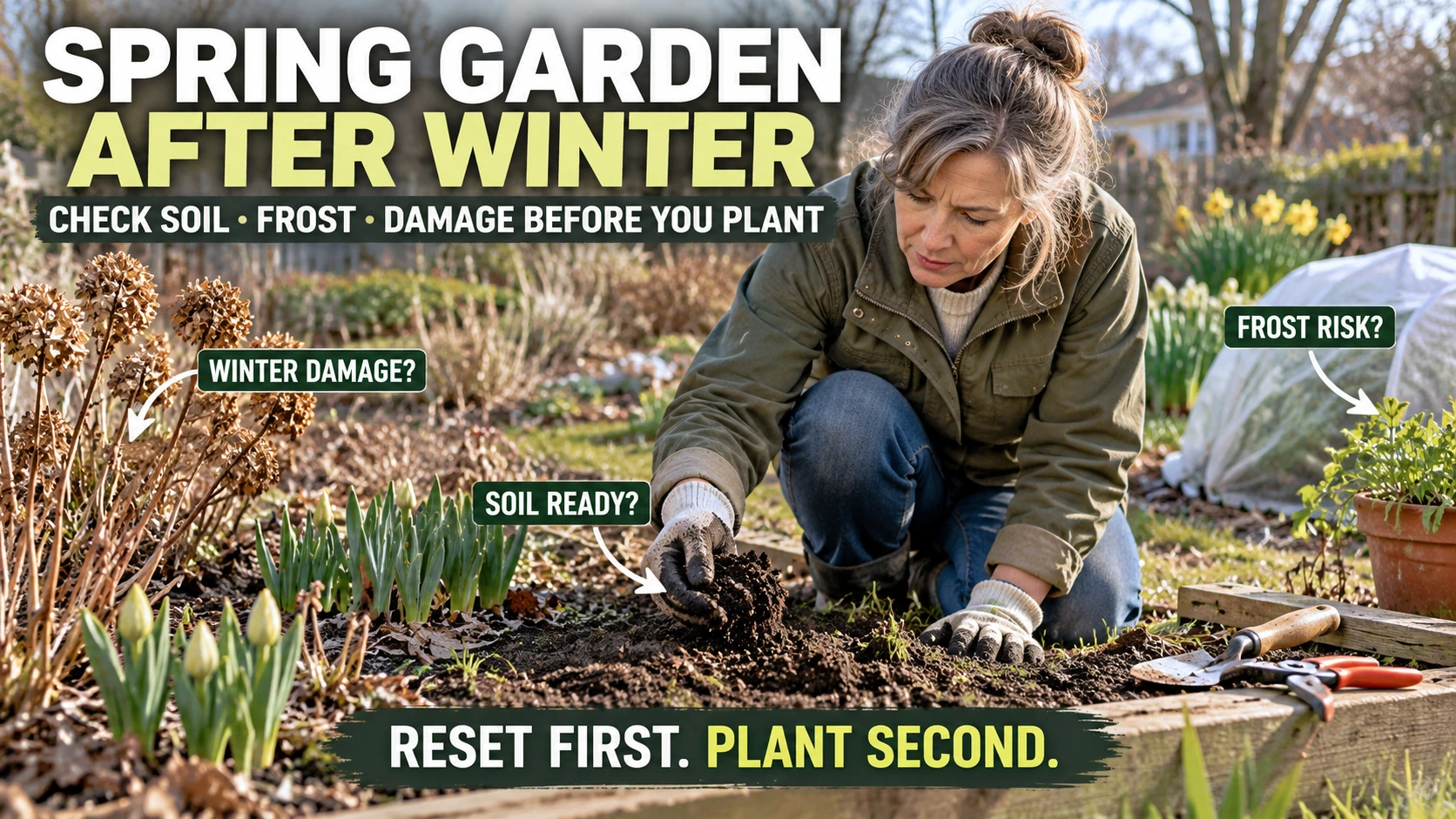
The best spring gardening idea after winter is to reset the garden in the right order: inspect damage, wait for workable soil, protect plants from remaining cold, clean selectively, then plant in stages. One warm afternoon is not enough evidence that the whole garden is ready, because soil moisture, frost risk, plant type, and overwintering wildlife can all move on different schedules.
| Condition | What to do | What to avoid |
|---|---|---|
| Frozen or waterlogged soil | Inspect, clean tools, clear drains and paths | Digging, tilling, repeated foot traffic |
| Damp soil that crumbles | Weed, top-dress, make light preparation | Unnecessary deep cultivation |
| Frost still possible | Work with hardy plants and protected starts | Rushing tender annuals and warm-season crops outdoors |
| Old stems and leaf litter present | Clean high-use areas selectively and retain habitat pockets | Shredding or removing everything at once |
Do not let the first warm day set the whole schedule
Spring gardening after winter is a condition problem before it is a calendar problem. Air temperature can rise quickly while the soil remains saturated, shaded beds stay cold, frost pockets remain active, and tender growth is still vulnerable to a cold night.
That is why a useful spring reset starts by reading the site. In the United States, the USDA Plant Hardiness Zone Map is useful for perennial cold tolerance, but it is not a last-frost forecast; gardeners still need local frost information and plant-specific guidance. In other countries, use the equivalent local climate, frost, and planting guidance rather than copying dates from a different region.
1. Inspect winter damage before you cut anything
Walk the garden once with no intention of fixing it. Look for broken branches, lifted roots, cracked pots, leaning supports, blocked drains, frost-burned foliage, erosion, animal damage, standing water, and places where mulch has piled against stems or crowns.
Clearly broken or hazardous material can be dealt with first, but questionable frost damage deserves patience. The Royal Horticultural Society’s frost guidance notes that frost-damaged plants may recover from dormant buds, and that damaged growth is best pruned after the risk of further frost has passed. Large damaged limbs, unstable trees, or work near utilities belong with a qualified professional rather than a casual spring pruning session.
2. Test whether the soil is actually ready to work
Wet soil is one of the easiest ways to create a problem while trying to start the season early. Heavy traffic and cultivation can compress pore space, especially when soil is moist enough to smear, and the resulting compaction can restrict drainage, air movement, and roots long after the surface looks dry again.
A practical garden check is simple: pick up a handful from the bed and press it. If it forms a slick, dense lump or leaves a smeared surface, wait; if it breaks apart into crumbs with modest pressure, light work is usually more reasonable. This is not a laboratory test, but it is a better decision cue than the date alone, and the soil-compaction mechanism is consistent with guidance from Penn State Extension.

If the top looks dry but the layer underneath is still wet, do not let the surface fool you. The same diagnostic idea applies to containers and raised beds, and the related guide on soil that looks dry on top but wet underneath explains why moisture can remain trapped below the visible surface.
3. Make spring cleanup selective, not automatic
Old stems, leaves, seed heads, and sheltered debris are not always waste. They can also be overwintering habitat, which means aggressive cleanup can remove beneficial insects at the moment they are beginning to emerge.
The Xerces Society recommends avoiding a rush into spring cleanup because insects may still be using leaf litter and dead stems, while Illinois Extension similarly advises delaying full cleanup until warmer conditions are reliably established. Treat temperature rules of thumb as local guidance rather than universal thresholds; insect emergence, frost, rainfall, and plant growth differ by climate.
- Clear first: walkways, drains, unsafe debris, diseased material that clearly needs disposal, and places where trapped moisture threatens structures or plants.
- Leave longer: some hollow stems, leaf litter, seed heads, and sheltered habitat areas where they are not creating a safety or disease problem.
- Move gently: if cleanup cannot wait, relocate intact leaves and stems to a less visible habitat corner instead of shredding everything.
- Keep beds readable: mark emerging bulbs and perennial crowns before raking so they are not snapped or stepped on.
If wildlife value is part of the garden’s purpose, connect this reset to your broader wildlife garden ideas rather than treating spring cleanup as a separate cosmetic job.
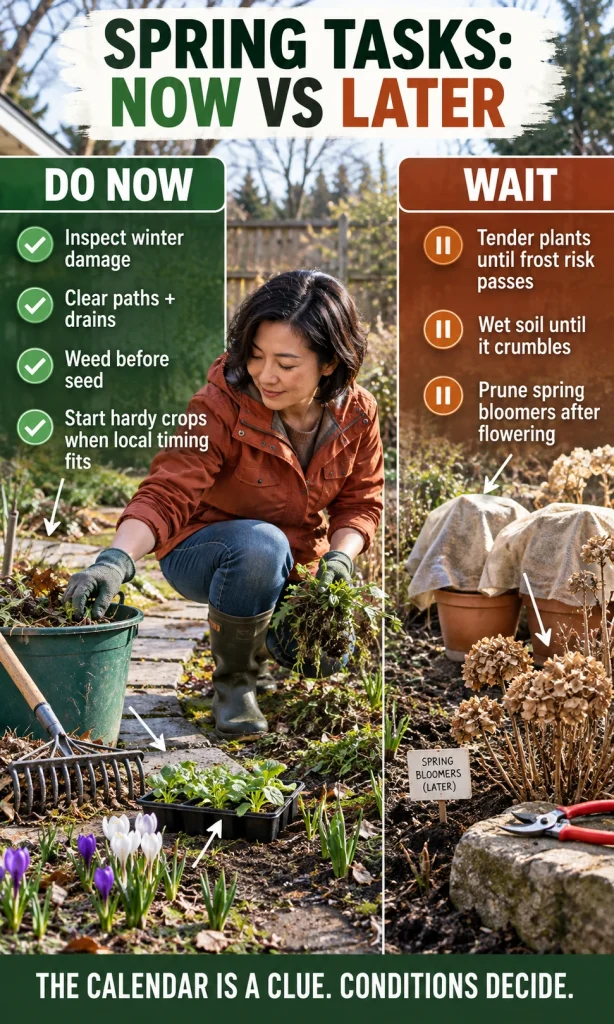
4. Separate spring jobs into “do now” and “wait”
Several useful jobs can begin early because they do not require warm soil or frost-free nights. Others should wait because the downside of rushing them is much larger than the benefit of finishing a week or two earlier.
| Do now when conditions allow | Wait until the condition changes |
|---|---|
| Inspect winter damage and drainage | Tender planting while frost remains likely |
| Pull young weeds from workable soil | Digging waterlogged beds |
| Clean and sharpen hand tools | Heavy pruning of questionable frost damage |
| Check pots, supports, irrigation and covers | Pruning spring-flowering shrubs before you confirm the correct timing for that species |
5. Prune by plant type, not by impatience
Winter often leaves obvious dead tips and broken stems, but spring pruning is not one universal job. Some shrubs flower on wood formed in the previous season, some bloom on new growth, and some tender plants benefit from keeping old top growth until the risk of frost has eased.
Remove broken, rubbing, or hazardous growth when you can identify the cut confidently. For ornamental shrubs, confirm the species and its flowering habit before making a broad reduction; for spring-flowering shrubs, pruning immediately after flowering is often the safer pattern because an early cut can remove the coming display.
6. Improve the soil without overworking it
Once the soil is workable, spring is a good time to add finished compost or an appropriate organic mulch. The goal is not to turn every bed deeply, but to protect structure, improve organic matter, reduce weed competition, and conserve moisture as the season warms.
The RHS mulching guidance recommends applying mulch to moist, unfrozen soil and keeping it away from direct contact with stems. That last detail matters: piling organic material against trunks, crowns, or stems can hold unwanted moisture where the plant tissue needs air.
Before adding anything, diagnose what the bed actually needs. If drainage has been poor all winter, more material is not automatically the answer, and the guide on how long soil should stay wet after watering can help distinguish normal moisture retention from a drainage problem.
7. Plant in stages instead of filling the garden in one weekend
A staged spring planting sequence is safer because hardy plants and tender plants respond to different temperature ranges. Cool-season vegetables, hardy perennials, and established shrubs may be ready while tomatoes, peppers, basil, many summer annuals, and other frost-sensitive plants still need protection or indoor time.
Use local crop calendars, nursery guidance, and short-range frost forecasts for the specific plant. Hardening off transplants gradually is also more useful than moving them from protected indoor conditions straight into wind, sun, and cold nights.
If you are rebuilding the season from scratch, start with a small number of reliable plants rather than buying everything at once. The site’s gardening tips for beginners and best beginner plants can help narrow the first round.
8. Reset containers, watering and supports before growth accelerates
Containers reveal winter problems quickly because roots have less soil volume around them and drainage holes can clog. Check whether the pot is cracked, the mix has collapsed, the root ball stays wet for too long, or the plant has been pushed loose by freeze-thaw cycles or wind.
Do the same for irrigation lines, hose fittings, stakes, trellises, cold frames, cloches, and plant supports. Small repairs are easier before vines, perennials, and vegetable crops are actively growing through them.
Spring garden readiness
Spring Garden Activation Studio
Turn winter conditions into a clear do-now, wait, and next sequence without relying on a fixed calendar date.
Your condition-led sequence
What to do now, what to wait for, and what comes next
Do now
Wait for
Next window
Spring garden readiness
Spring Garden Activation Report
Condition-led after-winter reset.
Do now
Wait for
Next window
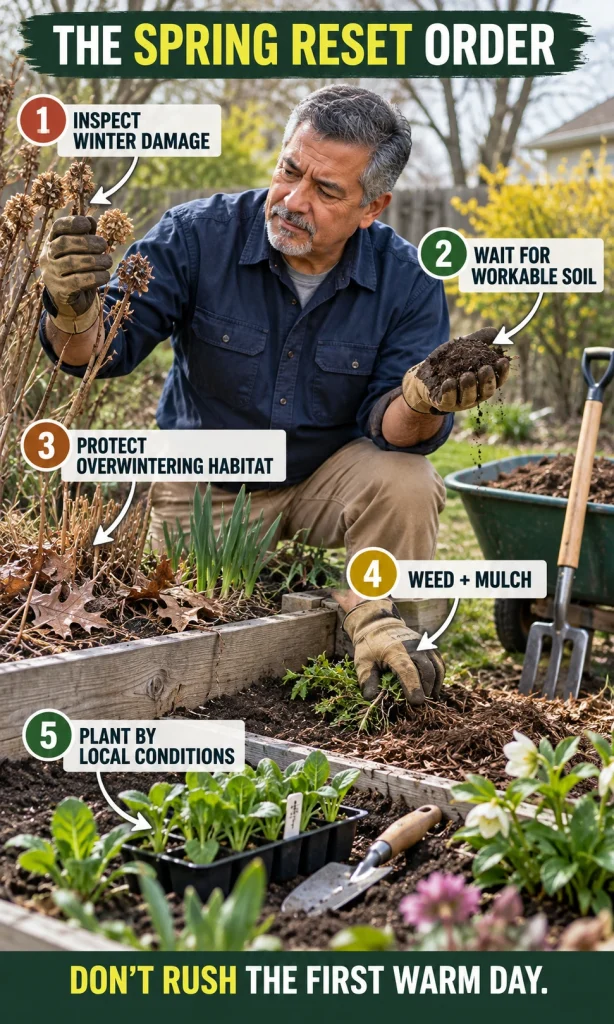
The spring reset order
- Inspect winter damage. Separate safety problems from cosmetic damage and uncertain live growth.
- Wait for workable soil. Keep digging and heavy traffic off frozen or soggy beds.
- Protect overwintering habitat. Clean selectively and retain useful stems or leaves where practical.
- Weed, top-dress and repair. Make the site functional before adding new plants.
- Plant by local conditions. Match each plant to its frost tolerance, soil temperature needs, and local timing.
Common spring gardening mistakes after winter
- Working wet soil because the air feels warm. Surface weather and root-zone condition are not the same thing.
- Cutting every brown stem immediately. Some material still protects plants or shelters overwintering insects.
- Assuming a hardiness zone predicts the last frost. Hardiness zones describe perennial cold tolerance, not a daily spring weather forecast.
- Planting tender crops because garden centers are selling them. Retail availability does not guarantee your local night temperatures are safe.
- Mulching against stems and trunks. Keep organic mulch around the root zone, not piled against living bark or crowns.
- Replacing a frost-damaged plant too quickly. Some plants reshoot from lower buds after the top growth looks dead.
Spring Gardening After Winter FAQ
When should I start spring garden cleanup?
Start with safety, drainage, paths, and inspection as soon as conditions allow, but delay a full strip-clean of leaves and stems when they may still shelter overwintering insects. Local climate matters, so use regional guidance rather than one fixed date for every garden.
Can I dig the garden as soon as snow melts?
Not if the soil is still soggy or smears into a dense lump. Wet soil compacts more easily, so wait until it drains and crumbles more readily before digging, dividing, or repeatedly walking on the bed.
Should I prune frost-damaged plants right away?
Remove clearly broken or unsafe growth, but avoid rushing cosmetic pruning on tissue that may still be alive. After frost risk eases, new growth often makes the boundary between live and dead material easier to identify.
When can I plant outdoors after winter?
Plant according to the crop or plant, the local frost outlook, and the condition of the soil. Hardy plants may be ready earlier, while tender annuals and warm-season vegetables should wait until local cold risk suits them.
Should I remove all old leaves and stems in spring?
No. Keep some leaf litter and hollow stems where they are not creating a disease, drainage, or safety problem, because they can provide useful habitat. If cleanup is necessary, working in stages is usually better than shredding or removing every sheltered area at once.
A better spring garden starts with restraint
After winter, the garden does not need maximum activity; it needs the right activity in the right order. Read the soil, cold risk, plant response, drainage, and habitat first, then move from repair into planting only when those signals agree.
That approach gives you a cleaner starting point without trading away soil structure, new growth, pollinator habitat, or tender plants for the satisfaction of finishing everything on the first warm weekend. Once the garden is truly ready, the season can accelerate quickly because the foundational work has already been done.