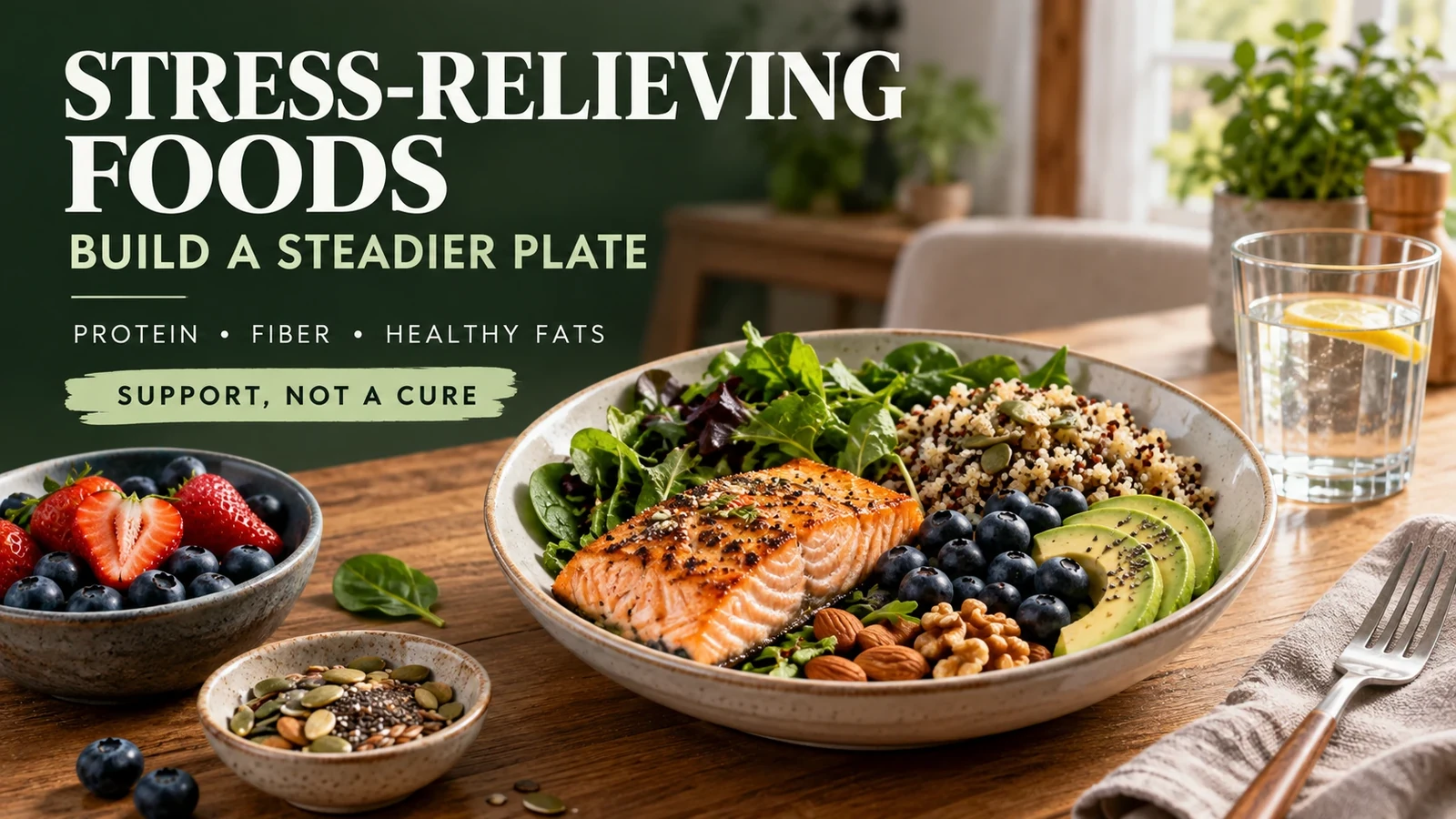

No single food can switch off stress, but the way you eat can make a stressful day easier to handle. Regular meals built around whole foods, protein, fiber-rich carbohydrates, healthy fats, and enough fluid can support steadier energy and reduce the extra friction created by skipped meals, heavy caffeine use, or stress-driven snacking.
The most useful way to think about “stress-relieving foods” is not as a list of edible sedatives. Think of them as foods that help you stay fed, hydrated, and nutritionally supported while you use sleep, movement, breathing, social support, problem-solving, or professional care to address the stress itself.
Start with a balanced meal pattern rather than chasing one “calming” ingredient: combine a protein source, a high-fiber carbohydrate, colorful plants, and a healthy fat. If stress is making you jittery, sleep-deprived, ravenous, nauseated, or dependent on caffeine, adjust the meal to that problem first.
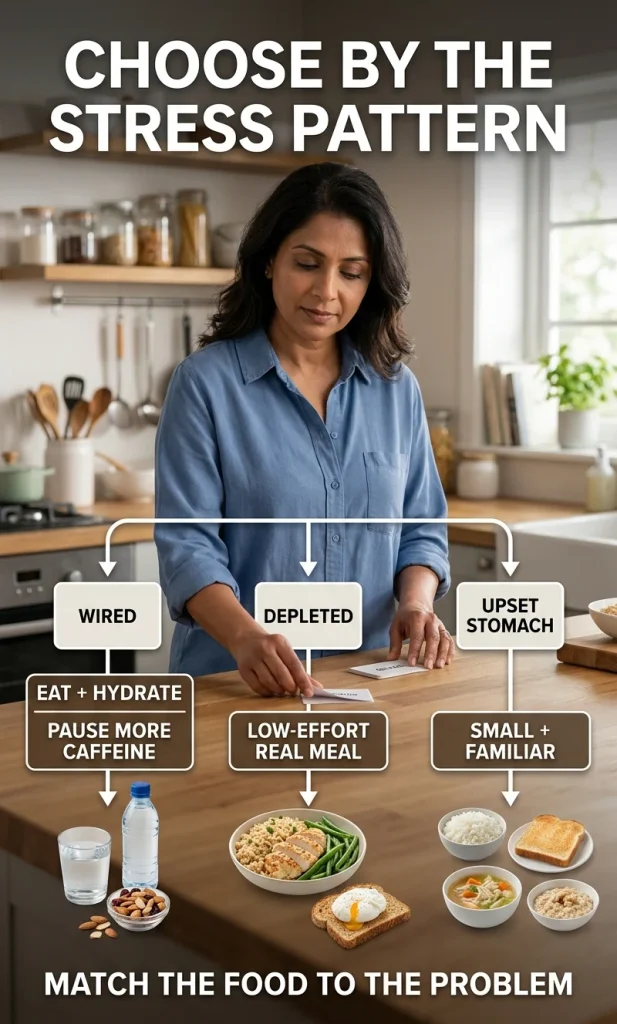
The best food choice depends on how stress is showing up

Calm Plate Check
Match a practical meal, snack, or drink to the way stress is showing up right now.
Build it like this
Three easy examples
One thing to watch
Do something non-food too
Food is support, not the whole answer
If stress feels unmanageable, is lasting for weeks, is disrupting sleep or daily function, or is linked with panic, depression, trauma, or unsafe circumstances, consider talking with a qualified health or mental-health professional.
Need professional support?
Use your own location to find a registered dietitian/nutrition professional for food concerns or a licensed mental-health professional for persistent stress. No provider names, ratings, or availability are invented here.
| What you notice | A practical food response | Why it helps |
|---|---|---|
| Jittery or “wired” | Eat a real meal or snack, drink water, and avoid stacking more caffeine on top. | Hunger, dehydration, and caffeine can all make physical stress sensations harder to interpret. |
| Strong sweet or salty cravings | Pair the food you want with protein or fiber instead of relying on a sugar-only snack. | A more complete snack is usually more filling and less likely to leave you hungry again quickly. |
| You forgot to eat | Choose a low-effort meal: yogurt and oats, eggs and whole-grain toast, a bean bowl, soup with bread, or leftovers with vegetables. | The first job is restoring regular nourishment, not designing a perfect diet. |
| Stress is disturbing sleep | Keep evening food simple and satisfying, and move caffeine earlier in the day if it affects you. | Sleep loss and stress can reinforce each other, so the evening routine matters as much as the food. |
| Your stomach feels unsettled | Use smaller, familiar, well-tolerated meals and avoid forcing large portions. | Stress can change appetite and digestion; comfort and tolerance come before “superfood” rules. |
Seven food groups worth leaning on during stressful weeks
A single serving of salmon, oats, yogurt, spinach, or dark chocolate will not erase a deadline, conflict, or financial worry. The stronger idea is to build a repeatable eating pattern that supplies protein, fiber, unsaturated fat, vitamins, and minerals without making meals another complicated task.
1. Oats and other minimally processed whole grains
Oats, brown rice, barley, quinoa, and whole-grain breads give you carbohydrates plus fiber, which makes them useful when stress has pushed you toward irregular meals. They are especially practical at breakfast or lunch because they combine easily with protein and fruit instead of leaving you with a carbohydrate-only meal.
A bowl of oats with plain yogurt, berries, and walnuts is a better “stress breakfast” than oats because of one special compound. It works because the meal is easy, filling, and nutritionally broad: carbohydrate for energy, protein for staying power, fiber, healthy fat, and micronutrients in one bowl.
2. Beans, lentils, tofu, eggs, fish, poultry, and other protein foods
Protein matters because stressful days often turn into skipped meals followed by intense hunger. Adding a clear protein source to breakfast, lunch, dinner, or a snack makes the meal more substantial and can reduce the temptation to keep grazing because the first food choice never really satisfied you.
If you need easy examples, the site’s guide to foods with protein can help you build combinations without turning the meal into a nutrition project. A useful rule is simple: choose one protein source you already like, then add a whole-food carbohydrate and something colorful.
3. Leafy greens, beans, nuts, seeds, and other magnesium-rich foods
Magnesium is involved in nerve function, muscle function, energy metabolism, and many other physiological processes. The NIH Office of Dietary Supplements magnesium fact sheet lists foods such as legumes, nuts, seeds, whole grains, and green leafy vegetables among useful sources.
That does not mean a magnesium-rich dinner acts like a tranquilizer, and it does not make high-dose supplements a default stress treatment. The practical takeaway is more modest: stressful periods are a poor time to let diet quality collapse, and magnesium-rich whole foods are a good part of a balanced pattern.
4. Omega-3-rich foods such as oily fish, chia, flax, and walnuts
Salmon, sardines, trout, mackerel, chia seeds, flaxseed, and walnuts provide omega-3 fats or their plant precursor. Research on omega-3s and stress is still more complicated than many “cortisol-lowering food” lists suggest, but these foods fit comfortably inside a heart-healthy, nutrient-dense eating pattern.
A useful approach is to include fish regularly if you eat it, or use plant sources such as chia, flax, and walnuts if you do not. Do not read that as a promise that one food will lower your stress level on command.
5. Fruit and vegetables you will actually eat
Berries, oranges, kiwi, peppers, tomatoes, carrots, broccoli, leafy greens, and other produce contribute fiber, potassium, vitamin C, folate, and many plant compounds. Variety matters more than finding the “best” fruit for cortisol.
If prep feels impossible, make the barrier smaller: frozen berries, prewashed greens, baby carrots, microwavable vegetables, canned tomatoes, and whole fruit all count. During a stressful week, convenience can be part of the health strategy.
6. Yogurt, kefir, and other fermented foods if you tolerate them
The gut-brain connection is a real research area, but the leap from “the microbiome matters” to “this yogurt will calm you down” is too large. Some trials of specific probiotic strains and fermented foods have reported effects on stress-related outcomes, but results are strain-specific and not consistent enough to treat any fermented food as a guaranteed stress remedy.
Plain yogurt or kefir can still be useful because it is convenient, provides protein, and pairs well with oats, fruit, nuts, or seeds. If fermented foods worsen bloating or other digestive symptoms, do not force them; the site’s overview of foods that commonly cause bloating may help you spot a more practical fit.
7. Water, decaf drinks, and a caffeine strategy
Stress can make people forget to drink, while long workdays can turn one coffee into several. Water will not treat psychological stress, but dehydration can add headache, fatigue, or poor concentration to an already difficult day.
Caffeine tolerance varies widely. If you notice that coffee or energy drinks make you shaky, race your thoughts, worsen reflux, or delay sleep, reducing the amount or moving it earlier may help more than adding another “calming” food later.
What stress actually does to appetite and eating
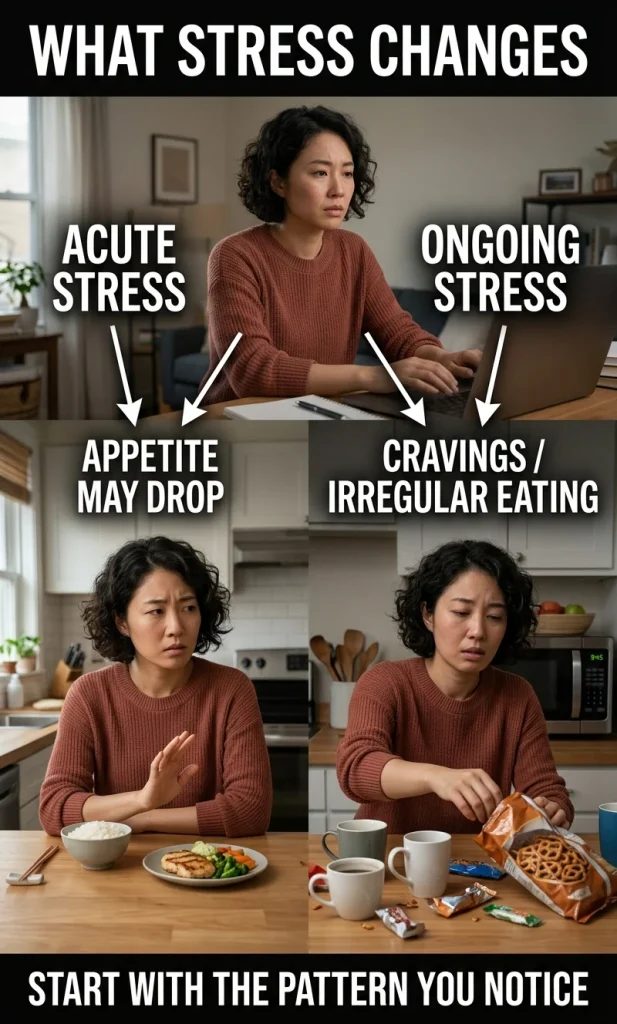
Stress is not just a feeling in the head. The body’s stress response involves the autonomic nervous system and hormones including adrenaline and cortisol, which can change alertness, digestion, appetite, and food-seeking behavior. The Harvard Nutrition Source overview of stress and health describes how acute stress may suppress appetite while chronic stress can be associated with stronger cravings and disrupted eating patterns.
This explains why two people can react in opposite ways. One person gets busy and forgets lunch; another starts picking at sweets all afternoon. The nutrition solution therefore starts with the behavior stress is creating, not with a universal list of “anti-stress foods.”
Build a stress-support meal in four parts

- Choose a protein. Fish, eggs, yogurt, tofu, beans, lentils, chicken, or another protein you tolerate.
- Add a high-fiber carbohydrate. Oats, brown rice, quinoa, potatoes with skin, whole-grain bread, beans, fruit, or another minimally processed source.
- Add plants. Aim for one or two vegetables or a piece of fruit rather than waiting for a “perfect” rainbow plate.
- Add a healthy fat or finishing ingredient. Olive oil, avocado, nuts, seeds, tahini, or another unsaturated-fat source can make the meal more satisfying.
This structure also works when appetite is low. Make the portion smaller, soften the texture, or turn the same components into soup, yogurt with oats, a smoothie with protein and fruit, toast with eggs, or rice with tofu and cooked vegetables.
Do not turn “stress eating” into another source of stress
Food can be comforting, and comfort is not a nutritional failure. The problem begins when eating becomes the only coping strategy or when shame around food creates another loop of stress, restriction, overeating, and guilt.
If that pattern sounds familiar, the article on whether food can be a healthful coping mechanism is a useful next read. The goal is to widen your coping options: sometimes you are genuinely hungry and need food; sometimes you need food plus a break, a conversation, movement, or sleep; sometimes the stressor itself needs to be addressed.
What to limit when you already feel overstimulated
You do not need a banned-food list. Instead, pay attention to foods and drinks that predictably make your own stress symptoms harder to manage.
- Too much caffeine: especially when you are already jittery, sleeping poorly, or using caffeine to compensate for too little food.
- Alcohol as a nightly stress strategy: it may feel relaxing at first but can interfere with sleep and can become a coping pattern of its own.
- Large amounts of sugary food on an empty stomach: not because sugar is uniquely “toxic” to stress, but because a sweet-only snack may not keep you full for long.
- Foods that reliably aggravate reflux, bloating, or nausea: physical discomfort can make a stressful evening worse.
If bedtime is the main problem, see what not to eat before bed for a more specific look at evening timing and foods that can disturb sleep.
A Mediterranean-style pattern is more convincing than a magic ingredient
One reason Mediterranean-style eating keeps appearing in mental-health research is that it describes a whole pattern: vegetables, fruit, legumes, whole grains, nuts, olive oil, and regular fish rather than one nutrient taken out of context. A systematic review of Mediterranean diet and mental-health outcomes reported associations with lower perceived stress among other outcomes, while also showing that the evidence comes from a mixture of observational and intervention studies.
That is the right level of confidence for this topic. A high-quality diet may support mental and physical resilience, but it is not a substitute for treating anxiety, depression, trauma, burnout, insomnia, or an unsafe life situation.
If stress is making it hard to eat at all
Low appetite deserves a different strategy from stress snacking. Use small portions, familiar foods, soups, smoothies, yogurt, eggs, toast, rice, bananas, nut butter, or other easy options you can tolerate, and consider eating by schedule for a few days rather than waiting for strong hunger cues.
If low appetite lasts, causes unintended weight loss, or is accompanied by persistent nausea, vomiting, severe abdominal symptoms, or significant anxiety, get medical advice. Food should make coping easier; it should not become a way to delay care for symptoms that need assessment.
Food helps most when it is part of a larger stress plan
The American Psychological Association’s stress-management guidance includes nutrition alongside sleep, movement, social support, and other coping strategies. That combination matters because a balanced lunch cannot solve a hostile workplace, caregiving overload, financial pressure, grief, or a mental-health condition.
A useful next step is not to overhaul your diet. Pick one repeatable meal, one fallback snack, and one caffeine boundary that make stressful days easier, then build from there. If you want a broader food-and-mood perspective, see foods that boost your mood and getting healthy eating habits back on track.
Frequently asked questions
What food is best for stress?
There is no single best food. A balanced meal with protein, a fiber-rich carbohydrate, vegetables or fruit, and a healthy fat is more useful than chasing one “stress-relieving” ingredient.
Can food lower cortisol?
Diet can influence health factors connected with the stress response, but a specific food should not be treated as a reliable way to “lower cortisol.” Cortisol changes throughout the day and responds to sleep, illness, exercise, medication, and psychological stress as well as diet.
Is dark chocolate a stress-relieving food?
Dark chocolate can be an enjoyable food and provides cocoa compounds, but it should not be presented as a stress treatment. If you enjoy it, have a reasonable portion and judge it as part of your overall diet rather than as medicine.
What should I eat when stress kills my appetite?
Choose small, easy, familiar foods such as yogurt with oats, eggs and toast, soup with bread, rice with tofu, fruit with nut butter, or a smoothie that includes a protein source. Persistent appetite loss or unintended weight loss deserves medical advice.
Which foods can make stress feel worse?
For some people, too much caffeine, alcohol used for relaxation, large sugar-heavy snacks when very hungry, or foods that aggravate digestive symptoms can make an already stressful day feel harder. The useful test is your repeated response, not a universal banned-food list.
Bottom line
Stress-relieving food is best understood as supportive food, not a cure. Build meals that keep you nourished and steady, notice the behaviors stress is pushing you toward, and use food alongside the non-food actions that address the actual source of stress.