

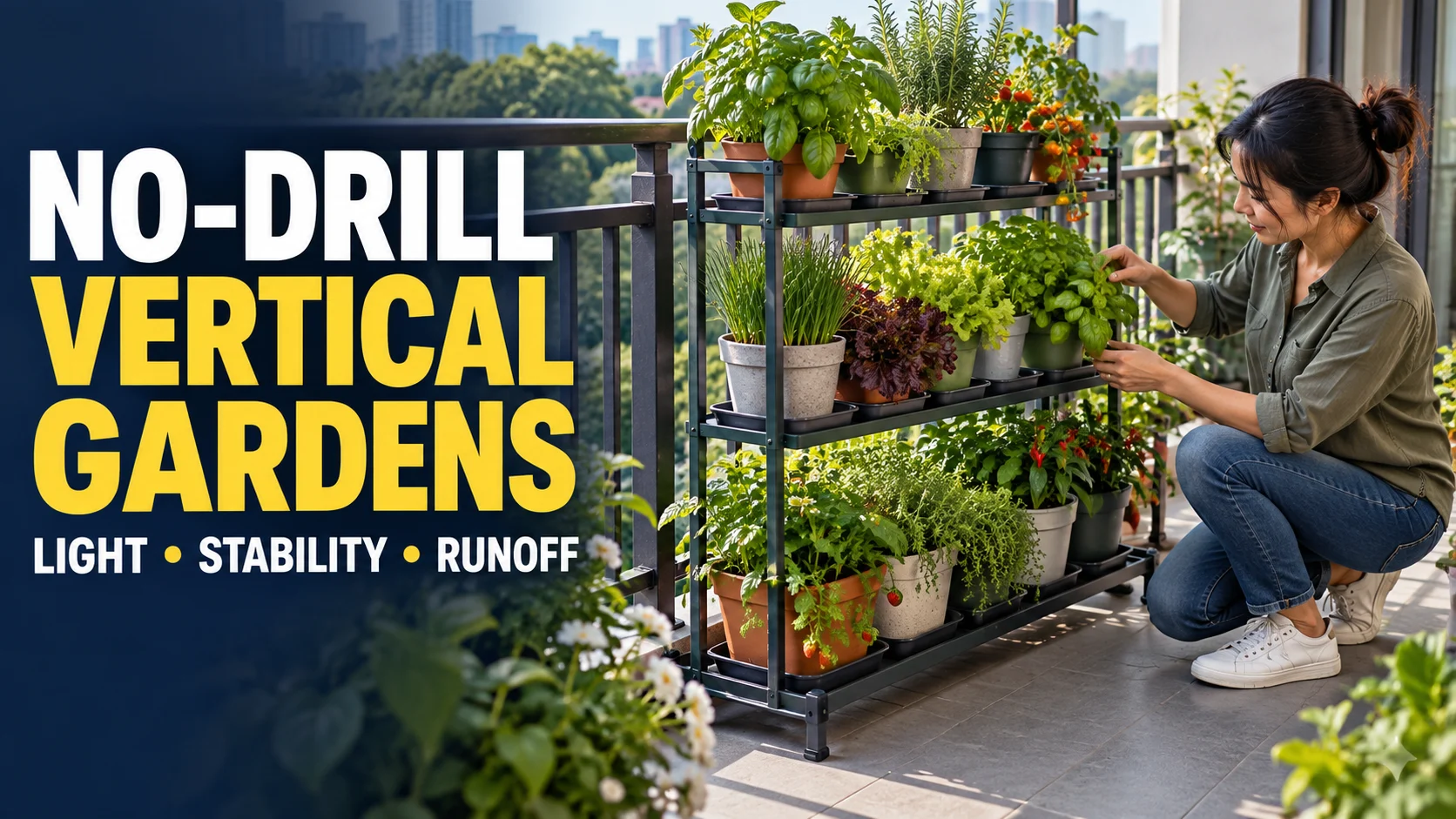

For most renters, a low freestanding rack with removable pots is the simplest vertical garden to start with. Choose a system only after checking building permission, stability, available light and where excess water will go. A setup can leave no drill holes and still damage a finish, overload a support or block a doorway.
Choose the garden your space can support
Vertical gardening saves planting space by arranging containers at different heights or training plants upward. It does not create extra sunlight, eliminate root space or make wet potting mix lighter. The best small-space design is the one you can water, inspect and dismantle without moving half the balcony.
Start with independent containers when you are unsure how the space behaves. One pot can be turned toward the light, carried to a sink or replaced if its roots become crowded. A connected pocket wall is harder to adjust because its structure, irrigation and planting positions depend on one another.
Separate the planting decision from the attachment decision. “Freestanding” describes how a frame is supported, while “self-watering” describes water delivery; neither guarantees that the product suits an exposed balcony. Read the assembly instructions before buying, especially any requirement for a wall anchor or anti-tip restraint.
- Start with a low pot rack: easy inspection and separate watering, provided its rated loads and stability requirements are met.
- Try a compact tower: less floor spread, but check shaded pockets, watering access and the filled base.
- Use railing planters only conditionally: building permission, compatible brackets and secure inward-facing installation must all be resolved.
- Leave tall walls for later: wind exposure, anchoring and waterproofing make them more demanding.
What to check before buying a no-drill system
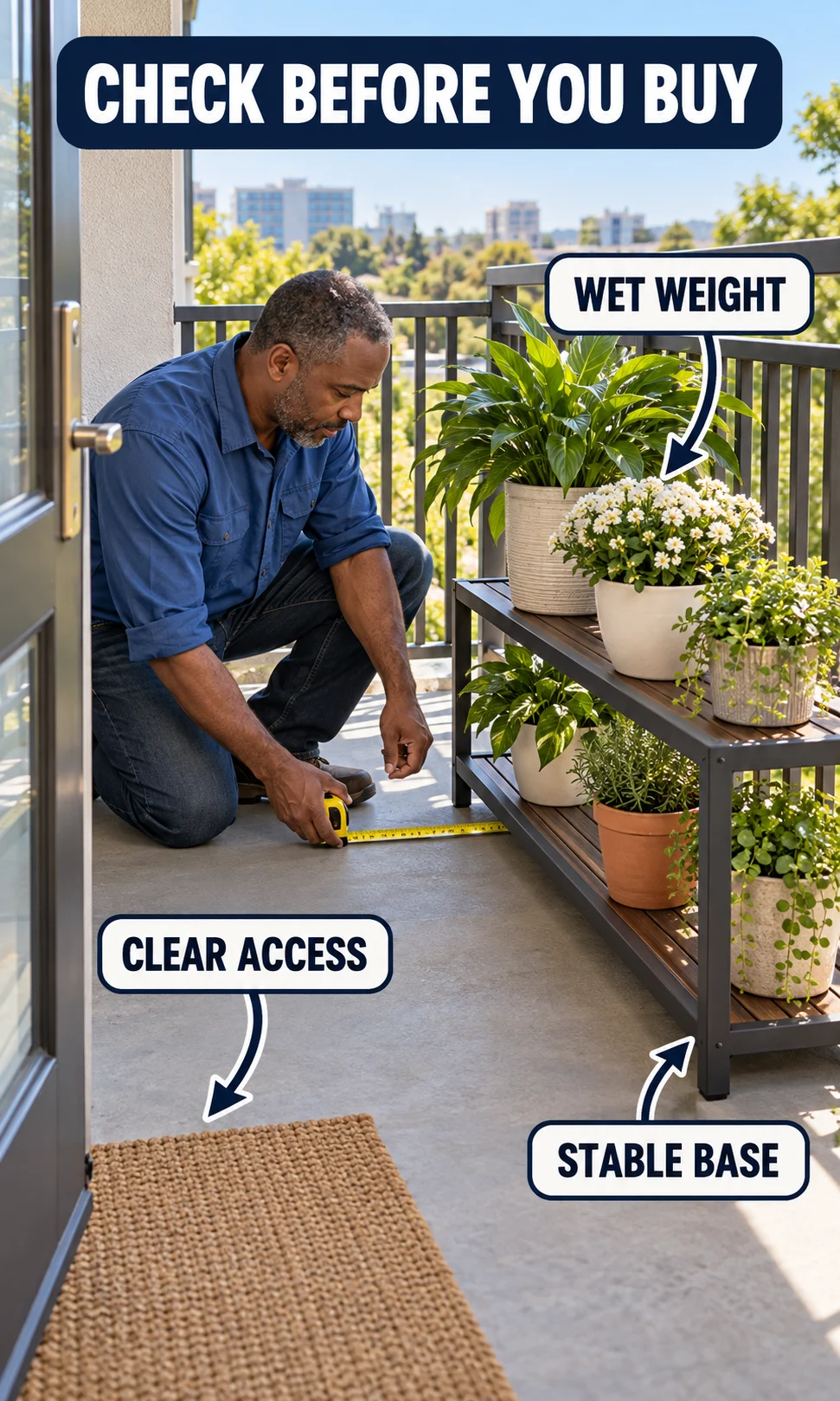
Ask management or your landlord about freestanding planting, railing attachments, irrigation and floor protection. Keep the response and photograph the original surfaces. A removable product is easier to take away, but the lease and the condition of the property determine whether damage becomes a deposit issue.
Measure the full footprint, including feet, projecting pots and mature foliage. Open the door completely and rehearse carrying a watering can through the remaining route. Keep emergency access, drains and required clearances unobstructed; a convenient gap is not a substitute for the building’s requirements.
Check weight in the condition the garden will actually operate: watered growing medium, mature plants, pots, frame, trays and any reservoir. Manufacturer shelf limits and balcony structural capacity answer different questions. The RHS guidance on balcony constraints explains why container weight and exposure need attention; ask management or a qualified structural professional when the permitted load is unclear.
A freestanding rack still needs protection from tipping or sliding. Wind can catch foliage and panels, while narrow feet can concentrate load or mark flooring. If the manufacturer requires anchoring and you cannot install the specified restraint with permission, choose another design rather than improvising ballast or adhesive fixings.
Eight vertical garden designs, with their real trade-offs
1. A low freestanding shelf with individual pots
An outdoor-rated shelf gives each plant its own root zone and catch tray. Choose a broad base and enough space above each pot to reach the soil, not just display the leaves. This is a practical first choice when easy watering and replacing individual plants matter more than covering a whole wall.
2. A tiered plant stand
A stepped stand can expose lower pots to more light than a flat vertical rack. Its wider footprint is the trade-off, and the legs must suit the floor and the fully loaded arrangement. Check the actual product instructions because a decorative indoor stand may not be rated for outdoor moisture or gusts.
3. A movable garden cart
A cart makes cleaning and repositioning easier on a flat, accessible surface. Use suitable locking wheels, keep the arrangement low and avoid moving it while heavily loaded unless the maker permits that use. Door thresholds, sloping floors and wind can turn mobility into a problem, so assess the route before treating wheels as an advantage.
4. A stackable planting tower
A tower offers multiple planting pockets within a compact base. Check the usable soil volume in each pocket and whether lower plants become shaded as upper plants grow. Choose a model whose assembly, filled weight and watering instructions are available; the number of openings alone says little about how well mature plants will grow.
5. A planter with an integrated trellis
A container-and-trellis system adds growing height without hanging individual pots from a wall. It suits a climber selected for your climate, light and available root volume. The planted trellis can catch wind, so a tall screen on an exposed balcony needs a specified support arrangement rather than an assumption that a heavy pot will hold it upright.
6. A freestanding A-frame growing stand
An A-frame can support pots or climbing growth if it is purpose-built for that load. Its spread feet consume floor space, and hanging pots alter how weight is distributed. Do not turn a household ladder into a planter without a suitable design; safe access and stable support matter more than the rustic appearance.
7. A freestanding pocket panel
Pocket panels create the living-wall effect without mounting the planting directly to masonry. They remain demanding because small root volumes dry unevenly and the lower pockets may receive runoff from above. Use a system with a suitable backing, defined drainage collection and a supported frame; fabric alone does not protect the wall or floor behind it.
8. Inward-facing railing planters
Railing planters can keep the floor clearer where building rules permit them. Brackets must fit the railing, resist dislodging and support the filled container without damaging the finish. Keep planters inside the balcony and follow both building and manufacturer requirements; do not treat an over-railing hook as universally secure or approved.
Swipe horizontally to compare.
| Design | Most useful for | Main condition | Moving out |
|---|---|---|---|
| Low shelf | Separate herbs or foliage pots | Outdoor rating, stable base, shelf loads | Remove pots, then frame |
| Tiered stand | Giving lower pots better exposure | Allow for its wider footprint | Lift pots separately |
| Garden cart | Cleaning and repositioning | Suitable locked wheels and flat floor | Check thresholds first |
| Planting tower | Compact planting footprint | Pocket volume, light and irrigation | May need partial emptying |
| Planter + trellis | A suitable compact climber | Wind and support requirements | Prune or detach growth |
| A-frame | Purpose-built growing support | Spread feet and rated attachments | Check folded dimensions |
| Pocket panel | A living-wall appearance | Backing, drainage and anchoring | Often needs more dismantling |
| Railing planter | An approved inward-facing display | Permission, fit and secure mounting | Remove brackets and inspect finish |
Why tension poles and leaning pallets are conditional choices
A tension-pole frame transfers pressure into its contact surfaces. A ceiling finish, waterproof membrane or railing may not be an appropriate bearing point, and friction can change with moisture or movement. Use only a purpose-designed product in a location accepted by the building and the manufacturer; an ordinary curtain rod is not a plant support.
A leaning pallet is not automatically stable or safe for food growing. Its history, treatment, condition, wet load and required restraint all need checking. For a rental, independent pots on a rated stand are usually easier to inspect and remove than a pallet filled directly with damp growing medium.
Match plants to actual light and root space
Observe sunlight at the intended pot positions, including lower tiers, rather than judging the balcony from its brightest corner. Buildings, overhangs and mature foliage can shade containers for much of the day. A sunny top shelf does not prove that a strawberry plant on the bottom tier receives enough light to fruit well.
Herbs have different moisture and light preferences, so group them by care needs while retaining separate containers where possible. Mint is easier to contain in its own pot, and small pockets may not provide enough room for larger herbs as they mature. For more planting arrangements, compare these herb garden ideas against the conditions you have measured.
| Condition | Practical planting direction |
|---|---|
| Strong sun | Consider culinary herbs suited to your climate; give rosemary and other larger herbs adequate root space. |
| Partial sun | Trial leafy greens or herbs that tolerate your actual exposure; expect growth to vary by season. |
| Bright indirect indoor light | Consider suitable foliage plants; edible herbs may need additional light for sustained harvests. |
| Dim indoor corner | Move the planting to better light or use an appropriate grow light; height does not compensate for darkness. |
| Small tower pockets | Choose compact plants and check the product’s usable root volume; openings do not equal mature plant capacity. |
| Mixed watering needs | Keep plants in separate pots; avoid putting dry-loving herbs in the same continuously wet root zone as moisture-loving plants. |
Strawberries are a possible specialist crop, not a guaranteed high-yield answer for every balcony. Light, variety, climate, root space and consistent irrigation all affect fruiting. If you want an edible harvest, trial a small number of plants first; if your indoor site cannot provide enough light, these small-space indoor gardening options offer other starting points.
Water each level without soaking the plants below
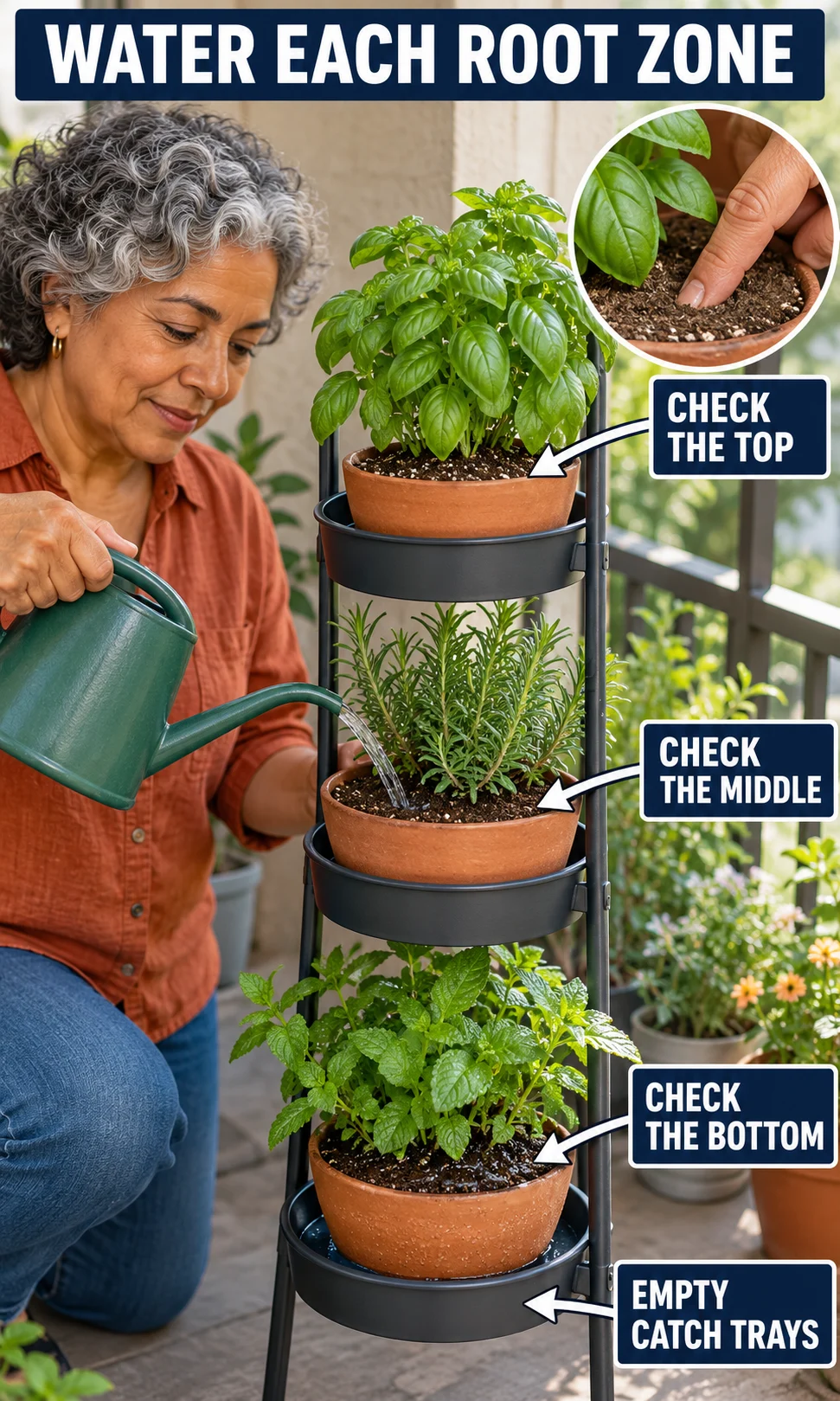
Uneven watering can leave exposed upper pots dry while shaded lower pots remain wet. Cascading water also makes it difficult to know how much each root zone received. Independent containers let you check moisture separately and stop watering a lower pot that is still damp.
- Check the growing medium in top, middle and lower pots before watering; do not rely only on the surface color.
- Water slowly into the potting mix, pause to let it absorb, then check drainage.
- Collect runoff without keeping an ordinary nursery pot submerged in a full saucer.
- Empty catch trays after drainage and inspect the floor, wall and stand for damp marks.
- Recheck exposed pots during hot or windy weather and after changing plant size or position.
Use a suitable container growing mix and working drainage holes. Small containers can change moisture rapidly, so a fixed weekly volume is unreliable. Container herb watering guidance supports checking conditions and avoiding soggy growing medium rather than applying the same schedule to every plant.
A drip system should deliver water to each intended root zone and provide a defined route for excess water. Test the most distant and lowest outlets, watch for siphoning, and check what happens when a hose comes loose. A gravity reservoir still needs secure support, an appropriate shutoff arrangement and permission for its location.
Self-watering containers have their own reservoir and overflow design. Follow the product instructions and the plant’s needs rather than emptying a designed reservoir as though it were an ordinary saucer. Before leaving the garden unattended, trial the arrangement under supervision; a timer cannot compensate for blocked drainage or a failed connection.
Find the cause before replacing plants
A plant’s position gives useful clues, but the symptoms are not a diagnosis on their own. A drooping upper plant may be dry, heat-stressed or root-bound, while a drooping lower plant may have wet roots. Inspect moisture, drainage and root condition before adding more water to the whole structure.
Swipe horizontally to compare.
| Symptom | Check first | Practical response |
|---|---|---|
| Upper pots dry quickly | Sun, wind, root crowding and pot size | Water individually; consider a larger suitable pot or a less exposed position. |
| Lower pots stay wet | Cascade runoff, blocked holes and full trays | Separate water delivery and restore drainage; pause watering damp pots. |
| Plants lean or stretch | Light at that exact tier | Improve exposure or change the crop; rotate only if safe to do so. |
| Damp wall or floor marks | Leaks, tray overflow and wet contact points | Stop the leak, dry the area and redesign collection before restarting. |
| Rack rocks or shifts | Assembly, feet, load distribution and restraint instructions | Unload safely and resolve support; replace unsuitable hardware or the system. |
| Tower harvest disappoints | Light, usable soil volume and crop suitability | Reduce crowding and trial a smaller planting; do not assume more pockets mean more yield. |
Build a small trial before spending on a full wall
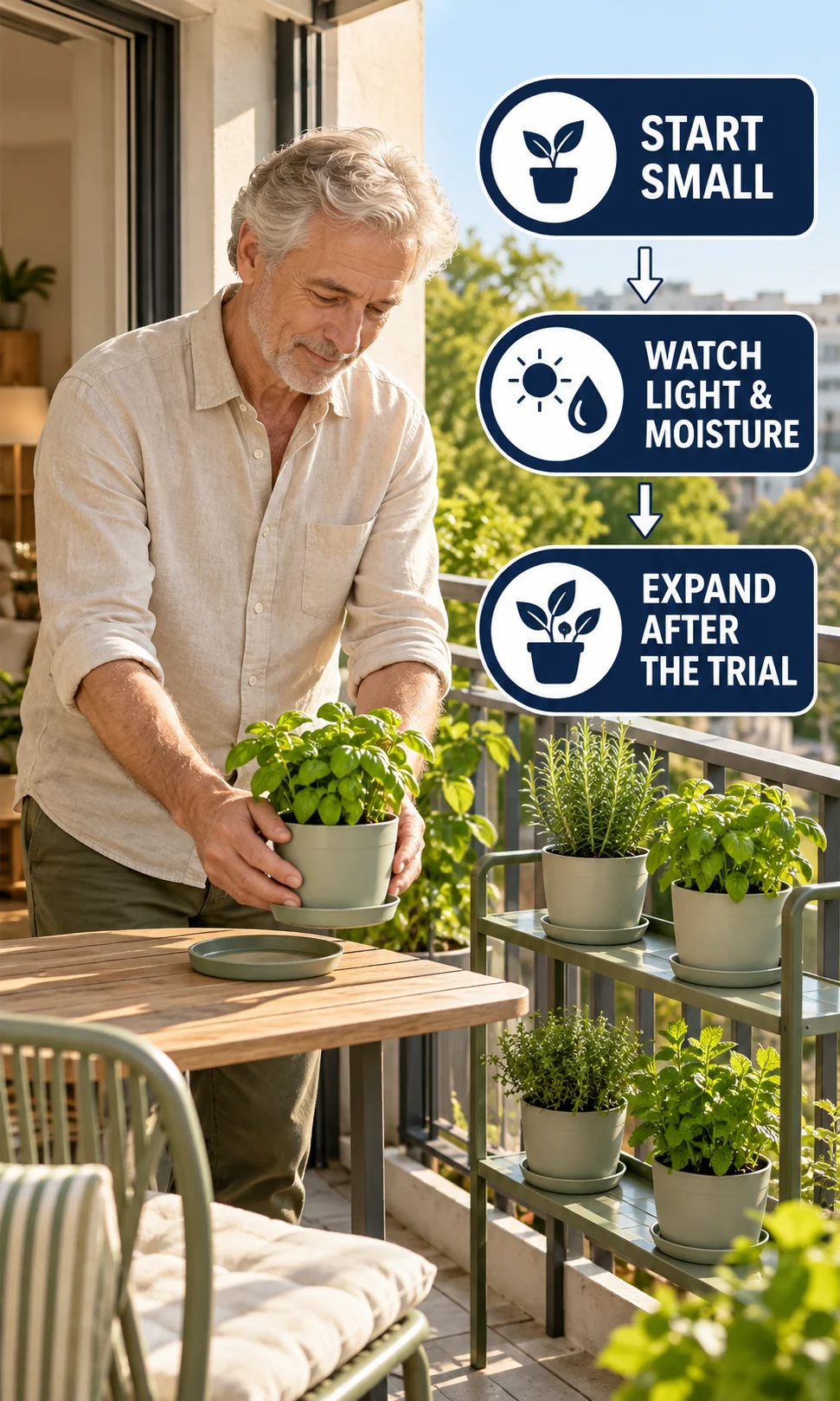
Start with a few removable pots after resolving permission, support and drainage. Put them where the finished garden would stand and observe light, drying and access across changing conditions. The trial is useful only if you record the awkward moments too: reaching a rear pot, emptying a tray or moving a watering can through the route.
Price the complete arrangement rather than the frame alone. Include pots, growing mix, plants, trays, protective feet permitted for the surface and any required irrigation parts. Compare current local quotes in your own currency; universal budget bands and wet-weight figures would hide the differences between products and buildings.
- Record the frame’s dimensions, empty weight, rated shelf limits and restraint requirements.
- Weigh representative pots after watering and drainage; use measured values in your purchase comparison.
- Check reservoir capacity separately from wet pot weight to avoid double-counting stored water.
- Confirm how the unit comes apart and whether its pieces fit through the door.
- Keep a photograph of the trial layout and notes on watering effort before adding more tiers.
Use Small-Space Garden Studio to narrow the options
Small-Space Garden Studio turns the checks above into a provisional shortlist and a setup report. Enter what you know about permission, wind, light, access and runoff, then compare the remaining trade-offs. The result helps organize your next checks; it does not verify structural capacity, approve an installation or guarantee a crop.
A practical first planting
Small-Space Garden Studio
Compare a manageable setup. Resolve support, light and runoff before buying.
Provisional guidance only. This experience cannot verify building permission, structural capacity, wind stability or crop performance.
Independent pots on a low stand make individual watering and removal easier. Use this comparison to organize the checks that still need attention.
Inputs stay in this page and are cleared on reload. No account, tracking or external API is required.
Frequently asked questions
Can renters install a vertical garden without drilling?
Yes, a suitable freestanding stand can hold removable pots without wall fixings. Check the lease, building rules and product restraint requirements first. Removability does not guarantee permission or prevent damage from water, pressure or movement.
How much weight is safe on a balcony?
There is no universal safe weight for a balcony garden. The structure, load distribution, existing use and building restrictions matter. Ask management or a qualified structural professional for the applicable assessment; a planter’s weight label does not establish balcony capacity.
Can railing planters damage a railing?
Yes, brackets can rub coatings, trap moisture or apply unsuitable loads. Use only a permitted product compatible with the railing and secure it as instructed. Inspect contact points and keep the installation inside the balcony rather than over a public area.
How often should I water a vertical garden?
Check the pots individually and water according to the plant, growing mix and actual moisture. Sun, wind, container size and root growth can change the interval. Avoid watering a damp lower pot simply because an exposed upper pot is dry.
Are vertical herb gardens suitable for low light?
Some herbs tolerate partial sun, but a dim room rarely supports strong ongoing harvests without extra light. Check the actual planting position and choose plants accordingly. For decorative greenery, suitable foliage plants may be more realistic than fruiting crops.
Can I take the garden when I move?
Removable pots and a dismantlable frame are usually easier to transport than a planted wall. Check door widths, the weight of each part and whether growth is attached to a trellis. Empty reservoirs and protect surfaces while moving the pieces.
Your next steps
Choose a manageable first planting rather than the largest display that fits the wall. Resolve the support and runoff checks, trial removable pots in the real light, and expand only when the care routine works. A modest garden that stays accessible and healthy is more useful than a dense installation you cannot safely water or move.
- Confirm permission and the relevant support requirements.
- Keep access and drainage clear.
- Choose a product that works with the permitted restraint arrangement.
- Trial plants in the light available at each tier.
- Observe moisture and runoff before adding more containers.