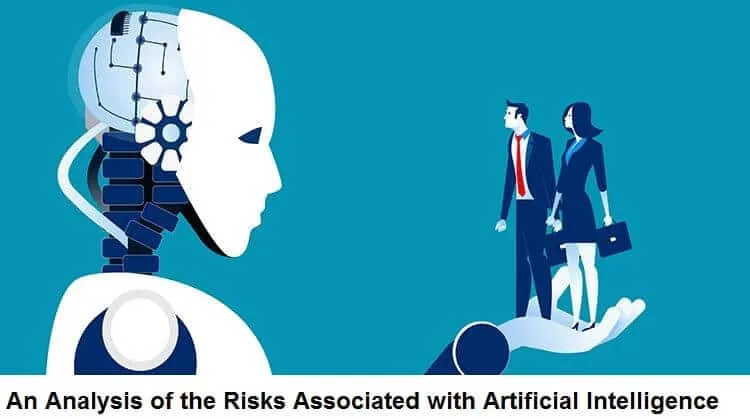

Artificial intelligence (AI) has long been debated in the tech community. Concerns have ranged from the automation of jobs to the proliferation of fake news. Some have suggested that AI poses an existential threat, with the creation of a destructive superintelligence. However, we can only speculate about the potential consequences of AI. Let’s look at some of the major risks that AI could pose. The following are a few of them. And the ways you can protect yourself and your company from these dangers.
Job automation. While the first AI risks are relatively limited, the second are the most serious. While some jobs will be eliminated entirely, the underlying premise of this technology is that it will be capable of replacing many jobs. Some recent studies indicate that automation is already disrupting several industries. A Brookings Institution study found that about 36 million people are employed in jobs that are vulnerable to automation, including sales jobs, market analysis, hospitality, and warehouse labor. This means that the most vulnerable jobs are those with high education requirements, such as teachers, nurses, and economists.
In addition to these risks, AI has the potential to manipulate democracy. It can create inaccurate profiles, which can affect the outcome of elections, and interfere with informational and decisional privacy. This technology is a key component of Internet technologies, such as the Internet of Things and Big Data Analytics. It can capture personal information and make detailed behavioral profiles for companies and governments. It can also be used to market goods and services, and influence political decisions.
While AI is advancing rapidly and has enormous potential to benefit humanity, it also presents significant risks. As a result, the United Nations must act to mitigate these dangers. In order to do this, the world must develop a binding regulation for AI that creates a formal oversight framework. In addition to the regulatory framework, a multilateral treaty should consider high-risk AI systems. These include autonomous vehicles, safety-related products, essential public services, and even remote biometric identification systems.
While AI is not regulated, it is still growing rapidly and there are some serious risks. Some of these concerns include the potential for human rights violations, gender bias, and the possibility of unintended consequences. In particular, there are some major challenges for organisations seeking to implement AI. Firstly, organisations should establish a strategy for its use. This will ensure that they can identify the right AI capabilities. It is essential to consider how people will interact with machines, whether they will be able to work ethically with AI, and how they will interact with them.
While AI has immense promise, it can also cause problems. In the UK, AI-powered autonomous vehicles could pose the biggest threat to society. The Bank of England has said that 15 million UK jobs will be automated by 2035. This means that a lot of retraining will be necessary. This could also lead to a rise in inequality in the UK. If AI is used for this purpose, the implications could be disastrous for the economy.
These risks are already apparent. The technology is incredibly complex and engineers are unable to understand the reasons behind the decisions it makes. Furthermore, the technology is not reliable. As long as humans can understand it, AI isn’t a threat. Moreover, the human emotions that distinguish human beings from machines with artificial intelligence are an important part of human life. And the same goes for AI, which is becoming increasingly more intelligent every day.
In the UK, AI has already surpassed the capabilities of human beings. It can predict what will happen in the future. A machine can be trained to identify objects and identify words, but it won’t know the difference between a penguin and a cat. But that’s not to say that AI cannot change our lives. We need to consider AI risks in our daily lives, and make sure they don’t interfere with our daily lives.
Lack of regulation is one of the biggest risks facing AI. There is a lack of oversight, which means that AI can be misused. It is already a liability risk, and if AI is misused, the risk could become an international crisis. The FTC memo also warns companies that they must be transparent and not exaggerate the performance of their algorithms. Its ambiguous definitions and reliance on artificial intelligence can lead to a backlash, which will affect the economy.