

You can grow a productive beginner vegetable garden with afternoon sun, but the easiest crops depend on how many hours of direct light actually reach the bed, how hot that light becomes, and how easy the area is to water. Fruiting crops such as tomatoes, peppers and eggplants usually perform best with strong sun, while leafy crops can be more forgiving when the site receives less direct light. Start by observing the space for a few days before buying a large pile of seeds, because the garden you can comfortably water and maintain will usually outperform the ambitious garden you struggle to keep up with.
Afternoon sun is not automatically better or worse than morning sun. It is often warmer and more drying, which can help heat-loving crops but can also make containers and shallow raised beds lose moisture faster, especially in hot weather. The practical goal is to match the crop, growing space and watering routine to the conditions you really have rather than designing around a perfect garden you do not.
Start by Measuring the Sun You Actually Have
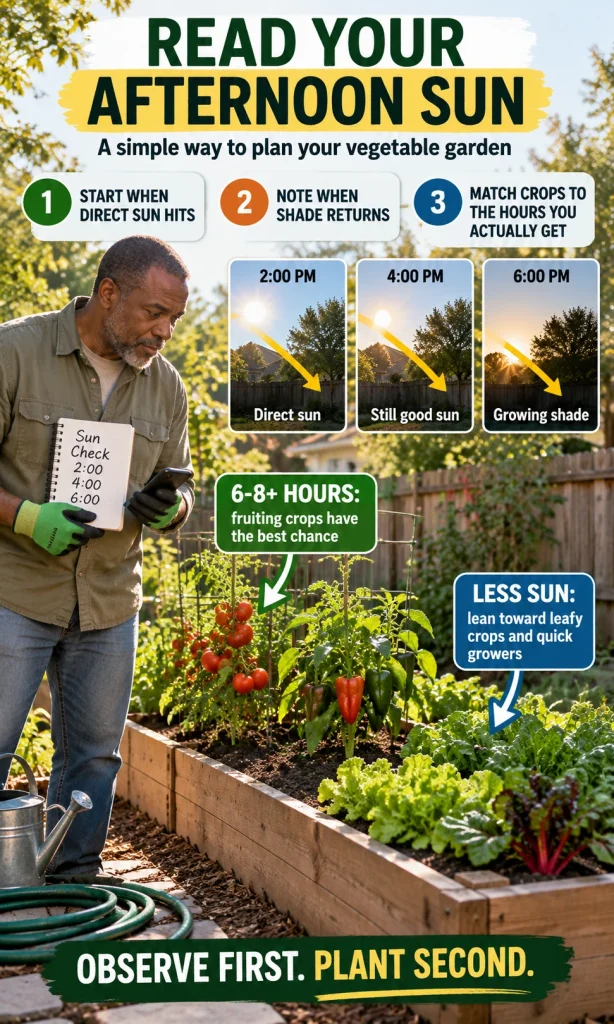
The phrase afternoon sun is too vague to choose vegetables by itself because one garden may receive two bright hours after lunch while another receives six or more hours of direct light. Watch the proposed bed or containers at several points during the day and note when direct sun begins, when nearby trees or buildings create shade, and whether that pattern changes across the season. This simple observation gives you a much better planting decision than guessing from the direction your backyard faces.
For sun-loving fruiting vegetables, the University of Minnesota Extension recommends locating raised beds where tomatoes, peppers and eggplants can receive about six to eight hours of sunlight each day. The same guidance notes that sites with much less sun can still support crops such as lettuce, baby kale, scallions, microgreens, radishes and beet greens. That distinction is useful because it turns shade from a gardening failure into a crop-selection problem you can work around.
| What you observe | Best beginner direction | What to watch |
|---|---|---|
| Around 6-8+ hours of direct sun | Tomatoes, peppers, beans, cucumbers and many herbs become realistic choices | Afternoon heat can increase drying, especially in containers |
| Moderate direct sun with part-day shade | Mix leafy greens, herbs, radishes and other quick-growing crops | Fruit production may be slower or lighter |
| Only a few direct-sun hours | Prioritize leafy crops and compact quick growers | Avoid building the whole garden around heat-loving fruiting crops |
Choose Vegetables for Your Light, Not for the Catalog Photo
A first vegetable garden is easier when the crop list is short, familiar and matched to the site. The Royal Horticultural Society’s beginner vegetable guidance makes a useful point that many new gardeners overlook: grow what you actually like to eat and keep experiments limited at first. A small bed filled with vegetables your household uses is more rewarding than a large plot that produces food nobody is excited to harvest.
For a sunnier backyard, a beginner could combine one or two fruiting crops with a faster crop that gives earlier feedback, such as lettuce, radishes, scallions or bush beans. If your afternoon light is shorter, lean harder toward leafy vegetables and herbs instead of forcing tomatoes or peppers into a spot that never gives them enough energy. You can always add more ambitious crops after you see how the first season behaves.
- Strong sun: tomatoes, peppers, bush beans, cucumbers with support, basil and other sun-loving herbs.
- Mixed sun: lettuce, chard, radishes, scallions, leafy herbs and other fast or foliage-focused crops.
- Hot afternoon exposure: keep heat-loving crops where they receive the strongest light, but plan for faster moisture loss.
- Limited space: choose compact varieties and crops you can harvest repeatedly rather than filling the area with one sprawling plant.
Afternoon Sun Changes the Watering Problem
Afternoon light often arrives when air and soil temperatures are already elevated, so the same bed may dry more quickly than a bed that receives its strongest sun earlier in the day. This does not mean you should water on a rigid schedule, because rainfall, soil texture, mulch, container size and plant growth all change how fast moisture disappears. Check moisture below the surface and water the root zone when the soil is genuinely drying rather than reacting only to a dry-looking crust.
If you want a deeper explanation of that difference, see why soil can look dry on top while staying wet underneath. That same principle matters in vegetable beds because shallow watering can train roots to stay near the surface, while repeated unnecessary watering can leave deeper soil wetter than it appears. The goal is steady root-zone moisture without keeping the bed constantly saturated.
Raised Bed, In-Ground Bed, or Containers?
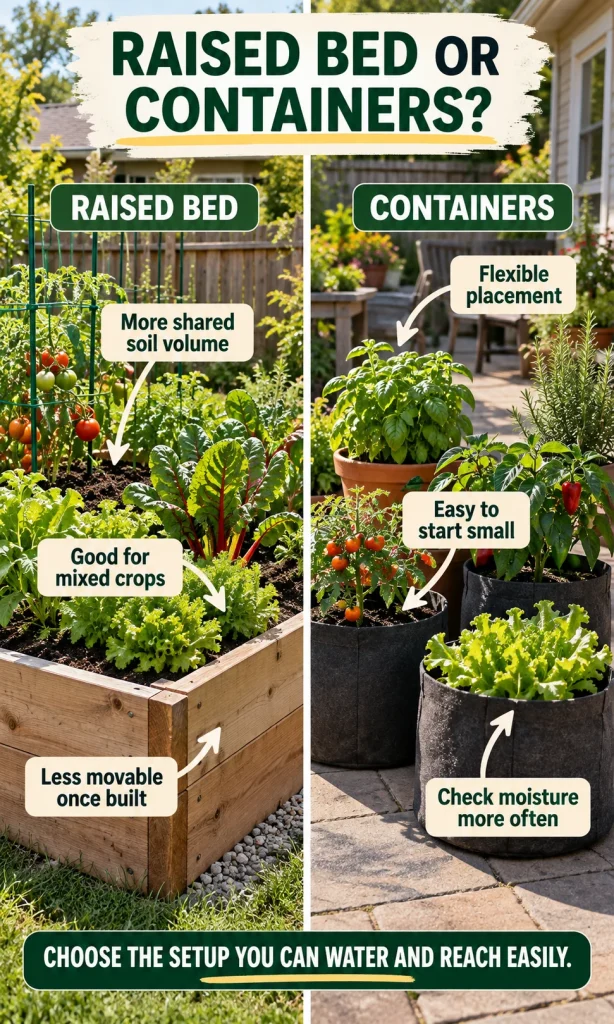
There is no single best setup for a novice vegetable gardener, because access and maintenance usually matter more than the material around the soil. Raised beds give you more control over the soil and can be easier to reach, while in-ground beds often hold moisture more steadily once the soil is improved. Containers are the most flexible option for small spaces, but their smaller soil volume usually means you need to check moisture more often.
The best choice is the one you can reach comfortably with a watering can or hose and inspect without making gardening feel like a special event. RHS planning guidance also emphasizes working with the space, soil and time you genuinely have rather than trying to grow everything at once. A modest raised bed near the back door can be more productive for a beginner than a larger plot at the far edge of the yard that is easy to forget.
Prepare the Soil Before You Fill the Space With Plants
Vegetable roots need soil that can hold moisture while still draining excess water and allowing air into the root zone. If you are planting in the ground, loosen compacted soil and improve structure with suitable organic matter rather than burying young plants in dense, hard ground. If you are filling containers or a raised bed, use a growing medium designed for that purpose instead of assuming any bagged material will behave the same way.
Soil type changes how often you need to water and how quickly nutrients move, so a little soil knowledge saves a great deal of confusion later. The site’s guide to soil types for beginners can help you recognize why sandy soil dries quickly, clay holds water longer, and well-structured soil feels easier to manage. You do not need perfect soil before planting, but you do need a root zone that drains and does not stay compacted.
Plant With Enough Room for the Mature Crop
Overplanting is one of the easiest beginner mistakes because young seedlings make a bed look almost empty. A few weeks later, leaves overlap, airflow drops, watering becomes awkward and one vigorous plant can shade its neighbors. Use the mature spacing on the seed packet or plant label rather than judging spacing by the size of the seedling in your hand.
If you enjoy close planting systems, learn the logic before compressing the bed simply to fit more plants. The site’s square-foot gardening guide explains one structured way to organize a small space, but even dense layouts still depend on crop size, airflow, access and light. The useful question is not “How many plants can I squeeze in?” but “Can each plant still receive enough light, root space and attention to grow well?”
Make Watering Easy Enough That You Will Actually Do It
Put the garden close enough to a practical water source that routine care does not become a carrying exercise. A hose, watering can, drip line or another simple system can all work if water reaches the root zone evenly and you can adjust frequency as weather changes. If the site is awkward to water, reduce the number of containers or move the first bed closer before adding more crops.
Mulch can help reduce evaporation once seedlings are established, but it should not become an excuse to stop checking the soil. The surface under mulch can look dark while deeper areas are still too dry, or the surface can look dry while lower soil remains moist. For a broader watering routine, see how to water plants correctly and adapt the method to your vegetable bed, weather and soil.
Your First Vegetable Bed: Set It Up in This Order
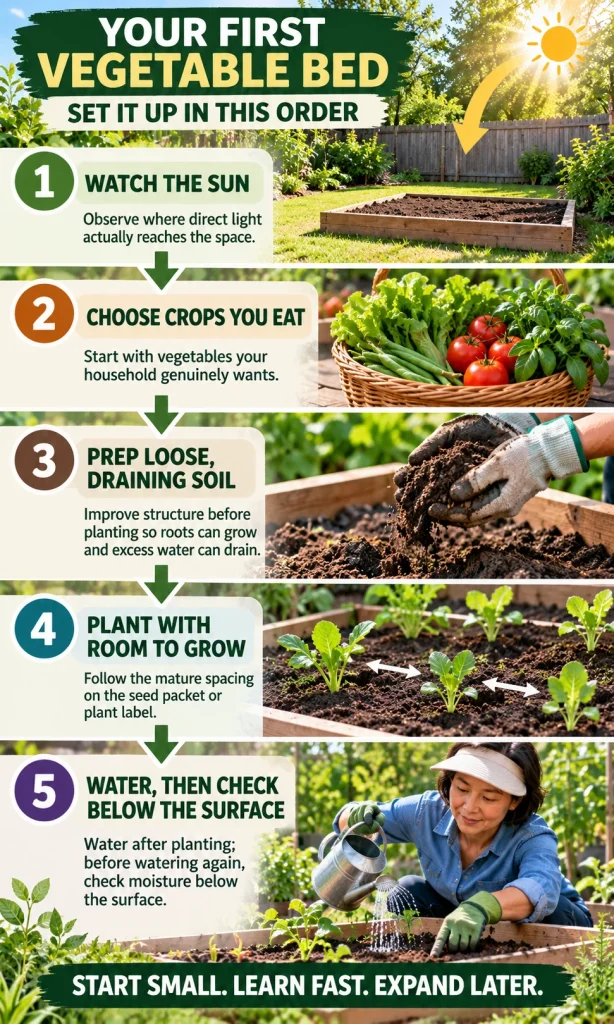
A beginner garden becomes much easier when the decisions happen in the right sequence. First confirm the light, then choose crops that fit that light, then prepare the soil, give each crop enough mature space, and finally build a watering routine around the real site. Skipping the first two steps is how many gardens end up with sun-loving vegetables in shade or far more plants than the available water and time can support.
- Watch the sun. Record where direct light reaches the growing area and how long it lasts.
- Choose crops you eat. Keep the first crop list short enough to learn what your space does well.
- Prepare loose, draining soil. Improve compacted ground before planting.
- Plant with room to grow. Follow mature spacing rather than seedling size.
- Water, then check below the surface. Let root-zone moisture guide the next watering instead of a fixed calendar.
Use This Interactive Check Before You Buy More Seeds
The most useful beginner recommendation depends on the combination of light, heat, growing space, water access and the types of vegetables you actually want to harvest. The interactive experience below turns those conditions into a practical starting direction without giving you a fake “garden score.” It helps you decide which crop group is the strongest fit, which conditions need extra attention, and what to do first this week. Use the result as a starting point, then adjust for your local planting season and the specific varieties you choose.

Sun + space + water fit check
Backyard Harvest
Fit Studio
Use the garden you actually have - its sunlight, setup and watering access - to choose a simpler first crop direction and avoid an overcomplicated start.
The result is a practical starting direction, not a diagnosis or guarantee. Local seasons, cultivar requirements and weather still matter.
Your easiest crop direction
What may change your watering routine
How to use the space you selected
What to do first this week
Find nearby garden supplies or local horticulture help
Enter any city, town, postcode or ZIP code. The buttons open Google Search or Maps; no API key is required and no local business is fabricated inside this experience.
Common Beginner Vegetable Garden Mistakes
Most early garden problems are not caused by a lack of effort. They come from choosing a site before measuring the light, buying too many crops at once, placing thirsty containers too far from water, or watering by habit instead of checking the soil. These are all fixable mistakes, and they are much easier to correct in a small first garden than in a large one.
- Buying plants before observing the site: choose the growing space first, then buy crops for that space.
- Growing only long-season crops: include something fast enough to give you an early harvest and useful feedback.
- Judging moisture only from the surface: check below the top layer before deciding the bed needs more water.
- Planting too close: follow mature spacing and remember that airflow matters as leaves expand.
- Starting too large: build one manageable bed or a small container group, learn from it, then expand.
What to Do During the First Month
During the first week, focus on establishment rather than chasing rapid growth. Keep newly planted seedlings evenly moist without waterlogging the soil, check that strong afternoon sun is not scorching recently transplanted plants, and correct leaning supports or loose labels before they become annoying. Small adjustments now are easier than repairing a crowded or poorly watered bed later.
As the plants begin active growth, compare them with the conditions around them rather than with idealized photographs online. A tomato that stays compact in a partly shaded spot may simply be telling you that the light is better suited to leafy crops, while a container that wilts quickly every afternoon may be telling you that the root zone is heating and drying faster than expected. Use those observations to improve the next planting instead of treating every imperfect plant as a failure.
Frequently Asked Questions
Can vegetables grow with only afternoon sun?
Yes, many vegetables can grow with afternoon sun if the site receives enough total direct light for the crop you choose. Fruiting crops generally need stronger sun, while leafy vegetables, scallions, radishes and similar crops are more forgiving when direct-light hours are lower. Measure the light for the actual bed before choosing the crop list.
Is afternoon sun too hot for a vegetable garden?
Afternoon sun can be intense, especially in hot climates or beside heat-reflective walls and paving, but it is not automatically too hot. Watch soil moisture, use mulch where appropriate, and pay closer attention to containers and raised beds because they can dry faster than surrounding ground. If plants repeatedly wilt despite adequate root-zone moisture, reassess heat exposure and the crop choice rather than simply watering more often.
What vegetables are easiest for a first garden?
Choose vegetables you already enjoy eating and that match your light. Bush beans, lettuce, radishes, scallions, chard and herbs can give beginners useful feedback quickly, while tomatoes and peppers are rewarding when the site has strong sun and you are prepared to support and water them consistently. Keeping the first crop list short makes it easier to notice what your site does well.
Should a beginner use a raised bed or containers?
Use the format that is easiest to reach, water and maintain in your space. Raised beds offer more soil volume and easier soil control, while containers are flexible and excellent for starting small but usually need more frequent moisture checks. In-ground beds are also a good choice when the existing soil can be improved and the site already has convenient access.
How often should I water a new vegetable garden?
There is no reliable universal day count because weather, soil, mulch, container size and plant growth all change water use. Check moisture below the surface and water the root zone when the soil is drying rather than watering simply because a calendar says it is time. Newly planted seedlings may need closer attention while their root systems establish, especially in hot afternoon exposure.
Decision Summary
A good first vegetable garden is not the one with the most crops; it is the one that matches your real light, soil, water access and available attention. Measure the afternoon sun, choose vegetables you will actually eat, keep the first bed manageable, and let the plants show you what your backyard does well. Once that first small system feels easy, expanding the garden becomes a confident next step instead of a rescue project.