



During an ulcerative colitis flare, familiar foods with softer textures – such as eggs, white rice, fish and peeled, well-cooked vegetables – may be easier to tolerate. Your needs depend on your symptoms and treatment plan, so there is no food list that is safe or effective for everyone. Keep prescribed treatment going and contact your IBD team when symptoms return or worsen; food changes support nutrition but do not replace treatment for inflammation.
If your team has given you a written flare plan, follow it. If not, ask what assessment and treatment you need rather than waiting for a diet to work. Crohn’s & Colitis UK’s flare guidance explains when urgent care is needed; use your country’s emergency services when symptoms are severe.
Quick food guide: often easier options, with conditions
Think in terms of preparation and personal tolerance, rather than a permanent allowed-and-forbidden list. The examples below are starting points for adults who can eat and drink and have no conflicting clinical instructions. Food allergies, bowel narrowing, recent surgery, an ostomy or a pouch can require a different plan.
| Food group | Possible starting choice | Preparation and limitation |
|---|---|---|
| Protein | Eggs; skinless poultry; white fish; tofu | Cook thoroughly. Poach, steam or bake; use a moist texture and avoid heavy frying. |
| Starches | White rice; plain pasta; white bread; peeled potatoes | Cook until soft. Choose versions without added seeds if rough textures worsen symptoms. |
| Fruit | Ripe banana; smooth applesauce; peeled canned peaches | Try an amount you already tolerate. Drain canned fruit if the juice is troublesome; these foods still contain fibre. |
| Vegetables | Peeled carrots; peeled and deseeded zucchini; soft squash | Cook until fork-tender. Start with a modest serving rather than assuming all cooked vegetables suit you. |
| Dairy or alternatives | Lactose-free milk; smooth yogurt; fortified alternatives | Choose according to tolerance and allergy needs. Plant drinks differ greatly in protein and calcium. |
| Energy additions | Small amount of olive oil; smooth nut butter | Use only if tolerated and allergy-safe. Smooth nut butter still contains fat and some fibre. |
| Fluids | Water; broth; oral rehydration solution when appropriate | Sip regularly. Broth is not a complete meal or a substitute for a formulated rehydration solution. |
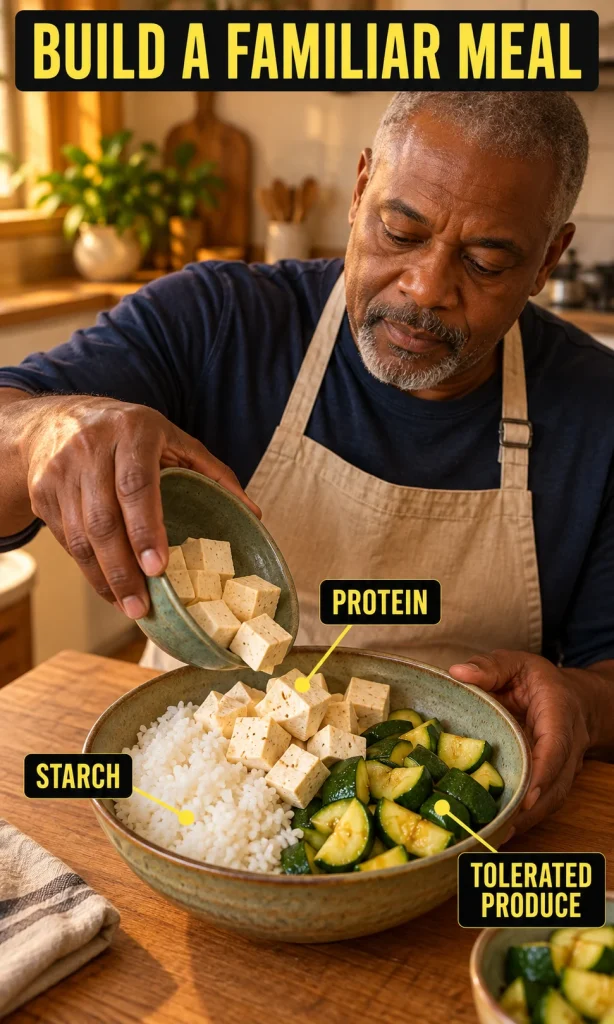
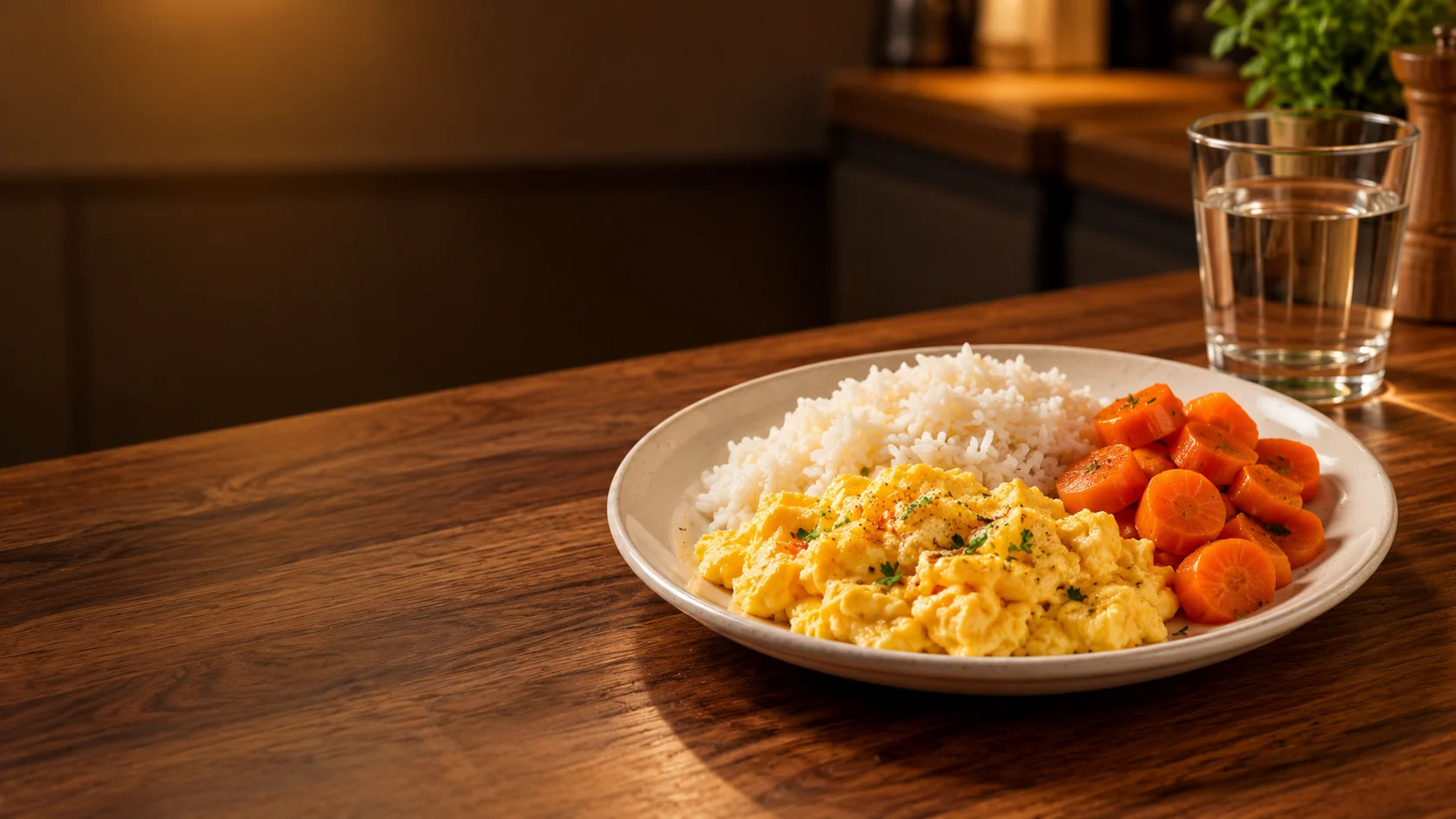
A meal can be very simple: soft white rice, poached fish and tender peeled carrots, with water alongside. Change any ingredient that you know causes trouble, and adjust the serving to your appetite. A smaller complete meal is more useful than repeatedly eating only a few plain crackers.
What to limit if it makes your flare symptoms worse
A food can aggravate urgency, gas or diarrhoea without being the cause of intestinal inflammation. That distinction matters because blaming every symptom on the last meal can lead to unnecessary restrictions. Use this table to identify possible changes, not to eliminate every category at once.
| Food or drink | Why it may be difficult | Possible adjustment |
|---|---|---|
| Raw salads, bran, popcorn, whole nuts and tough skins | Rough textures and insoluble fibre may be harder to tolerate | Try tender peeled produce, refined starches or smooth nut butter if suitable. |
| Fried food and very rich sauces | A large fat load may worsen symptoms for some people | Bake or poach; use a smaller amount of fat rather than removing it completely. |
| Milk and ice cream containing lactose | Lactose intolerance can cause gas or diarrhoea | Try lactose-free products if appropriate; UC does not automatically require dairy avoidance. |
| Chilli-heavy dishes, coffee and alcohol | These can aggravate symptoms in some people | Reduce the suspected trigger and compare your response. |
| Large glasses of fruit juice or drinks with sugar alcohols | Some sugars and polyols may increase loose stools or gas | Choose water; ask about oral rehydration solution when losing substantial fluid. |
| Fizzy drinks | Carbonation can worsen bloating | Try a non-carbonated drink if bloating is troublesome. |
There is no reason to ban all gluten, all sugar or all dairy simply because you have UC. A separate diagnosis such as coeliac disease, a food allergy or lactose intolerance changes the advice. Crohn’s & Colitis UK’s food guidance discusses individual triggers and the difficulty of identifying them during active disease.
Low fibre and low residue: useful terms with limits
A temporary reduction in coarse, insoluble fibre may help some people manage diarrhoea and stool bulk during a flare. “Low residue” is a less precise term that usually refers to reducing material left in the bowel, whereas “low fibre” focuses specifically on dietary fibre. Neither phrase means the colon needs to be starved or that eating the right food will switch off inflammation.
Texture changes are often a useful first step before excluding more foods. Peeling removes skins, deseeding removes seeds, and cooking softens plant structure; blending changes particle size but does not remove all fibre. A blended kale smoothie is therefore different in texture from raw kale, yet it is not automatically a low-fibre drink.
Follow a prescribed low-fibre diet when your clinician recommends it, including any specific instructions about amounts. Do not give yourself a universal fibre limit or keep restrictions indefinitely because symptoms briefly improve. Royal Free London’s low-fibre guidance describes this approach as usually temporary and recommends professional guidance.
Build the plate around protein and enough energy
Start with a protein you can tolerate, then add a starch and a suitable fruit or vegetable. If everything on the plate is dry, use a little tolerated broth or sauce to make eating easier. This approach gives each part of the meal a purpose without requiring a complicated recipe.
For example, shredded chicken mixed into soft rice can be easier to eat than a dry chicken breast beside a large salad. An egg served with peeled potato offers another option when cooking feels difficult. Neither meal is an anti-inflammatory prescription; both are practical ways to keep eating while your treatment is being assessed.
- Eggs: scramble, poach or boil thoroughly, using modest fat if rich food bothers you.
- Fish and poultry: remove bones and tough skin; keep the cooked food moist.
- Tofu: choose a texture you like and prepare it simply; avoid assuming it suits everyone.
- Nut butter: try a thin spread if tolerated, rather than whole nuts or a large serving.
A flare can make appetite unreliable, so having easy protein choices ready reduces the effort needed to eat. Ask your dietitian about your actual energy and protein requirements if you are losing weight or struggling with intake. Generic gram targets cannot account for your size, disease activity, kidney function or other health needs.
Choose fruit and vegetables by texture, amount and response
Bananas and applesauce are common starting options, but a large portion can still disagree with you. Try a familiar amount and keep the rest of the meal predictable. If a fruit repeatedly causes symptoms, use another tolerated option rather than forcing it because it appears on a flare-food list.
Squash is not automatically unsuitable during a flare. A modest serving of peeled, deseeded, thoroughly cooked squash may be tolerated, whereas a large serving or a preparation with tough skin may be more difficult. The relevant question is how it is prepared and how you respond, not whether its name appears in a “high fibre” category.
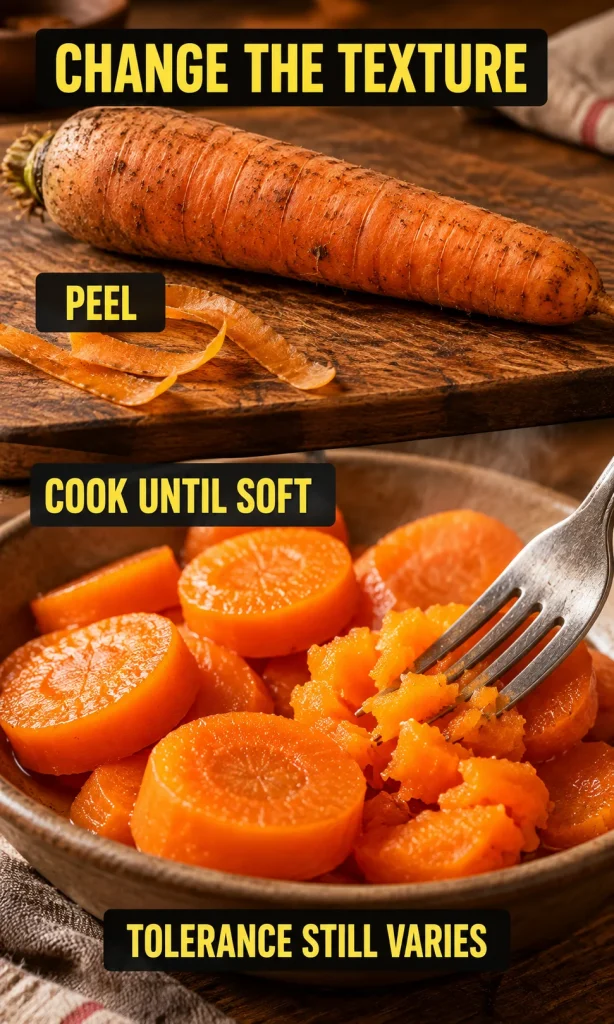
Cooking and peeling can make vegetables easier to manage, but portions still matter. Carrots and zucchini can be cooked until easily crushed with a fork and served beside rice or potato. If you cannot tolerate vegetables temporarily, let your team know so they can help protect nutrition without turning a short adjustment into a permanent exclusion.
Dairy-free and vegetarian meals during a flare
If lactose causes trouble, lactose-free dairy may preserve familiar protein and calcium sources. If you avoid all dairy, compare fortified alternatives carefully: a low-protein almond drink is not nutritionally equivalent to dairy milk or a higher-protein soy drink. Choose products that fit your allergies and tolerance, and read the nutrition label rather than relying on the word “plant-based.”
Vegetarian meals can use eggs, tofu, tolerated dairy or suitable fortified alternatives. Beans and lentils may be troublesome for some people during active symptoms, but they do not need to be permanently banned; texture and amount can be adjusted later. A restrictive vegan diet combined with poor intake deserves early dietitian support, particularly if soy, nuts and legumes are also excluded.
For a separate look at calcium sources, see calcium options beyond milk. Apply any suggestions to your flare tolerance rather than adding rough-textured foods immediately. A food can be nutritious in general and still need a different preparation during active symptoms.
Preparation that makes meals easier to manage
Use simple methods that preserve moisture: steaming, poaching, simmering and gentle baking. Peel tough skins, remove seeds when needed, and cut or shred food into manageable pieces. Pureeing may make a meal smoother, but it should still contain useful ingredients rather than becoming only watered-down vegetables.
- Choose a protein and starch you already tolerate.
- Cook them fully and keep the texture soft or moist.
- Add a modest serving of suitable peeled, cooked produce if tolerated.
- Use a little tolerated oil or sauce for energy and palatability.
- Serve a manageable amount; save another portion safely for later.
Small, frequent meals can be more practical when a large plate feels overwhelming. They are an option, not a rule requiring you to eat at fixed intervals or ignore hunger. If you repeatedly cannot finish enough food across the day, the answer is nutrition support and flare assessment rather than ever-smaller portions.
A flexible three-day UC flare meal plan
These are meal ideas for someone able to eat and drink, not a nutritionally calculated prescription or a treatment timetable. Choose portions with your dietitian if you need a structured plan, and swap any ingredient that conflicts with your tolerance or allergies. Three days of examples are enough to show variety without implying a flare should resolve within a week.
| Day | Breakfast | Lunch and dinner | Snack options |
|---|---|---|---|
| 1 | Fully cooked scrambled egg with white toast | Lunch: moist chicken and white rice. Dinner: baked white fish, peeled mashed potato and soft carrots. | Ripe banana; smooth lactose-free yogurt if tolerated. |
| 2 | Cream of wheat made with tolerated milk or fortified alternative | Lunch: tofu with soft rice and peeled zucchini. Dinner: shredded turkey with plain pasta and a tolerated light sauce. | Applesauce; crackers with a thin layer of smooth nut butter if allergy-safe. |
| 3 | Rice cereal with tolerated milk and a small amount of banana | Lunch: fully cooked egg sandwich on white bread. Dinner: steamed fish or tofu, soft rice and peeled, cooked squash. | Soft canned peaches, drained; a suitable nutrition drink if recommended. |
To make these ideas dairy-free, use a tolerated fortified alternative and check sauces for milk ingredients. To make them vegetarian, replace poultry or fish with tofu or eggs while preserving a meaningful protein source. For coeliac disease, use suitable gluten-free bread, pasta or cereal and follow cross-contact precautions.
You can also adapt familiar dishes rather than changing your whole cuisine. Plain rice porridge with fully cooked egg or fish, or soft noodles with tofu, can fit the same meal structure. Avoid adding several unfamiliar ingredients at once, which makes it harder to tell what you tolerate.
Try Flare Meal Studio
Flare Meal Studio lets you assemble one meal from familiar starches, protein choices and softer produce options. You can select dietary preferences, see preparation notes and open a compact A4 summary to discuss with your care team. It does not diagnose a flare, calculate your nutritional requirements or certify a meal as safe.
Flare Meal Studio
Build one familiar meal. Adjust texture, keep protein, and take a clear summary to your care team.
Preparation notes A4 summaryFood tolerance varies. This experience does not diagnose a flare, treat inflammation, or replace your IBD team’s advice. No entries are saved or sent to analytics.
Severe abdominal pain with fever or a rapid heartbeat, continuous heavy bleeding, severe dehydration, or inability to keep fluids down needs urgent or emergency assessment. New or worsening flare symptoms need your IBD team’s advice.
Your meal idea
Preparation
Keep the bigger picture in view
Sip fluids regularly. Ask about oral rehydration solution if diarrhoea is causing substantial fluid loss. Diet changes do not confirm remission.
Find support from an IBD team or dietitian
Contact your existing team first for a suspected flare. These searches help find ongoing support; search results are not emergency triage or verified recommendations.
Compare three to five candidates: recognized dietitian credentials or gastroenterology qualifications, IBD experience, availability, cost or insurance, and coordination with your treating team. Check credentials directly; ratings alone do not establish suitability.
Hydration: replace losses without relying on juice
Frequent diarrhoea can remove both fluid and salts, and dehydration can make you feel weaker. Sip regularly rather than trying to drink a large amount at once. Dark urine, less urine than usual or dizziness are reasons to assess hydration and seek help if they persist or worsen.
For substantial diarrhoeal losses, ask your clinician or pharmacist whether a commercial oral rehydration solution is appropriate. Prepare it with exactly the amount of water specified on the packet. Sports drinks, fruit juice and broth have different compositions and should not be assumed equivalent to a formulated solution.
There is no single fluid target that works for every flare. Kidney or heart conditions, an ostomy, recent surgery and ongoing losses can change requirements. Crohn’s & Colitis UK’s dehydration guidance explains why severe dehydration needs urgent treatment; repeated vomiting or inability to keep fluids down should not be managed with a meal plan alone.
Protect nutrition when the flare lasts
A diet that becomes mostly rice, toast and broth may feel manageable but can fall short over time. Watch for falling intake, looser clothes, weight loss, unusual fatigue and a shrinking list of foods you feel able to eat. Bring these changes to your team early rather than waiting until you feel severely depleted.
Bleeding and inflammation can contribute to iron deficiency, while avoiding dairy can make calcium intake harder to maintain. Your clinician may review blood tests and recommend targeted supplements; the correct choice depends on your results and medications. The Foundation’s supplement guidance recommends checking with your healthcare team before starting supplements.
A dietitian may suggest an oral nutrition drink or another tailored strategy if food alone is insufficient. Such a drink is different from clear broth because it is designed to provide energy and nutrients. Do not start fasting, a juice cleanse or a liquid-only regimen as self-treatment for UC.
How to widen your diet after symptoms improve

Improved symptoms are encouraging, but they do not by themselves prove the bowel lining has healed. Ask your IBD team when and how to broaden your diet, particularly if you were given a specific restriction. A symptom review and any recommended tests matter more than reaching day seven of a meal plan.
Reintroduce one manageable change at a time: a different cooked vegetable, a slightly larger serving or a less processed texture. Keep the rest of the meal familiar and note your response. If a change causes trouble, return to the tolerated preparation and ask about trying again later rather than declaring the food permanently unsafe.
Over the longer term, a varied eating pattern matters. The AGA’s expert review on nutrition in IBD supports an overall Mediterranean-style pattern when appropriate, while recognizing individual nutritional needs. A remission diet should not remain an unnecessarily narrow flare menu.
A useful food record without blaming every meal
Record the food, approximate portion, preparation, symptoms and timing, along with medication changes and other relevant events. “Rice with peeled carrots and tofu” is more useful than “healthy dinner,” because the detail helps a dietitian identify possible adjustments. Keep the record brief enough that you can actually maintain it.
Symptoms during an active flare can fluctuate even when meals remain the same. A single bad afternoon is not proof that one ingredient caused inflammation, and a single comfortable day does not confirm remission. Use repeated patterns to guide a conversation with your team, not to create an expanding list of forbidden foods.
Frequently asked questions
What is a good breakfast during a UC flare?
Fully cooked eggs with white toast, or a smooth cereal made with a tolerated milk or fortified alternative, can be practical starting options. Choose foods you already tolerate and adjust the amount to your appetite. Add a protein source where possible rather than relying only on toast.
Can I eat eggs or bananas during a flare?
Many people tolerate fully cooked eggs and ripe bananas, but neither is suitable for everyone. Consider allergy needs, preparation and portion size. If either repeatedly worsens symptoms, use a tolerated alternative and discuss the pattern with your dietitian.
How long should I follow a low-residue diet?
There is no universal number of days. If your clinician prescribed a low-fibre or low-residue approach, ask when to review it and how to reintroduce variety. Persistent symptoms need flare assessment rather than indefinite restriction.
Is bone broth good for ulcerative colitis flares?
Broth may be a tolerable fluid or an ingredient that makes food moist. It has not been established as a treatment for UC inflammation, and its protein and energy content vary. Use it alongside adequate nutrition rather than as your only food.
Should I take supplements during a flare?
Ask your clinician about testing and your current diet before choosing supplements. Iron, vitamin D or other nutrients may be needed for a documented deficiency or specific risk. Supplements can have side effects and interactions, so more is not automatically better.
Do I need a low-FODMAP diet for a UC flare?
A low-FODMAP diet is not a treatment for active UC inflammation. It may be considered with a dietitian for selected IBS-like symptoms after disease activity has been assessed. Avoid combining multiple restrictive diets without nutritional support.
Keep eating while your treatment addresses the flare
Start with a manageable meal, use softer preparation where helpful and keep fluids available. Preserve as much variety as you can tolerate, and ask for support when symptoms or poor intake make that difficult. Your next step is a clear flare-care plan and enough nutrition to support you through it.