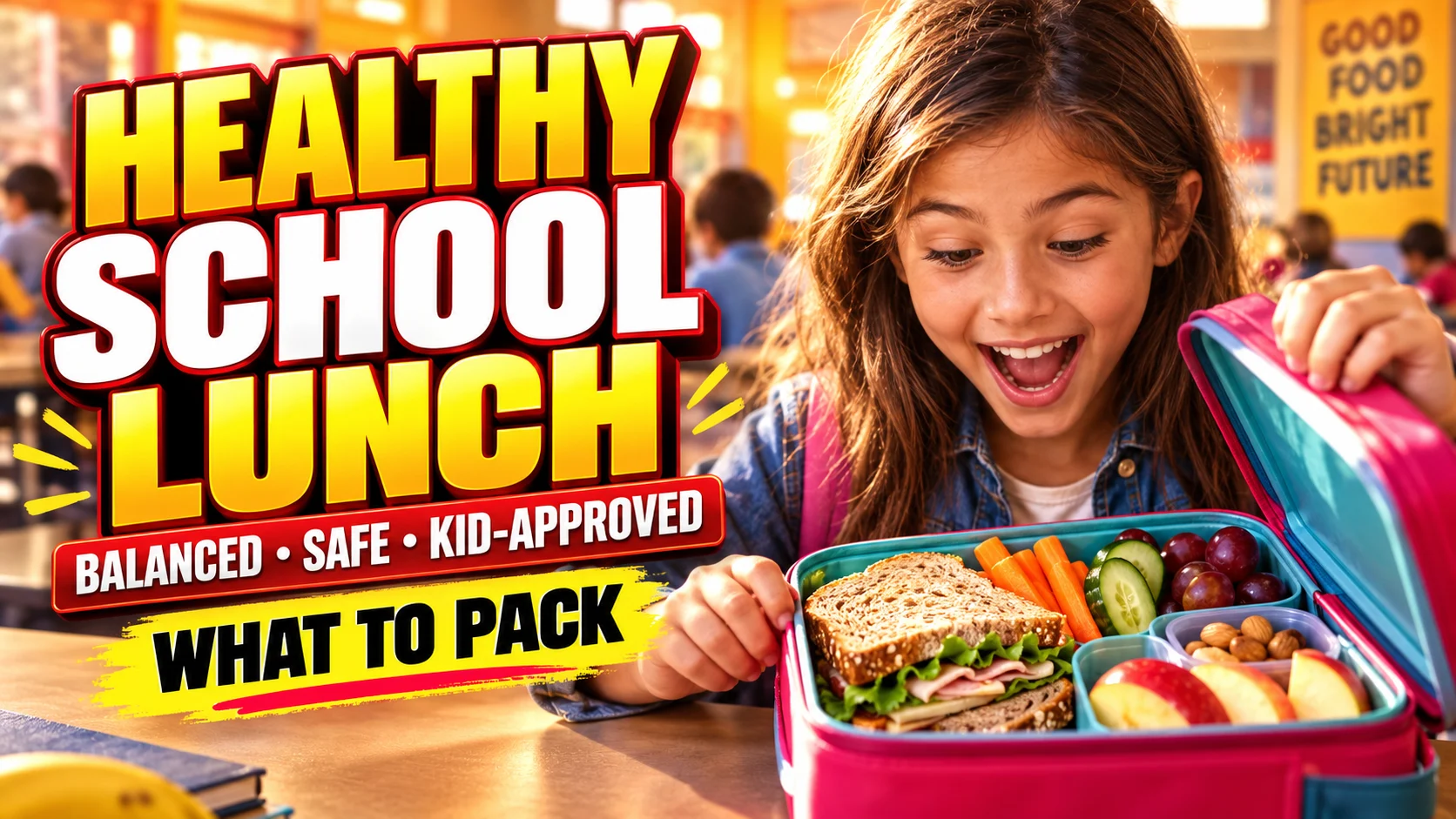

A healthy school lunch gives a child a useful mix of produce, protein, a whole grain or other satisfying starch, and a calcium-rich food, with water as the simplest everyday drink. The exact lunch can change with age, appetite, culture, allergies, school rules and what the child will actually eat, while packed lunches that contain perishables also need reliable temperature control. Think in terms of a balanced pattern across the day and week rather than forcing every lunchbox to look identical.
The simplest healthy school lunch formula
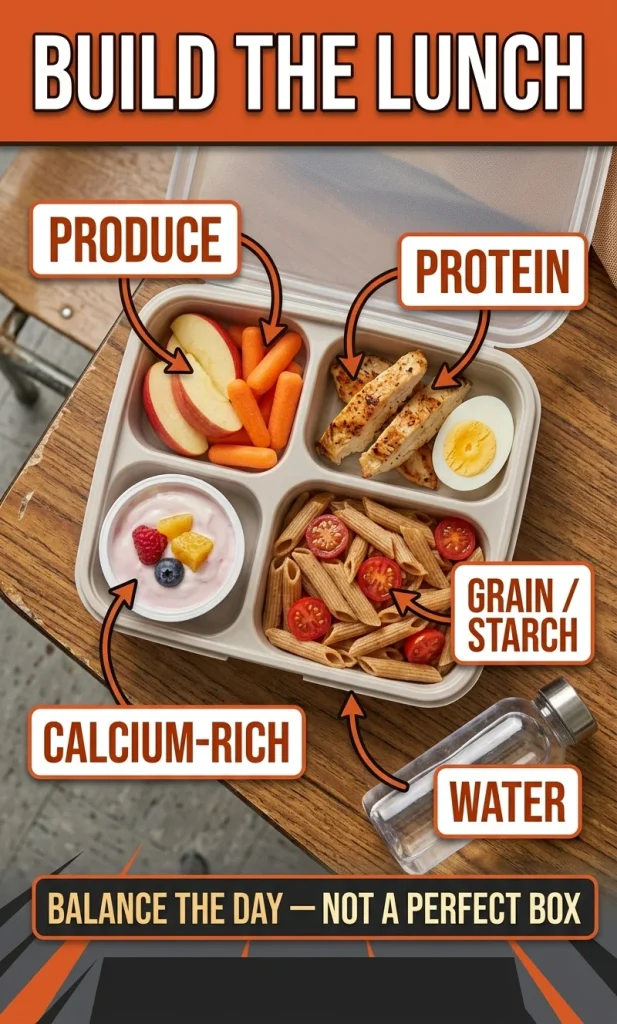
Start with the jobs the meal needs to do, then choose foods your child can comfortably eat during the time available. Current CDC healthy-eating guidance emphasizes nutrient-dense foods across protein, dairy, vegetables, fruits, healthy fats and whole grains, while also limiting heavily processed foods, added sugars and excess sodium.
| Lunch job | Practical choices | What to check |
|---|---|---|
| Produce | Fruit, vegetables, or both | Easy to open, chew and finish within the lunch period |
| Protein | Eggs, chicken, fish, beans, lentils, tofu, cheese, yogurt, or an allowed nut/seed option | School allergy rules and cold storage where needed |
| Grain or satisfying starch | Whole-grain bread or wrap, brown rice, oats, whole-grain crackers, corn, potato or another familiar staple | Prefer higher-fiber choices often, without turning lunch into a food battle |
| Calcium-rich food | Milk, yogurt, cheese, or an appropriate fortified alternative | Dietary needs, fortification and added sugar |
| Drink | Water; other unsweetened options as appropriate | Whether water is available at school |
That framework is intentionally flexible. A bean-and-rice lunch with fruit and yogurt can do the same nutritional jobs as a turkey sandwich with vegetables and milk, and a warm leftover meal can work just as well as a cold lunchbox when it is packed safely.
BALANCE • SAFETY • REAL-LIFE EATING
School Lunch Reality Check
Check the lunch for useful balance, temperature safety, school rules, and a realistic chance it gets eaten.
Build the lunch around the jobs food needs to do
This is a practical check, not a medical assessment. A child with allergies, feeding difficulties, diabetes, growth concerns, or another medical nutrition need may require an individualized plan.
Lunch check
Keep
Fix next
Watch
General education only. This does not replace advice from your child’s pediatrician, dietitian, allergy team, or school health staff when individualized needs are involved.
School-provided lunch and packed lunch can both be healthy
A cafeteria meal is not automatically less healthy than food brought from home, and a lunchbox is not automatically better. In the United States, meals served through the National School Lunch Program follow a formal meal pattern that includes fruits, vegetables, grains, meat or meat alternatives and milk; the current USDA National School Lunch Program meal-pattern chart also sets weekly grain, vegetable and dietary specifications. Other countries and school systems use their own standards.
Packed lunches are different because families control the food but also take responsibility for school rules, allergen restrictions and safe storage. The American Academy of Pediatrics notes that foods brought from home are not governed by one nationwide U.S. nutrition rule, although individual schools may set policies; its school nutrition guidance also emphasizes fruits, vegetables, whole grains and protein-rich foods as part of a healthy school environment.
What to put in a packed school lunch
Build from one reliable main item rather than starting with five separate “healthy” foods your child may ignore. For example, a familiar sandwich, rice bowl, pasta, bean wrap or leftovers can supply the meal’s protein and starch; produce, a calcium-rich item and water can then round out the lunch without making the box feel crowded.
Include fruit, vegetables, or both
Whole fruit and vegetables are easy ways to add fiber, vitamins, minerals, color and texture. A child who repeatedly leaves whole apples untouched may do better with sliced fruit, berries, orange segments or another form that matches the time and eating skills available; see why fruit matters in a balanced diet for a deeper explanation.
Add a protein food the child will actually eat
Protein can come from animal or plant foods. Eggs, poultry, fish, beans, lentils, tofu, yogurt and cheese are common lunch choices, while nuts, nut butters and some seed products depend on the school’s allergy policy. If you need more everyday options, the site’s examples of foods with protein can help widen the rotation.
Use whole grains often, but keep the meal practical
Whole-grain bread, wraps, crackers, pasta and rice can add fiber and staying power. A sudden switch from a familiar soft bread to a dense grainy option may backfire for a selective eater, so gradual changes are reasonable; the goal is a lunch the child can eat, not a technically perfect box that comes home untouched.
Include a calcium-rich food when it fits
Milk, yogurt and cheese are familiar options, while some children use fortified alternatives because of allergies, intolerance, dietary pattern or preference. The label matters because alternatives vary widely in protein, calcium and added sugar; the guide to calcium-rich foods can help you compare food sources.
Make water the easy default
Water is a simple everyday choice, especially when the school has refill stations or fountains. If a beverage is being packed, read the label rather than relying on front-of-package claims; understanding the food label helps you check added sugars, sodium and serving information more accurately.
How much should a child eat at lunch?
There is no single packed-lunch portion that fits every school-age child. Appetite changes with age, body size, activity, growth, breakfast, snacks, medication, sleep, illness and even how much time the school gives students to eat, so a rigid calorie target is rarely useful for a general lunchbox guide.
Use returned food as information. If the same large portion comes home daily, reduce the amount or change the format; if the child finishes everything and is consistently hungry soon afterward, add a more substantial main item or another nutrient-dense component. For growth concerns, restrictive eating, diabetes or another medical nutrition issue, use individualized guidance from the child’s healthcare team rather than an online formula.
Food safety matters as much as nutrition
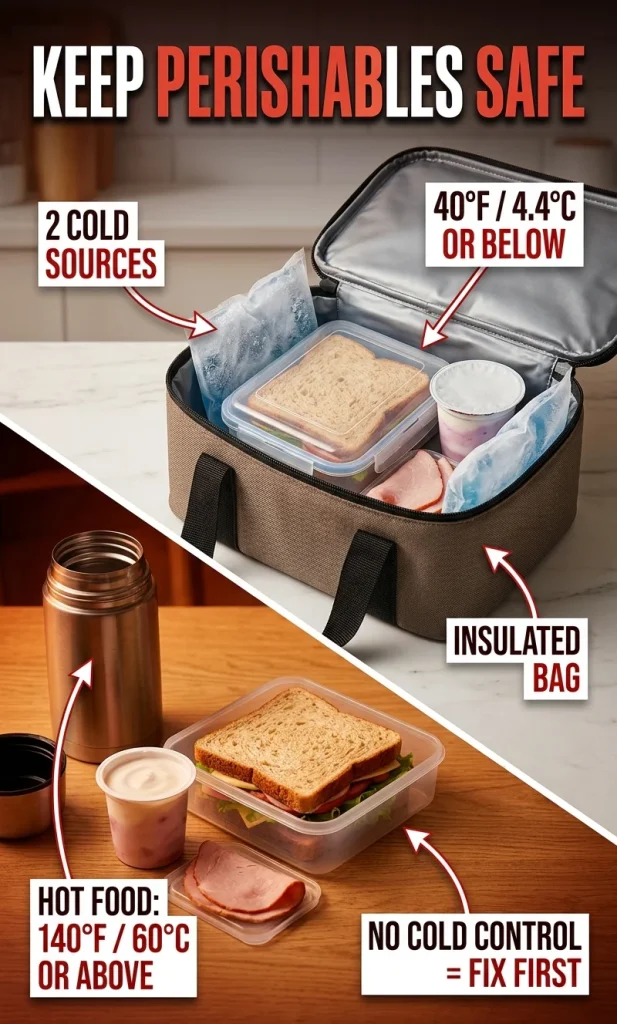
Yogurt, cut fruit, eggs, cooked meat, many sandwiches and leftovers can become unsafe if they sit too warm for too long. The USDA packed-lunch safety guidance recommends an insulated lunch bag and at least two cold sources for perishable foods when refrigeration is not available; it identifies 40°F to 140°F (4.4°C to 60°C) as the temperature range in which harmful bacteria can multiply rapidly.
- Cold lunch: start with chilled food, use an insulated bag, and place cold sources around perishables.
- School refrigerator: use it when the school allows it and the child can reliably store the lunch on arrival.
- Hot lunch: preheat a clean insulated food container and keep hot foods hot until lunchtime according to the container and food-safety guidance.
- Night-before packing: refrigerate prepared food promptly rather than leaving a filled lunchbox at room temperature.
Picky eaters: make the lunch familiar enough to succeed
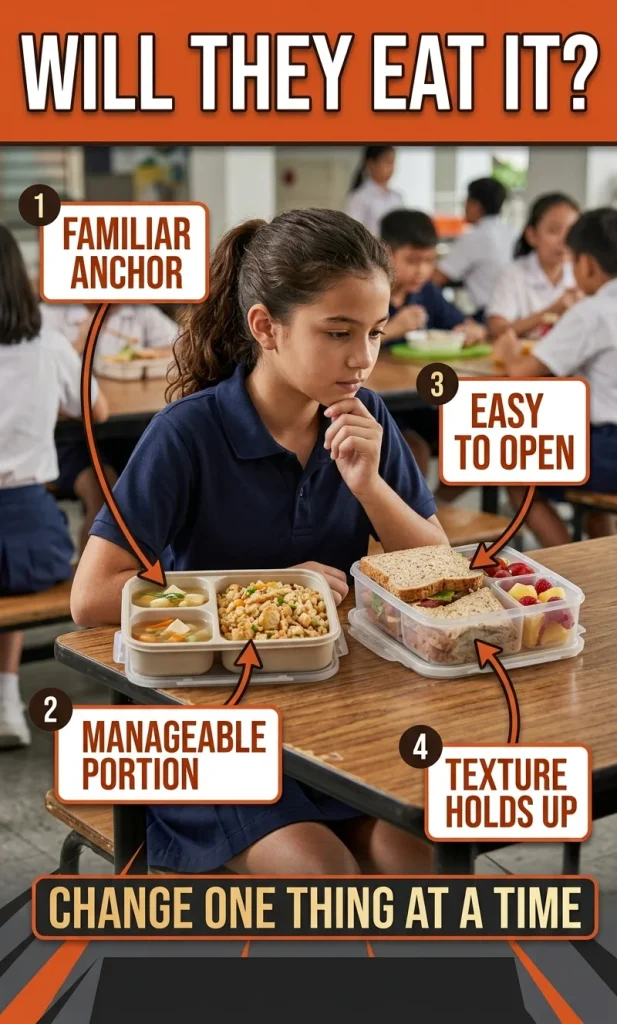
A healthy lunch has little value if the child consistently cannot or will not eat it. Start with one familiar “anchor” food, then vary one smaller element at a time – a different fruit, a new vegetable next to a familiar dip, or a new bread with a familiar filling – so lunch does not become an all-or-nothing test.
Texture and logistics matter as much as taste. Soggy sandwiches, hard-to-open packaging, unpeeled fruit, food that cools into an unpleasant texture or a container a young child cannot close can all turn a nutritious lunch into waste. For the broader habit-building side, see healthy eating habits for kids.
Check allergy and school rules before packing
Do not assume every school uses the same “nut-free” or food-sharing policy. The American Academy of Pediatrics recommends coordinated planning for children with diagnosed food allergies; its school food-allergy guidance for families explains why families, healthcare teams and schools need a clear plan for preventing exposure and responding to reactions.
For a child with a known allergy, follow the individualized school plan and medical advice. For everyone else, respect classroom restrictions and avoid teaching children to swap food casually, because another student may have a restriction you cannot see.
Healthy school lunch ideas that are easy to adapt
These are templates, not rules. Cultural staples such as noodles, dumplings, dosa, rice dishes, flatbreads, curries, soups and grain bowls can make excellent school lunches when the same balance and food-safety questions are applied.
| Main | Produce + side | Packing note |
|---|---|---|
| Chicken or tofu whole-grain wrap | Cucumber + orange segments + yogurt | Keep perishable ingredients cold |
| Bean and cheese quesadilla | Tomatoes + grapes | Cut into easy-to-hold wedges |
| Egg and whole-grain crackers | Carrot sticks + pear + cheese | Cold control required |
| Rice, lentils and vegetables | Fruit + plain yogurt or fortified alternative | Use a cold pack or a suitable hot-food container |
| Tuna or chickpea sandwich | Bell pepper strips + berries | Pack wet fillings separately if sogginess is a problem |
| Leftover pasta with vegetables and protein | Apple slices + calcium-rich side | Choose safe hot or cold holding |
How to make healthy lunches cheaper and faster
Convenience does not have to mean a box full of expensive single-serve products. Frozen vegetables, canned beans, canned fish, seasonal fruit, leftovers and family-size yogurt can all lower cost; compare sodium and added sugar where relevant and portion foods into reusable containers the night before.
- Batch one protein: cook eggs, chicken, tofu, beans or lentils for several lunches.
- Prep durable produce: wash and portion items that hold their texture well.
- Use dinner strategically: reserve a safe portion before serving the evening meal, then chill it promptly.
- Keep a shelf-stable backup: whole-grain crackers, shelf-stable milk where appropriate, canned fish with an easy-open lid, dried fruit, or another school-approved option can save a rushed morning.
For a wider planning approach, healthy meal planning on a budget can help you organize groceries across the whole week rather than buying special “lunchbox” products.
What should you limit without making lunch restrictive?
Use “what job is this food doing?” rather than dividing every item into good and bad. A cookie, chips or dessert can fit beside a substantial meal, but a lunch dominated by sweet drinks and highly processed snack foods may crowd out protein, produce, fiber and other nutrient-dense foods.
Packaged foods also vary widely. If sodium is a concern, compare labels within the same category instead of assuming every packaged product is equivalent; the guide to lower-sodium food choices explains what to look for.
How to judge a school lunch menu
Look at the menu over a week rather than judging one meal in isolation. Check whether your child has acceptable choices for produce, protein, grains or starches and a suitable beverage, then ask the practical question: which of those foods will they actually select and have time to eat?
If the school publishes nutrition and allergen information, review it together. The goal is not to make a child anxious about a “perfect” tray; it is to help them recognize a balanced meal, make a workable choice and know how to handle any allergy or dietary restriction safely.
Healthy school lunch FAQ
What is the healthiest drink for a school lunch?
Water is the simplest everyday default for most children, especially when the school has safe drinking water available. Plain milk or an appropriate unsweetened fortified alternative can also contribute nutrients depending on the child’s needs.
Is a school-provided lunch healthier than a packed lunch?
Neither is automatically healthier. School meals may follow formal nutrition standards, while packed lunches give families more control; the better choice is the one that safely meets the child’s needs and is actually eaten.
Can a sandwich be a healthy school lunch?
Yes. A sandwich can combine a whole-grain bread or other suitable base with protein and vegetables, then be paired with fruit, a calcium-rich side and water as appropriate.
Can chips or dessert be included?
They can fit in a broader balanced pattern. The practical issue is whether snack foods are replacing the main protein, produce, whole grains or other foods the lunch needs to provide.
How do I keep a packed lunch cold until lunchtime?
For perishable foods without school refrigeration, USDA food-safety guidance recommends an insulated lunch bag with at least two cold sources. Start with chilled food and place the cold sources around the perishables.
What should I pack if the school is nut-free?
Follow the school’s current written policy and choose allowed alternatives such as eggs, beans, lentils, dairy foods, tofu, meat, fish or approved seed products. Restrictions differ, so do not assume one school’s policy applies everywhere.
What if my child is a picky eater?
Include at least one familiar food and change one smaller element at a time. Also check texture, portion size, packaging and the time available to eat before deciding the child simply “does not like healthy food.”
Does every lunch need every food group?
A balanced framework is useful, but one lunch does not need to be nutritionally perfect in isolation. Look at the child’s overall eating pattern across the day and week, then use lunch to fill obvious gaps without turning the meal into a rigid checklist.
The practical bottom line
A healthy school lunch is balanced enough to support the child, safe enough to survive the trip to lunchtime, and familiar enough to be eaten. Start with a reliable main item, add produce and other missing food jobs, make water easy, protect perishables, follow school allergy rules and adjust portions based on what actually comes home.
If you are unsure whether a lunch is balanced, use the School Lunch Reality Check above before changing everything at once. Small, repeatable fixes are more useful than chasing a perfect lunchbox.