
The foods most worth moving away from bedtime are caffeine, alcohol, large or high-fat meals, and anything that reliably triggers heartburn for you. A small, simple snack is different from a second dinner: the amount, timing, and your own reflux or caffeine sensitivity often matter as much as the ingredient itself.
If you want one practical starting point, finish a substantial meal about two to three hours before lying down, and leave a full three hours if nighttime reflux is a recurring problem. Caffeine deserves a longer runway because it can still affect sleep hours after you drink or eat it, while alcohol may make you drowsy at first but can fragment sleep later in the night.
The 7 foods and drinks most likely to cause trouble before bed
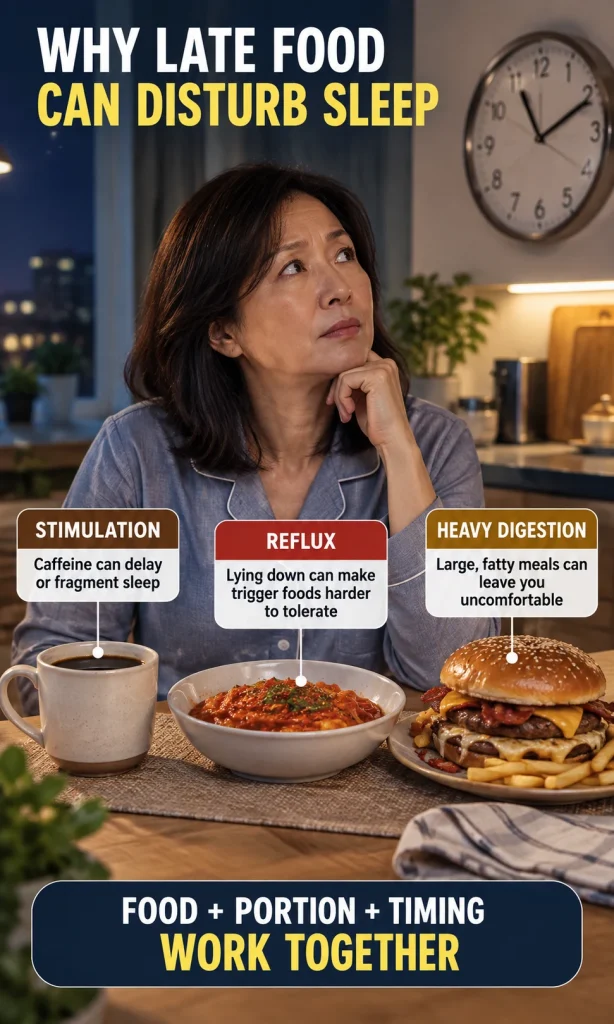
- Coffee, energy drinks, caffeinated tea, and other concentrated caffeine sources. Caffeine blocks adenosine signaling and can delay or fragment sleep. A controlled trial found that a 400 mg dose still disrupted sleep when taken six hours before bedtime, so people who are sensitive to caffeine may need an earlier cutoff than they expect.
- Alcohol. Alcohol can shorten the time it takes to fall asleep, but that sedating effect does not mean the sleep is better. As alcohol is metabolized, sleep can become lighter and more fragmented, and it can also aggravate reflux in some people.
- Large meals. A full stomach is simply harder to ignore when you lie flat. The larger the meal, the more likely you are to notice pressure, fullness, belching, or reflux when your body is trying to settle for sleep.
- Fried and very high-fat foods. Burgers, fries, fried chicken, rich cream sauces, and heavy cheese-based meals are common examples. They can be uncomfortable late at night and are also frequent reflux triggers for people who are susceptible.
- Spicy foods. Chilli, hot sauce, heavily spiced curries, and similar dishes do not bother everyone, but they can intensify heartburn or digestive discomfort in people who already react to them. The useful test is not whether a food appears on a universal “bad” list; it is whether the same food repeatedly causes symptoms when eaten late.
- Acidic foods when you are reflux-prone. Tomato-based sauces, citrus, and other acidic foods are common triggers for some people with GERD. They do not need to be banned from the entire diet, but bedtime is a poor time to challenge a trigger you already know tends to burn.
- Large rich desserts, especially chocolate-based ones. A big dessert adds volume and often combines fat, sugar, and – in chocolate – some caffeine. The concern is less about one spoonful of something sweet and more about turning dessert into another heavy meal just before lying down.
The strongest general sleep-hygiene advice is not “never eat after a certain clock time.” The National Heart, Lung, and Blood Institute’s healthy sleep guidance advises avoiding heavy or large meals within a few hours of bedtime and avoiding caffeine and alcohol before bed. For reflux specifically, the NIDDK guidance for GERD recommends eating meals at least three hours before lying down when nighttime symptoms are a problem.
How long before bed should you stop eating?
There is no single cutoff that fits every person and every meal, but a two-to-three-hour gap after a normal dinner is a useful general target. If you have frequent reflux, a larger meal, or a meal you already know is difficult for you, extending that gap is more sensible than forcing yourself to follow the same schedule as someone who digests it comfortably.
| Evening choice | Practical timing | Why it matters |
|---|---|---|
| Substantial meal | Aim for about 2-3 hours before bed | Less fullness and less chance of lying down with a very full stomach |
| Meal when reflux is common | Give yourself at least 3 hours before lying down | Matches established GERD lifestyle guidance |
| Caffeine | Consider a cutoff 6+ hours before bed if sleep is affected | A controlled study found sleep disruption even at six hours with a 400 mg dose |
| Alcohol | Keep it away from bedtime rather than using it as a sleep aid | Sedation can be followed by lighter, more fragmented sleep |
| Small snack | Often tolerable closer to bed if you are genuinely hungry | Portion and personal tolerance matter more than a rigid clock rule |
The six-hour caffeine point comes from a randomized crossover study in which a substantial 400 mg dose disturbed sleep even when taken six hours before bed. You can review the caffeine timing study indexed by PubMed, but the practical lesson is more useful than the exact dose: if you have trouble falling asleep, do not assume an afternoon coffee is automatically irrelevant.
Quick decision support
Bedtime Food Reality Check
Check whether tonight’s food is better eaten now, made smaller, or moved earlier based on timing, portion and common sleep or reflux triggers.
Your next move
Check complete
Why
Try this tonight
Why caffeine and chocolate deserve special attention
Caffeine is different from most foods on this list because the main problem is stimulation rather than digestion. Coffee, energy drinks, black or green tea, some sodas, and chocolate can all contribute caffeine, although the amount varies widely by product and serving size.
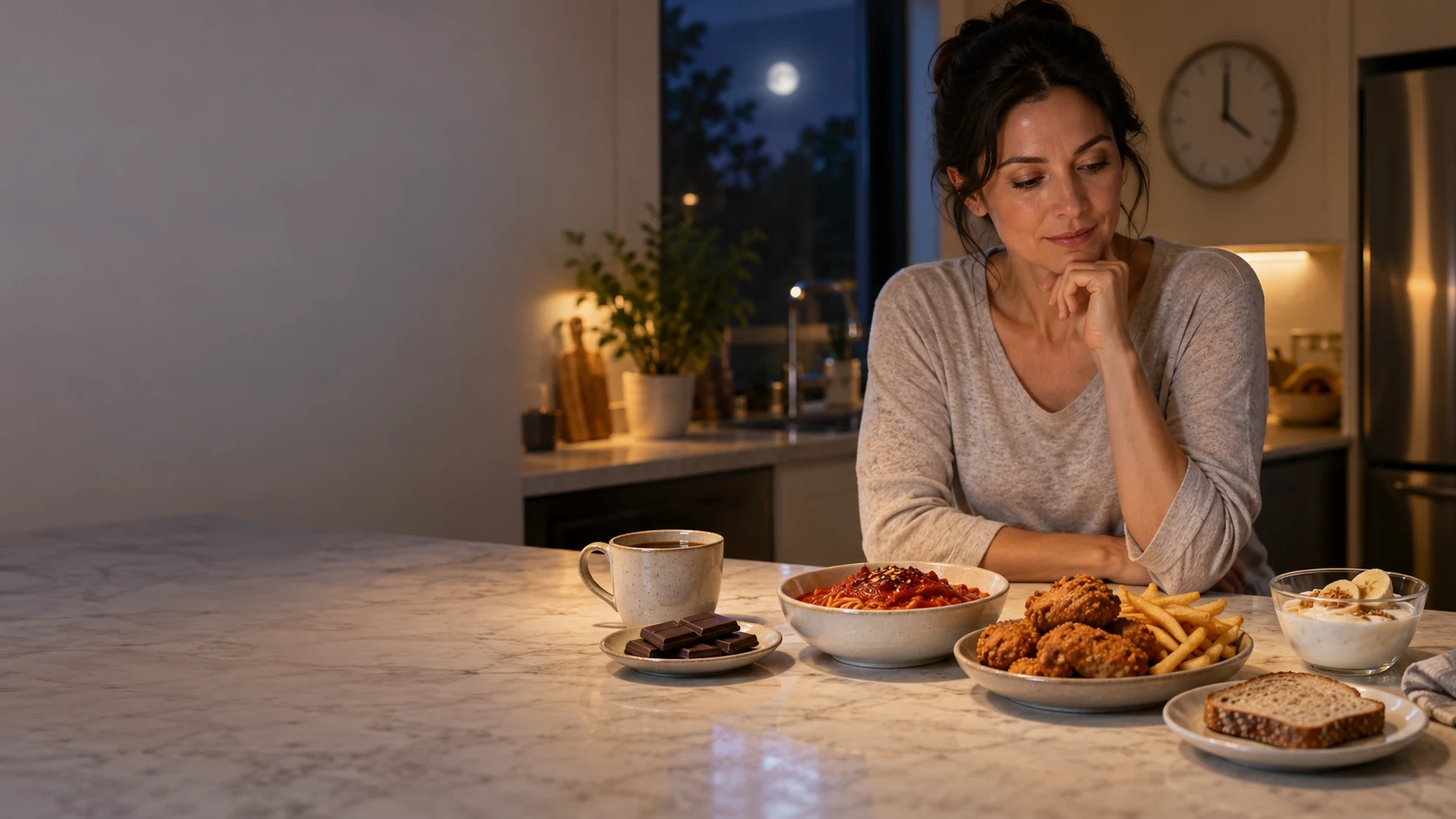
Chocolate is easy to miss because it looks like dessert rather than a stimulant source. A small portion may be fine for many people, but a large dark-chocolate dessert late at night can combine caffeine with a heavy dose of fat and sugar, which makes it a less forgiving bedtime choice if you already struggle with sleep or reflux.
Why alcohol is a poor sleep shortcut
Alcohol often feels relaxing because it can make you sleepy faster, which is why it is sometimes mistaken for a sleep aid. The trade-off comes later: sleep architecture can be disrupted as the alcohol wears off, making the second half of the night more fragmented even when sleep onset felt easy.
That makes the useful question “How did I sleep?” rather than “Did I fall asleep quickly?” If you routinely wake during the night after drinking, moving alcohol earlier or skipping it is a cleaner experiment than trying to solve the problem with additional food, supplements, or a later bedtime.
Why fatty, fried, spicy, and acidic foods are mainly a reflux problem
For many people, the most obvious consequence of late eating is not insomnia by itself but heartburn, regurgitation, bloating, or pressure once they lie down. If that pattern sounds familiar, our guide to foods to avoid with GERD goes deeper into common triggers, while how digestion actually works explains why meal size and timing can change what you feel after eating.
Trigger lists should still be personalized. Clinical guidance recognizes common categories such as high-fat foods, spicy foods, chocolate, coffee, alcohol, mint, citrus, and tomatoes, but not everyone reacts to all of them; the goal is to identify repeatable patterns instead of eliminating nutritious foods without a reason.

What about sugar before bed?
Sugar gets blamed for almost every kind of bad sleep, but the evidence is not strong enough to turn a teaspoon of sugar into a universal bedtime rule. The more practical concern is the real-world package: ice cream, cake, pastries, sweet cereal, and chocolate desserts are easy to overeat, may be high in fat, and can turn a small snack into a large late meal.
If you want something sweet, keep the portion modest and choose something you already tolerate well. For ideas that are intentionally smaller and sleep-oriented, see our guide to sleep-promoting desserts, while remembering that no dessert guarantees better sleep.
If you are hungry before bed, eating nothing is not always the best answer
Going to bed genuinely hungry can be uncomfortable and can make some people preoccupied with food when they are trying to wind down. A small snack can be reasonable, especially when dinner was early, activity was high, or your schedule simply left a long gap before sleep.
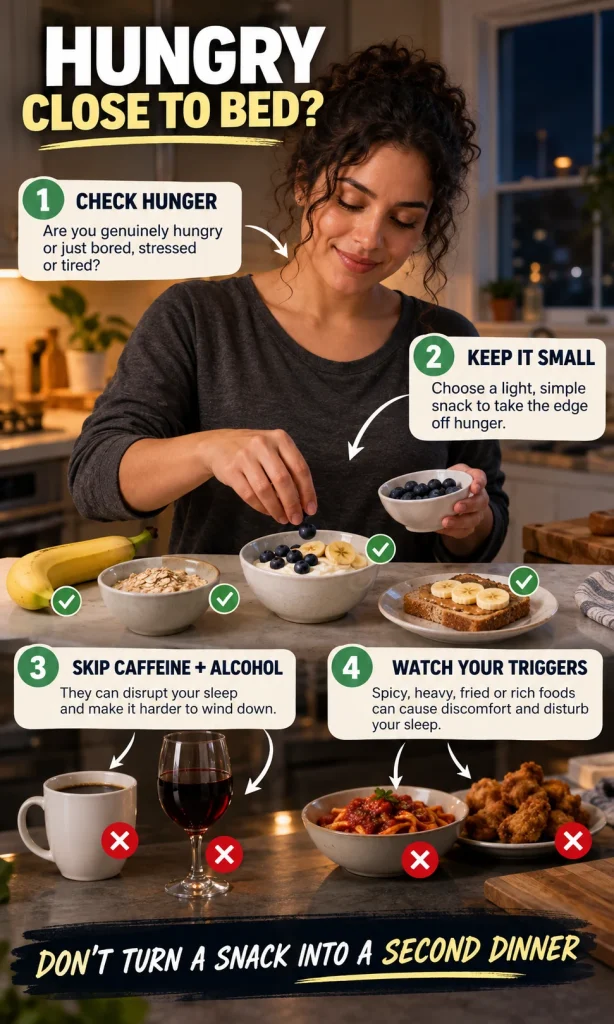
A better bedtime snack is usually small, simple, familiar, and caffeine-free rather than “perfect.” Plain yogurt with fruit, a banana, a small bowl of oats, or a slice of whole-grain toast are examples that many people tolerate well, but your own digestion matters more than copying a generic list.
- First, check whether you are actually hungry. Habit, boredom, stress, and screen time can feel like hunger even when your body is not asking for a meal.
- Keep the portion small. The goal is to take the edge off hunger, not recreate dinner.
- Skip caffeine and alcohol. They solve neither hunger nor sleep quality.
- Respect your personal triggers. If dairy, acidic fruit, rich foods, or another ingredient regularly causes symptoms, bedtime is not the time to test it again.
Late-night eating, bloating, and the “I feel too full to sleep” problem
Bloating can be mistaken for a sleep problem because the discomfort becomes more obvious once you stop moving and lie down. If your main issue is pressure, gas, or distension rather than heartburn, compare your evening pattern with our guide to foods that commonly cause bloating instead of cutting every food that appears on a sleep list.
One useful experiment is to change only one variable for several nights: portion size, meal timing, caffeine timing, alcohol, or a suspected trigger. That gives you a cleaner signal than changing dinner, supplements, bedtime, exercise, and screen habits all at once, and it is much easier to keep a habit that solves a problem you can actually identify.
A simple evening decision rule
If the food is caffeinated, alcoholic, very large, very fatty, or a known reflux trigger, move it earlier. If you are genuinely hungry and the option is small, simple, caffeine-free, and usually comfortable for you, it is usually a gentler choice than forcing yourself to go to bed hungry or eating a full second meal.
If your eating schedule has drifted later because the whole day is irregular, fixing bedtime food alone may not hold. Our guide to getting healthy eating habits back on track can help you rebuild the daytime pattern that makes late-night overeating less likely.
When nighttime food symptoms deserve medical attention
Occasional heartburn after a heavy late meal is different from symptoms that happen repeatedly or progressively. Seek medical advice if nighttime reflux is frequent, if swallowing becomes difficult, if you have persistent vomiting, gastrointestinal bleeding, unexplained weight loss, or if symptoms keep waking you despite reasonable changes in meal timing.
Chest pain should not automatically be assumed to be indigestion, especially if it is severe, new, or accompanied by shortness of breath, sweating, weakness, or pain spreading to the arm, back, neck, or jaw. In that situation, urgent medical assessment is more important than experimenting with bedtime foods.
Frequently asked questions
Is it bad to eat right before bed?
Not automatically. A small snack may be fine, but a large meal close to lying down is more likely to cause fullness, reflux, or sleep disruption, especially if it is fatty, spicy, caffeinated, or alcoholic.
How many hours before bed should I stop eating?
About two to three hours is a useful target after a normal meal. If you have nighttime GERD or frequent heartburn, giving yourself at least three hours before lying down is a better starting point.
Is fruit bad before bed?
Fruit is not generally a bedtime problem. If you are reflux-prone, acidic fruit such as citrus may be less comfortable than a banana, melon, or another fruit you already know you tolerate well.
Is chocolate bad before bed?
It can be for some people because chocolate contains caffeine and can also be rich and fatty. The amount and type matter, so a large dark-chocolate dessert is more likely to cause trouble than a small portion eaten earlier.
What should I eat if I am hungry before bed?
Choose a small, familiar, caffeine-free snack that does not normally cause reflux or bloating. Plain yogurt with fruit, a banana, a little oatmeal, or whole-grain toast are simple examples rather than mandatory choices.
Does eating before bed automatically cause weight gain?
No single bedtime snack automatically causes weight gain. Overall energy intake, food pattern, portion size, activity, sleep, and repeated habits matter more than one clock time, although late eating can make mindless extra calories easier to consume.
The bottom line
Before bed, focus less on rigid food bans and more on the combinations that reliably create problems: caffeine too late, alcohol near sleep, a large heavy meal, or a trigger food followed by lying down. Keep substantial meals earlier, use a smaller snack only when you are genuinely hungry, and let your own sleep and digestive response refine the rule from there.