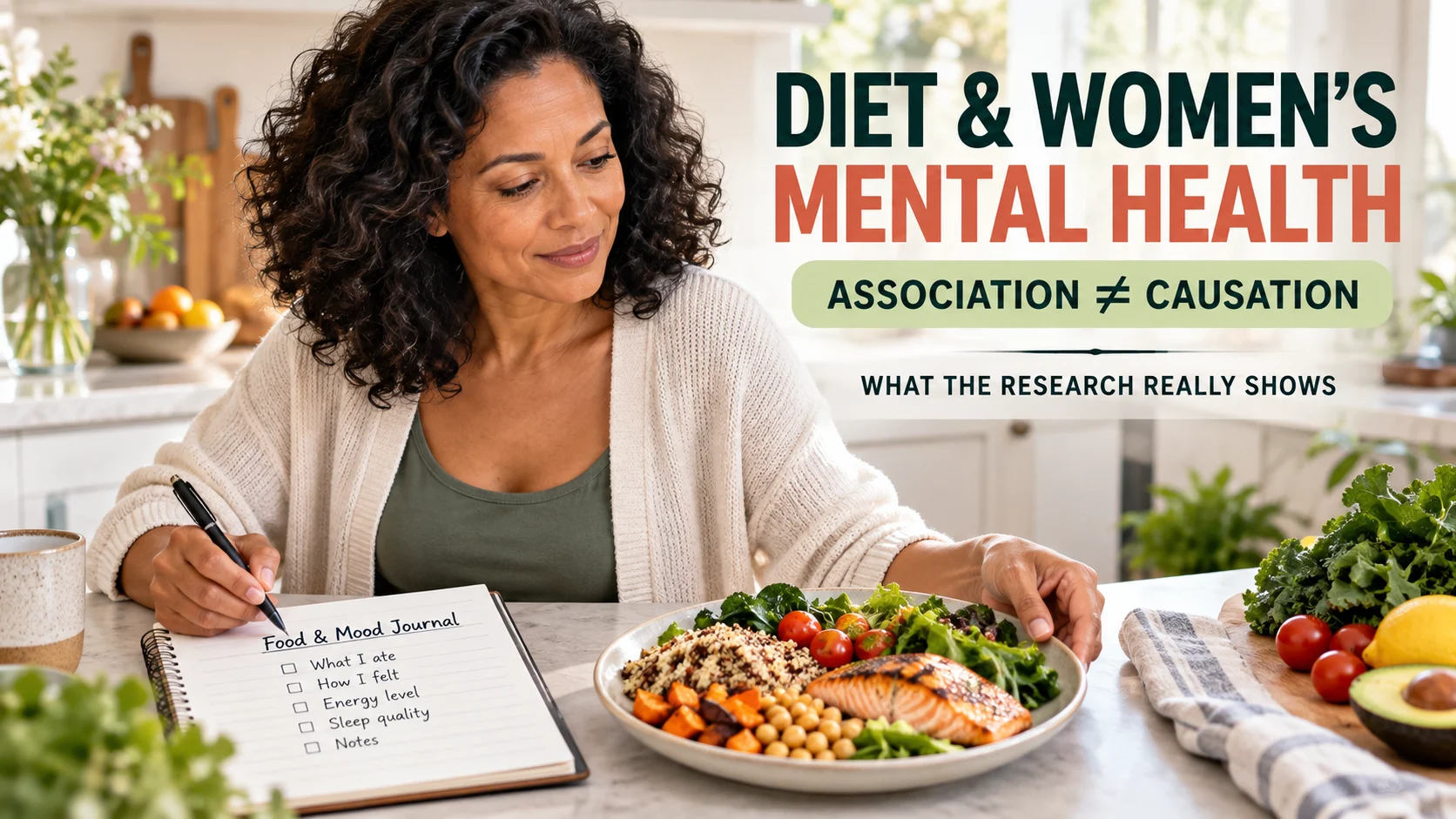

A 2021 study found stronger associations between dietary factors and mental distress in women aged 30 and older than in men, but it did not prove that food caused those differences or that women need a special “mental health diet.” Newer reviews still support a meaningful relationship between overall diet quality and depressive symptoms, while also warning that reverse causation, study quality and differences between self-reported symptoms and diagnosed depression make the evidence less certain than the original headline suggests.
What the 2021 study actually found
The research behind the original headline was a 2021 Journal of Personalized Medicine study of 1,209 adults aged 30 and older, including 880 women and 329 men. Participants completed an online food-mood questionnaire distributed through social media, and the researchers examined associations among food groups, dietary practices, exercise frequency and mental distress.
| What the study reported | What that means | What it does not prove |
|---|---|---|
| Women showed more diet-related associations with mental distress than men. | Diet and distress moved together more often in the women in this sample. | That diet caused the distress difference between women and men. |
| Fast food, high-glycemic foods and caffeine were associated with more distress in women. | Those exposures were useful signals for further study. | That any one of those foods causes depression or anxiety. |
| Fruit, dark green leafy vegetables, fish and breakfast were associated with better mental well-being in women. | Higher-quality dietary patterns may cluster with better well-being. | That these foods are treatments for a mental disorder. |
| Exercise appeared to change some diet-distress associations. | Diet and activity may interact within a broader lifestyle pattern. | That exercise cancels the effects of an unhealthy diet. |
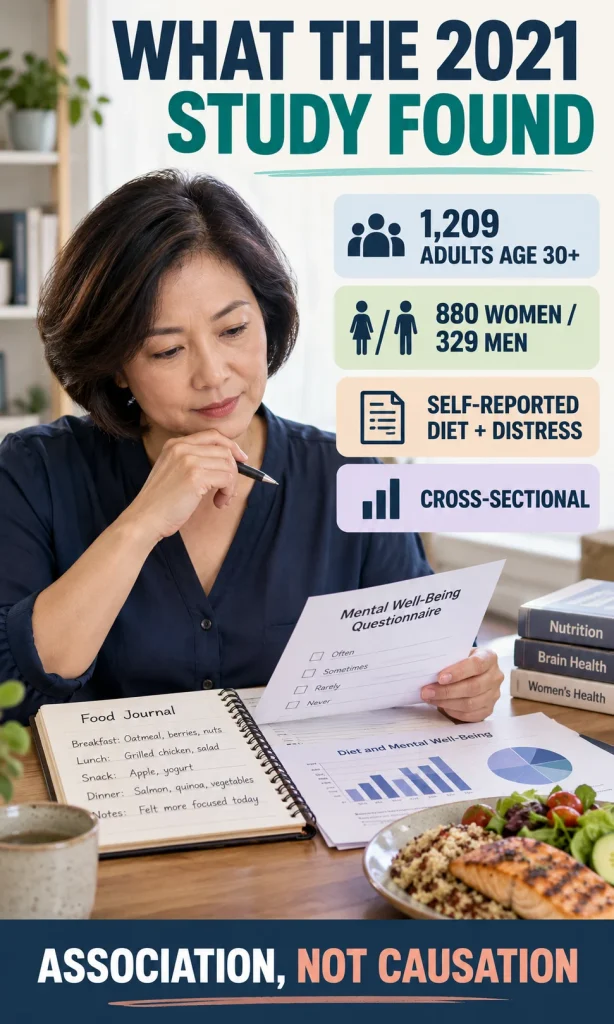
The most important limitation is built into the design: the authors described the study as cross-sectional and based on a convenience sample. They also noted that the analysis did not account for every genetic, socioeconomic, sleep, cultural or psychological factor that could affect both eating behavior and mental distress, so the results are best read as hypothesis-generating rather than as a personalized prescription.
Why association is not the same as cause
Mood can influence food choices just as food choices may influence mood, which creates a classic reverse-causation problem. A person who is depressed, anxious, sleep-deprived or under sustained stress may skip meals, rely on caffeine, order more convenience food, exercise less or lose interest in cooking, so a survey can detect a diet-mood relationship without identifying which direction came first.
Women also pass through life stages that can change sleep, appetite, body composition, iron needs, stress load and mood, including pregnancy, postpartum recovery and the menopausal transition. Those factors may matter when interpreting diet-mood studies, but they should not be collapsed into the claim that women as a group are simply more vulnerable to food; if midlife symptoms are part of the picture, our guide to perimenopause and women’s health explains why several changes can overlap.
What newer evidence adds
A much larger 2025 systematic review and meta-analysis combined 21 randomized trials and 92 prospective cohorts involving more than 700,000 participants. It found some associations between healthier dietary patterns and fewer self-reported depressive symptoms, but the authors rated the overall strength of evidence as very low because of reverse causation and limitations in study design and measurement; they also cautioned against treating diet as a stand-alone way to prevent or treat depression.
A separate 2025 systematic review of longer-term dietary interventions found small possible improvements in depressive symptoms in some adult groups, while evidence for many other diets and for anxiety remained limited or uncertain. In other words, the research field has grown since 2021, but it has not produced a clean rule saying that a particular diet will prevent depression in women or that women must eat differently from men for mental health.
Women-specific research points in a similar direction. A review of diet and depression during peri- and post-menopause found that healthier dietary patterns were the most consistently associated with fewer depressive symptoms, yet the authors also emphasized the limited volume and variable methodological quality of the evidence.
What a practical food pattern looks like
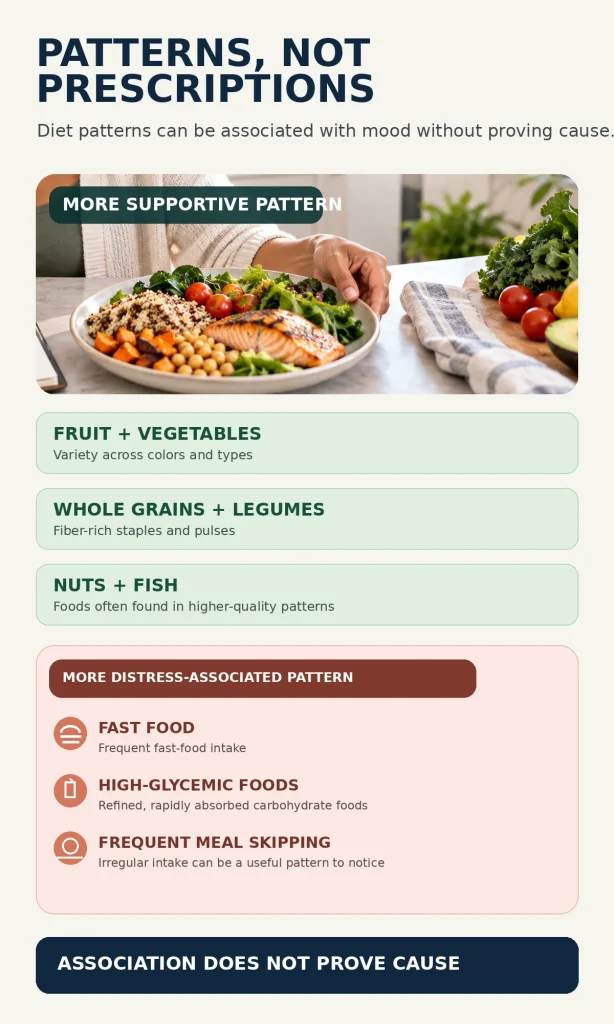
For general health, the safest starting point is not a psychiatric “superfood” list but a balanced dietary pattern that is adequate, varied and sustainable. The World Health Organization’s healthy-diet guidance emphasizes minimally processed foods, fruit, vegetables, legumes, nuts and whole grains while limiting excess free sugars, sodium and unhealthy fats, and those principles are useful whether or not mood is the reason you are improving your diet.
- Build meals around variety. Rotate vegetables, fruit, whole grains, legumes, nuts, seeds and appropriate protein sources rather than chasing one nutrient.
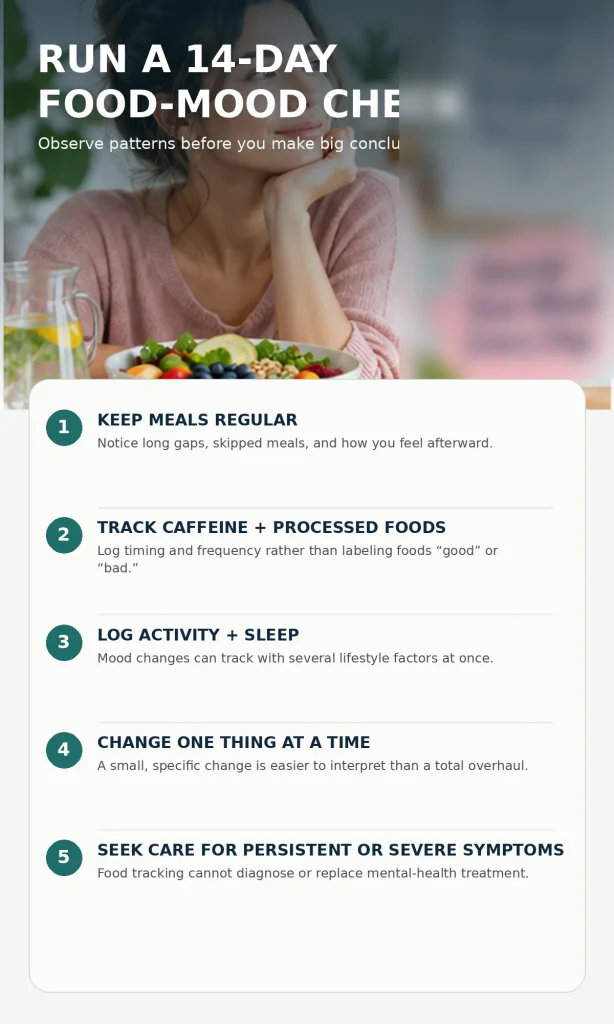
- Notice regularity. If long gaps or skipped meals reliably leave you shaky, irritable, headachy or unfocused, meal timing is worth observing before you make bigger changes.
- Watch caffeine in context. Amount, timing, sleep and individual sensitivity matter more than assuming coffee is universally good or bad for mood.
- Reduce reliance on heavily processed convenience foods when practical. The goal is a stronger overall pattern, not moral labels or perfection.
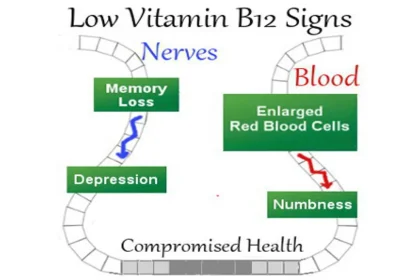
- Avoid treating supplements as substitutes for diagnosis. Iron, vitamin B12, folate, vitamin D and other nutrients can matter medically, but testing and supplementation should be based on individual needs rather than a generic mental-health stack.
Exercise may be the clearer part of the lifestyle signal
The 2021 study treated exercise as a potential mediator, and later evidence gives physical activity a firmer independent place in depression care than the original food headline might imply. A 2024 systematic review and network meta-analysis of 218 studies found that several forms of exercise reduced depressive symptoms compared with control conditions, although the confidence in many comparisons was limited by study quality.
Clinical guidance is similarly cautious but practical. NICE guidance for depression in adults advises that regular physical activity and a healthy lifestyle can support well-being, while the WHO depression guidance makes clear that persistent depression has effective psychological and medical treatments and should not be reduced to a lifestyle problem.
If low energy or loss of interest makes activity unusually difficult, that can be part of depression rather than a failure of discipline. Our guide to behavioral activation for depression explains how activity can be rebuilt in smaller, structured steps, while depression and sleep problems covers another factor that can distort both appetite and mood.
A better question than “Which food fixes my mood?”
The useful question is whether a repeatable pattern appears when diet, caffeine, movement, sleep and mood are observed together. A short observation period cannot diagnose depression, but it can help you arrive at a medical or dietetic appointment with more specific information than “I feel worse after eating badly.”
Use the Food-Mood Pattern Check
The interactive check below does not calculate a depression risk score or diagnose a condition. It organizes a few evidence-linked lifestyle patterns, highlights what you are already doing well, suggests one low-risk observation to try next and creates a one-page summary you can print for yourself or bring to a clinician or dietitian.
Food-Mood Pattern Check
Turn everyday eating and activity patterns into one clear, low-risk observation plan.
Build a pattern snapshot
This check uses broad patterns discussed in diet-and-mood research. It does not estimate depression risk, diagnose a condition, or tell you that a particular food caused a symptom.
Keep
Observe next
Evidence note
When nutrition deserves a clinical conversation
Diet is worth discussing with a clinician or registered dietitian when mood changes are accompanied by unintentional weight loss, marked appetite change, persistent gastrointestinal symptoms, a very restrictive eating pattern, heavy menstrual bleeding, pregnancy, postpartum changes, suspected nutrient deficiency or medication effects. Those situations can change nutritional needs and can also produce symptoms such as fatigue, poor concentration or low mood that overlap with mental-health conditions.
Persistent sadness, loss of pleasure, major sleep or appetite change, impaired functioning or thoughts of self-harm need mental-health assessment rather than a food experiment. If you are trying to decide whether what you are experiencing fits a broader depression pattern, start with our depression symptoms guide and seek professional care when symptoms are severe, worsening or difficult to manage safely.
The bottom line
The original 2021 study was useful because it asked whether diet, exercise and mental distress might relate differently in women and men, but its cross-sectional design cannot establish that women’s mental health is more causally affected by food. The stronger conclusion in 2026 is narrower and more useful: overall diet quality can be part of mental well-being, women-specific factors may modify that relationship, and food choices are best treated as one modifiable part of a larger mental-health picture rather than as a diagnosis or cure.
Frequently Asked Questions
Does diet affect women’s mental health more than men’s?
A 2021 cross-sectional study found more diet-related associations with mental distress in women aged 30 and older than in men, but that result does not prove a stronger causal effect in women. Newer reviews support studying sex- and life-stage-related differences while still treating the overall diet-depression evidence as limited and affected by reverse causation.
Can fast food or sugar cause depression in women?
Observational studies have linked more Western-style, highly processed or high-glycemic eating patterns with more depressive symptoms, but that does not prove a specific food causes depression. Mood can also change eating behavior, so the direction of the relationship is difficult to separate without stronger prospective and randomized evidence.
Is the Mediterranean diet the best diet for depression?
Mediterranean-style patterns are among the most studied and are often associated with fewer depressive symptoms, but current evidence does not justify calling one diet a universal treatment. A balanced, varied pattern that fits a person’s medical needs, culture, budget and preferences is more practical than treating one named diet as a cure.
Can exercise offset a poor diet for mental health?
Exercise has independent evidence for reducing depressive symptoms, but it should not be treated as a way to cancel out a poor diet. Diet, activity, sleep, stress, social conditions and medical factors interact, so improving one area can help without making the others irrelevant.
Should I take supplements for low mood?
Not automatically. Some nutrient deficiencies can contribute to symptoms that overlap with low mood or fatigue, but supplement choice and dose should be based on diet, health history, medications and testing when appropriate rather than on a generic mental-health supplement list.
When should I seek professional help instead of changing my diet?
Seek professional help when low mood, anxiety, loss of pleasure, sleep or appetite changes, or difficulty functioning are persistent, severe or worsening. Urgent help is appropriate when there is immediate risk of self-harm or suicide; food changes should not delay mental-health assessment or treatment.