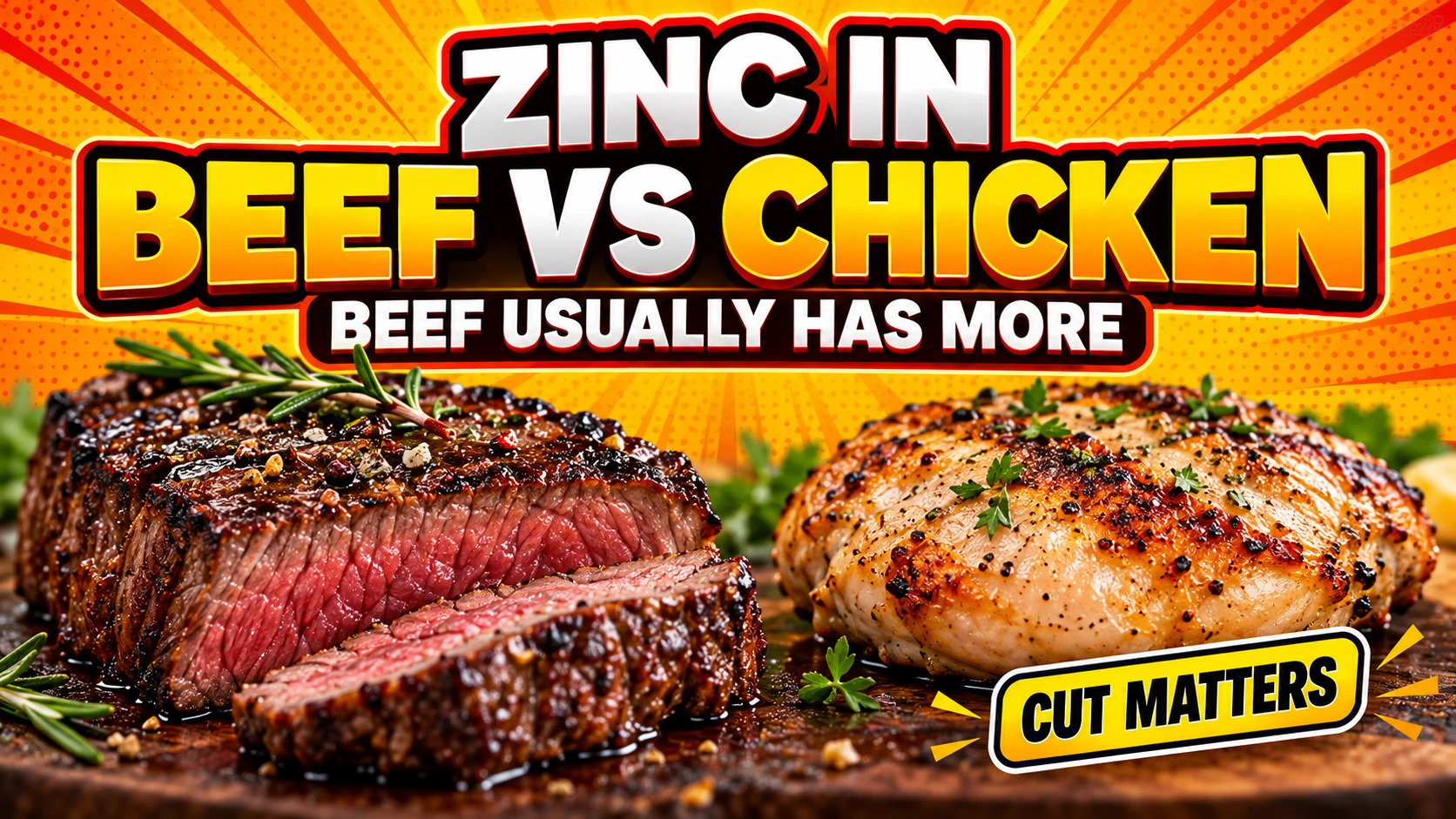

Beef generally gives you more zinc than chicken for the same cooked portion, but the gap depends heavily on the cut. A 3-ounce serving of roasted beef bottom sirloin provides about 3.8 mg of zinc, while roasted chicken breast is much lower; darker chicken meat contains more zinc than breast meat. If zinc is your main nutrition goal, beef is usually the stronger choice, while chicken can still make a useful contribution as part of a varied diet.
How much zinc is in beef compared with chicken?
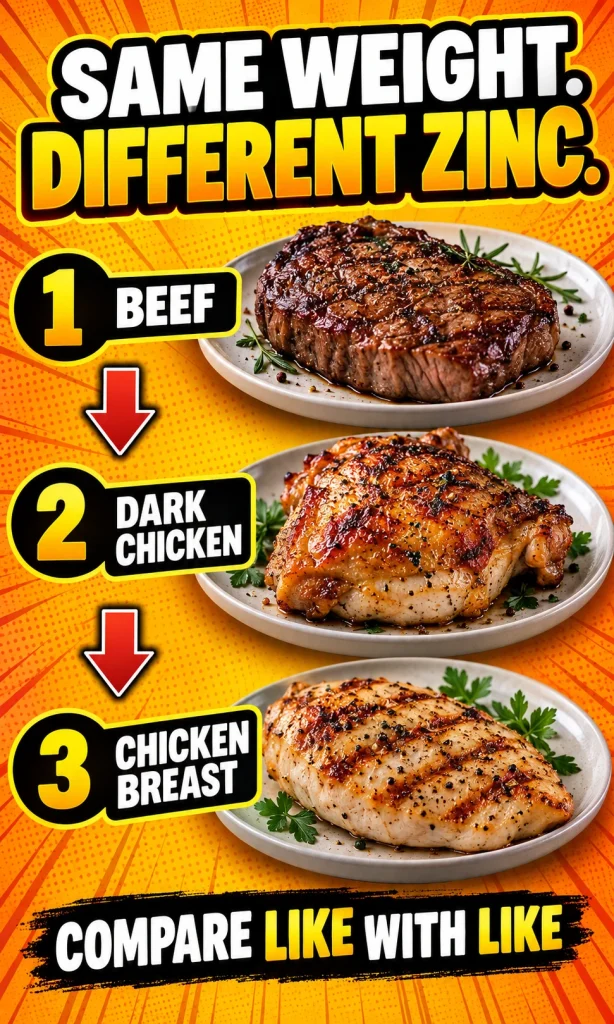
The clearest comparison comes from standardized cooked portions. The NIH Office of Dietary Supplements zinc fact sheet lists roasted beef bottom sirloin at about 3.8 mg of zinc per 3 ounces (85 g), equal to roughly 35% of the U.S. Daily Value for zinc. USDA reference data also show that chicken varies considerably by cut: roasted breast meat is relatively low in zinc, while roasted dark meat and thighs contain more.
| Cooked food | Reference portion | Approx. zinc | What it means |
|---|---|---|---|
| Beef bottom sirloin, roasted | 3 oz / 85 g | 3.8 mg | A strong everyday meat source of zinc. |
| Chicken breast, meat only, roasted | 1 cup chopped / 140 g | 1.4 mg | Lean and protein-rich, but not especially zinc-dense. |
| Chicken dark meat, meat only, roasted | 1 cup chopped / 140 g | 3.92 mg | Much higher than breast meat; portion size matters. |
Those entries are not identical serving weights, which is exactly why a simple “beef versus chicken” number can mislead. On a weight-adjusted basis, the reference beef sirloin remains substantially more zinc-dense than roasted chicken breast, while dark chicken meat closes part of the gap. The USDA zinc food table hosted by NIH is useful when you want to compare specific cuts and measures rather than broad meat categories.
Why beef usually contains more zinc
Zinc is naturally concentrated in animal tissues, but the amount is not uniform across species or muscle groups. Red meat is generally richer in zinc than poultry, and the NIH Office of Dietary Supplements identifies meat and seafood as important zinc sources, with beef making a substantial contribution to dietary zinc intake in the United States.
- Species matters: beef muscle commonly contains more zinc than chicken muscle.
- Cut matters: chicken dark meat usually contains more zinc than chicken breast.
- Cooking changes concentration: water loss can make nutrient values per 100 g look higher after cooking.
- Portion size changes the result: a larger serving can provide more zinc even when the food is less zinc-dense.
- Database entries are specific: skin, trimming, grade, preparation and whether values are raw or cooked all affect the reported number.
Chicken breast versus dark meat: the zinc difference matters
Chicken is often discussed as if every cut has the same mineral profile, but that is not true. USDA reference entries show roasted chicken breast meat at about 1.4 mg of zinc per 140 g cup, compared with about 3.92 mg for the same listed weight of roasted dark meat. If you prefer chicken and want more zinc from it, choosing thigh or other dark meat can materially increase the amount without changing to a different animal protein.

How much zinc do adults need?
For adults age 19 and older, the U.S. Recommended Dietary Allowance is 11 mg per day for men and 8 mg per day for women. Pregnancy raises the adult recommendation to 11 mg and lactation to 12 mg. These are daily intake targets for generally healthy people, not instructions to obtain the full amount from one food.
| Adult group | Zinc RDA | 3 oz roasted beef sirloin at 3.8 mg provides |
|---|---|---|
| Adult men | 11 mg/day | About 35% of the RDA |
| Adult women | 8 mg/day | About 48% of the RDA |
| Pregnancy, age 19+ | 11 mg/day | About 35% of the RDA |
| Lactation, age 19+ | 12 mg/day | About 32% of the RDA |
What zinc actually does in the body
Zinc is essential for normal immune function, protein and DNA synthesis, wound healing, cell signaling and growth. It also supports normal taste. That makes zinc important, but it does not mean that eating more and more zinc produces progressively better outcomes; nutrient adequacy and excess are different questions.
Zinc Portion Reality Check
Adjust the food, cooked portion and life stage to estimate zinc and see how much of a daily target that portion contributes.
Build your portion
Reference values vary by cut, trimming and cooking. This experience estimates dietary zinc; it does not diagnose deficiency or recommend supplements.
Your estimate
What the estimate uses
Beef reference: 3.8 mg zinc per 85 g roasted bottom sirloin from the NIH Office of Dietary Supplements table. Chicken references use USDA Standard Reference entries: roasted breast meat 1.40 mg per 140 g and roasted dark meat 3.92 mg per 140 g. Adult RDAs are 11 mg for men, 8 mg for women, 11 mg in pregnancy and 12 mg in lactation.
Zinc Portion Reality Check
A one-page food-composition estimate for the selected cooked portion.
Interpretation
This portion makes a meaningful contribution to the selected daily target.
How to use this
Use the result to compare portions and cuts, not to diagnose zinc status. Actual food composition varies, and a complete diet can provide zinc from many foods.
Reference basis
NIH Office of Dietary Supplements zinc guidance and USDA Standard Reference food-composition entries. Daily targets shown are U.S. adult RDAs.
Beef and chicken are not the only good zinc sources
Oysters contain far more zinc per serving than either beef or chicken. The NIH table lists 3 ounces of raw Eastern farmed oysters at 32 mg and cooked Pacific oysters at 28.2 mg, while foods such as crab, fortified cereals, pumpkin seeds, pork, lentils, dairy products, eggs and beans can also contribute. If you are building a broader eating pattern rather than choosing one meat, our guides to foods with protein examples and daily diet tips for eating healthy can help you spread nutrition across multiple foods.
Does the body absorb zinc from meat better than from plant foods?
Often, yes. Zinc from animal foods is generally more bioavailable than zinc from many plant foods because phytates in beans, nuts and whole grains can bind zinc and reduce absorption. That does not make plant foods “bad” zinc sources; it means the amount listed in a food table is only one part of the nutrition picture, especially for diets built heavily around high-phytate staples.
Should you choose beef just for zinc?
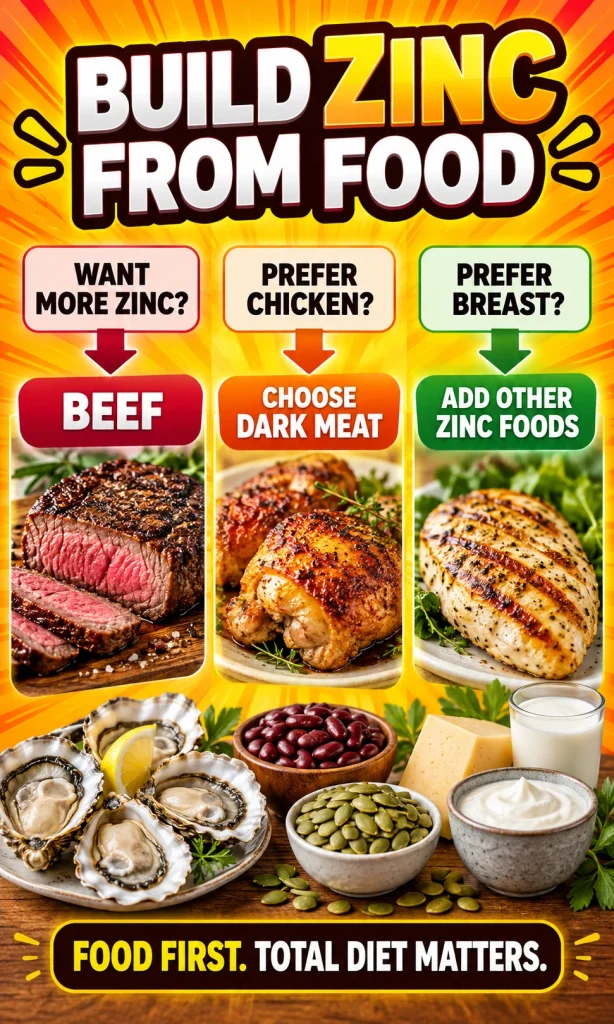
Not necessarily. If you already eat beef, its zinc density is a nutritional advantage; if you prefer chicken for taste, cost, fat profile or meal planning, dark chicken meat can provide more zinc than breast. The better decision is usually to look at your entire diet rather than forcing one food to solve a single nutrient target.
For a broader check on nutrition claims, see healthy eating common myths about food and nutrition. The practical question is not “Which food wins every nutrient?” but “Which combination of foods fits your needs, preferences and overall eating pattern?”
When zinc supplements need more caution than food
Excess zinc from ordinary food is uncommon, but concentrated supplements can create problems. The NIH lists 40 mg per day as the adult Tolerable Upper Intake Level from food, beverages, supplements and medications for healthy people; long-term high supplemental intakes can interfere with copper absorption and cause other adverse effects. If you are considering zinc specifically to treat symptoms, suspected deficiency or a medical condition, discuss that with a qualified healthcare professional rather than using food-comparison numbers as a diagnosis.
Bottom line
Beef is usually the more zinc-dense choice, while chicken varies sharply by cut. Roasted chicken breast is relatively low in zinc, dark chicken meat provides more, and beef can provide a substantial share of an adult’s daily zinc target in a modest portion. Use serving size and the exact cut to make the comparison meaningful, then judge zinc as one part of the whole diet.
Frequently asked questions
Does beef have more zinc than chicken?
Usually, yes. Beef is generally more zinc-dense than chicken, especially compared with chicken breast. Dark chicken meat contains more zinc than breast, so the size of the difference depends on which cuts you compare.
Is chicken breast a good source of zinc?
Chicken breast contributes zinc, but it is not especially zinc-dense compared with beef or chicken dark meat. It can still contribute to your total intake alongside other zinc-containing foods.
Which part of chicken has the most zinc?
Dark meat such as thigh and leg generally contains more zinc than breast meat. Exact values vary with cooking method, skin, trimming and serving size.
How much zinc do adults need each day?
The U.S. RDA is 11 mg daily for adult men and 8 mg for adult women. It is 11 mg during pregnancy and 12 mg during lactation for adults age 19 and older.
Can you get enough zinc without beef?
Yes. Oysters, other seafood, pork, poultry, fortified cereals, dairy foods, beans, nuts, seeds and whole grains can all contribute zinc. People following mostly plant-based diets may need to pay more attention to total intake and bioavailability because phytates can reduce zinc absorption.